
Brachytherapy vs EBRT
Brachytherapy vs External Beam Radiotherapy: Which Treatment Fits Which Cancer?
Understand Brachytherapy vs EBRT, the EBRT full form, how external beam radiotherapy works, and which treatment may suit different cancers.
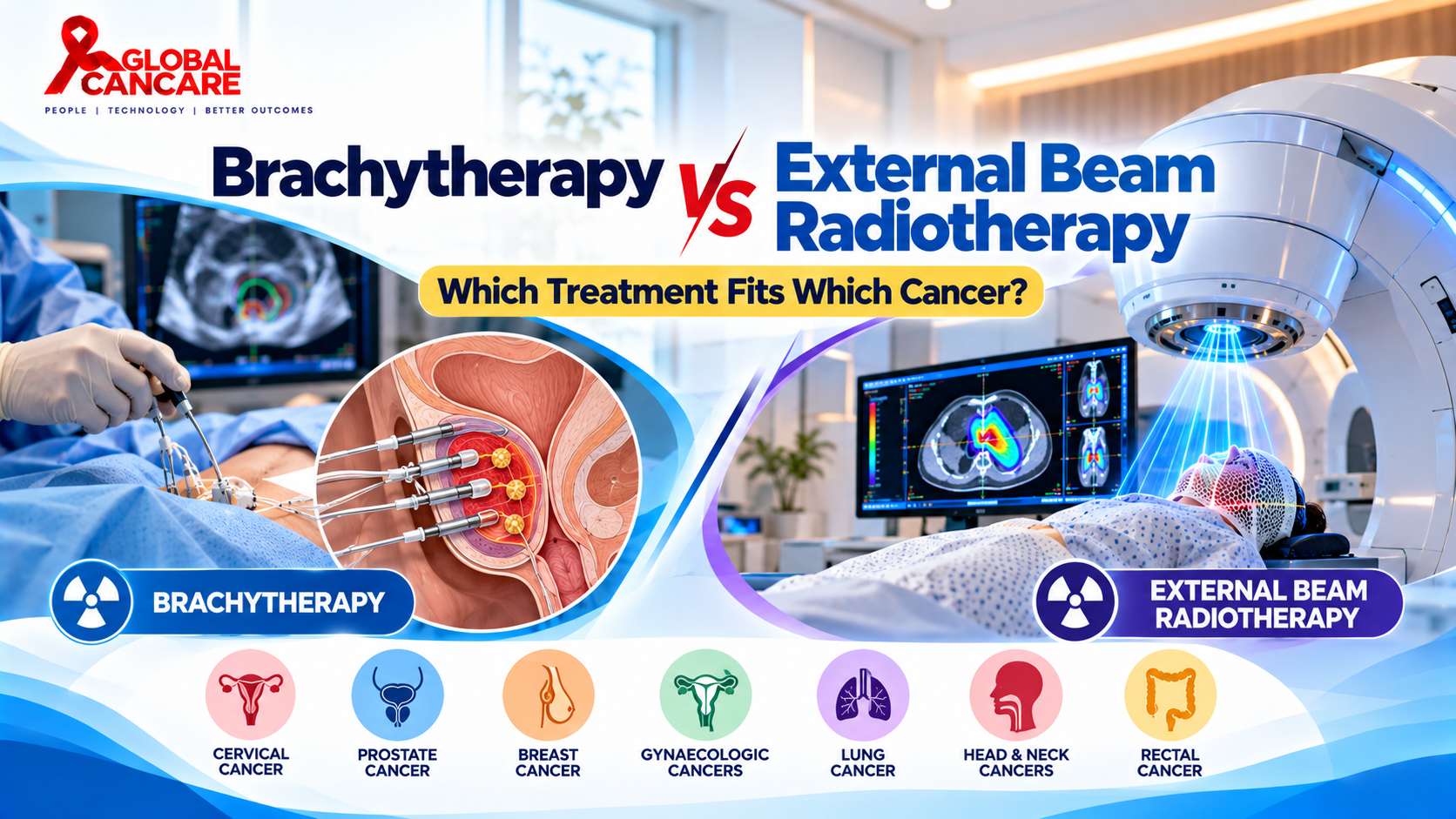
Introduction: Brachytherapy vs EBRT
Radiotherapy is an important treatment for many cancers. Although brachytherapy and external beam radiotherapy both use radiation to damage cancer cells, they deliver that radiation in very different ways.
Understanding this difference can help patients and healthcare professionals understand why one technique may be recommended over another—or why both may be used as part of the same treatment plan.
Quick Answer
Brachytherapy places a radioactive source inside or very close to the tumour, while EBRT (External Beam Radiotherapy) delivers radiation from a machine outside the body. The choice between brachytherapy vs EBRT depends on the cancer type, tumour location, size, stage, treatment goal, and whether radiation can be delivered safely and accurately to the target.
What Is Brachytherapy?
Brachytherapy is a form of internal radiation therapy. Instead of delivering radiation from outside the body, a small radioactive source is placed inside or close to the area being treated.
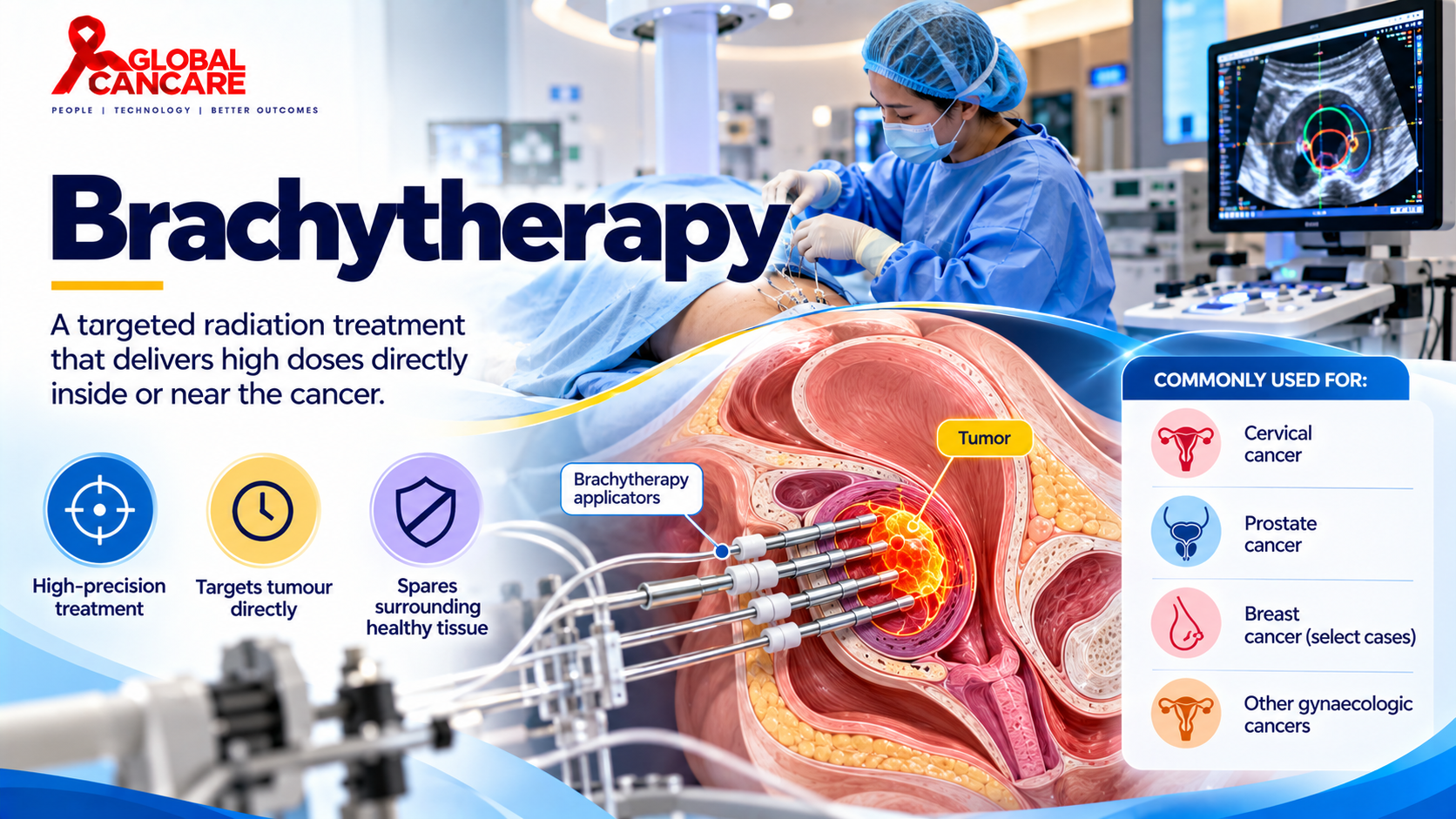
Depending on the cancer and treatment plan, the radioactive source may be placed temporarily or, in selected situations, permanently. The aim is to deliver a high radiation dose to the tumour while limiting exposure to nearby healthy tissues.
Brachytherapy is commonly associated with cancers where the tumour can be reached safely through a body opening or by placing an applicator or source close to the treatment area. It has an established role in cancers such as cervical, prostate, breast, skin, and some other tumour types.
What Is EBRT? Understanding the EBRT Full Form
The EBRT full form is External Beam Radiotherapy. It is one of the most widely used forms of radiation treatment.
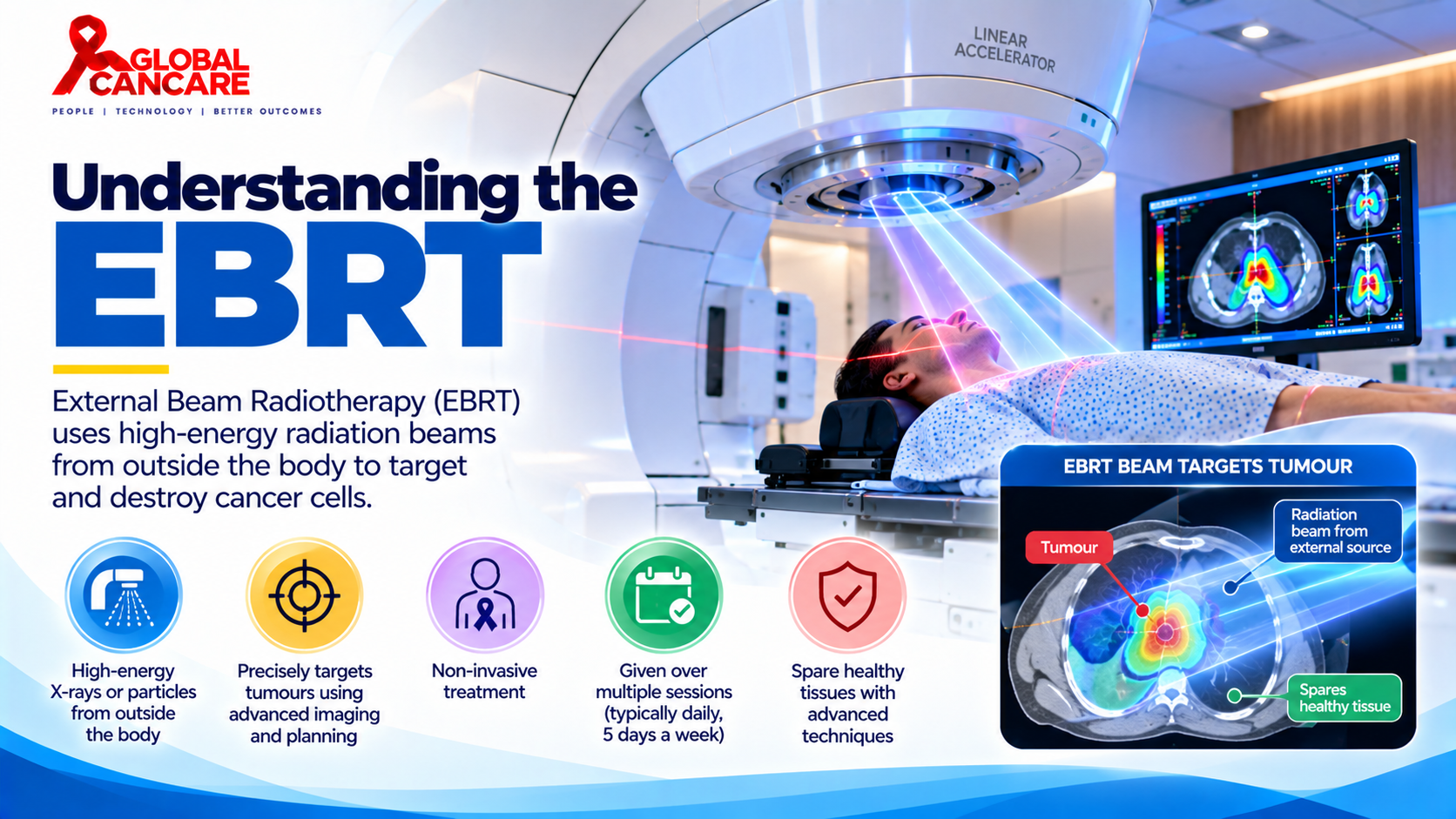
In external beam radiotherapy, a treatment machine directs radiation toward the tumour from outside the body. Modern systems can shape and guide the radiation dose to match the treatment target.
Depending on the clinical situation, EBRT can include techniques such as three-dimensional conformal radiotherapy, intensity-modulated radiotherapy (IMRT), image-guided radiotherapy (IGRT), stereotactic radiotherapy, and other specialised approaches.
The treatment team selects the technique according to the patient's diagnosis, anatomy, treatment objective, and surrounding organs at risk.
Brachytherapy vs EBRT: What Is the Difference?
Brachytherapy vs EBRT: The most important difference is where the radiation source is located.
Feature | Brachytherapy | EBRT / External Beam Radiotherapy |
|---|---|---|
Radiation source | Inside or close to the tumour | Outside the body |
Radiation delivery | Internal | External |
Treatment area | Often highly localised | Can cover a defined external treatment field |
Common applications | Cervical, prostate, breast and selected other cancers | Brain, breast, lung, prostate, head and neck, and many other cancers |
Planning | Uses imaging and treatment planning | Uses imaging, simulation and treatment planning |
Can both be used? | Yes, in selected cases | Yes, in selected cases |
The comparison is not about one treatment being universally better. Instead, the techniques solve different clinical problems.
Which Cancers May Be Treated With Brachytherapy?
Brachytherapy can be particularly useful when a tumour is accessible and a concentrated radiation dose can be delivered close to it.
For example, cervical cancer is an important application of brachytherapy. In many treatment protocols, brachytherapy forms an important part of definitive radiation treatment alongside EBRT and other appropriate therapies.
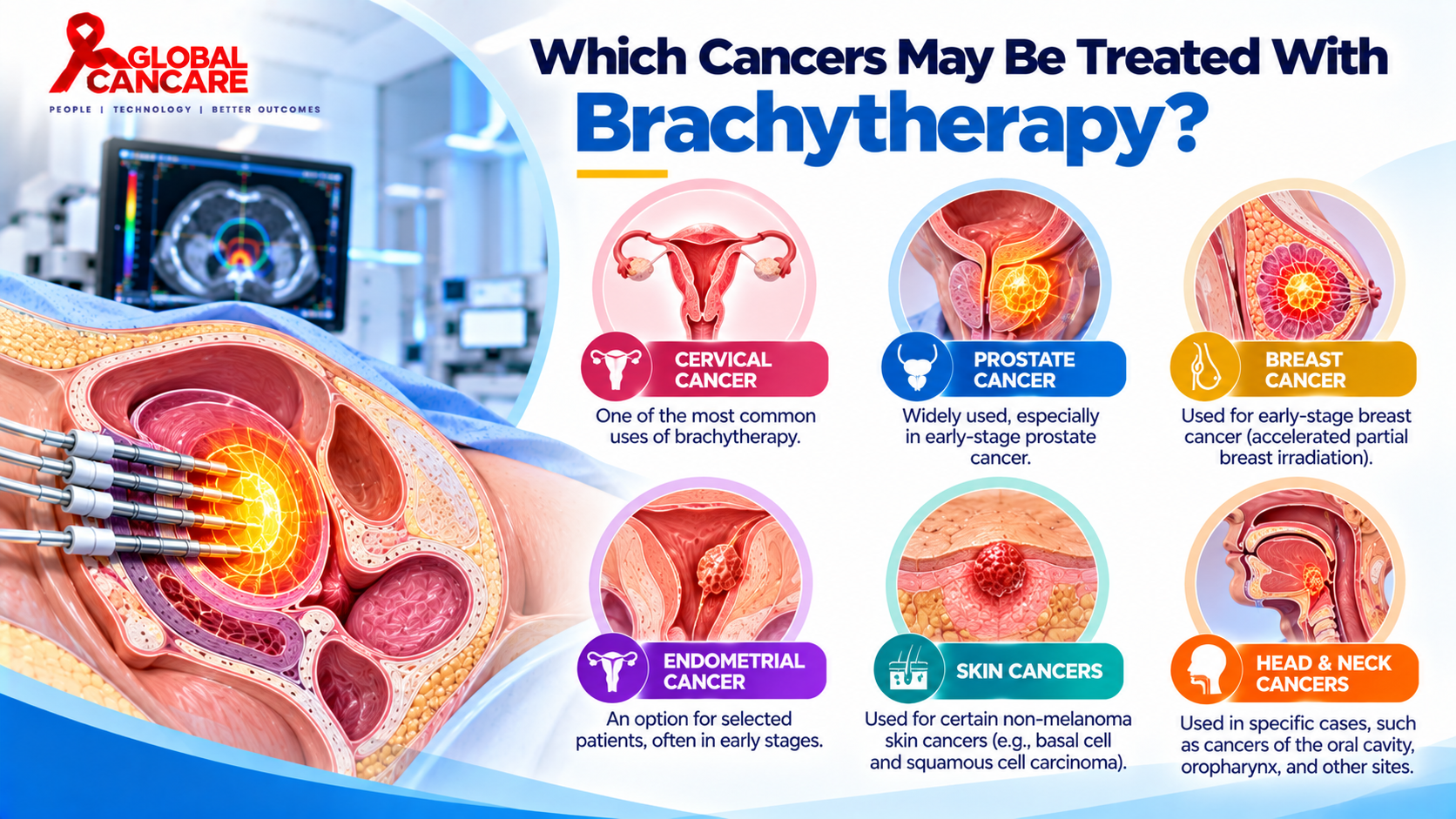
Prostate cancer is another established application. Depending on the patient's disease characteristics, brachytherapy may be used alone or combined with external radiation.
Brachytherapy can also have a role in selected breast cancers and other sites. The suitability of the technique depends on individual clinical factors rather than the cancer name alone.
When is External Beam Radiotherapy Used?
External beam radiotherapy (EBRT) can treat a wide range of cancers because the radiation beam can be directed toward different parts of the body.
It may be used as the primary treatment for some cancers, after surgery to reduce the risk of local recurrence, before surgery in selected situations, or as part of palliative treatment to relieve symptoms.
Modern EBRT uses advanced imaging and treatment-planning systems to help clinicians determine the appropriate radiation dose and treatment geometry while protecting nearby healthy structures as much as reasonably possible.
Can Brachytherapy and EBRT Be Used Together?
Yes. Brachytherapy vs EBRT is not always an either-or decision.
For some cancers, particularly cervical cancer, the two approaches can complement each other. EBRT can treat the broader target region, while brachytherapy can provide a concentrated dose directly around the tumour.
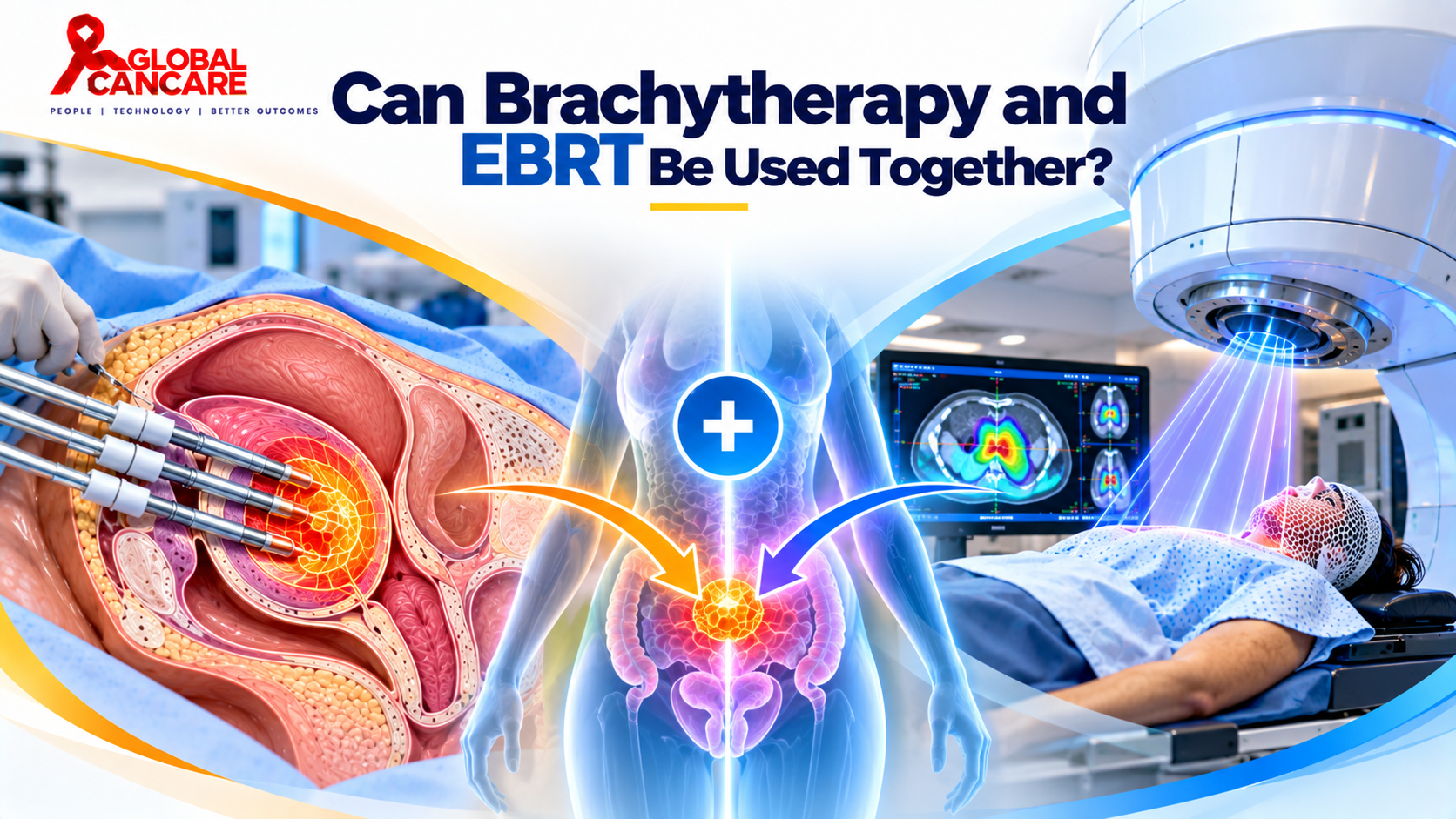
The final treatment plan is determined by a multidisciplinary team, considering tumour characteristics, imaging, previous treatments, anatomy, overall health, and the intended treatment outcome.
How Global CanCare Supports Radiotherapy Infrastructure
Delivering advanced radiotherapy requires more than treatment equipment. Hospitals need appropriate infrastructure, radiation shielding, treatment-planning systems, medical physics support, trained professionals, commissioning, quality assurance, and ongoing technical support.
Global CanCare Pvt. Ltd. works across the radiotherapy and oncology infrastructure ecosystem, supporting hospitals and healthcare organisations with technology, infrastructure, project implementation, and related services.
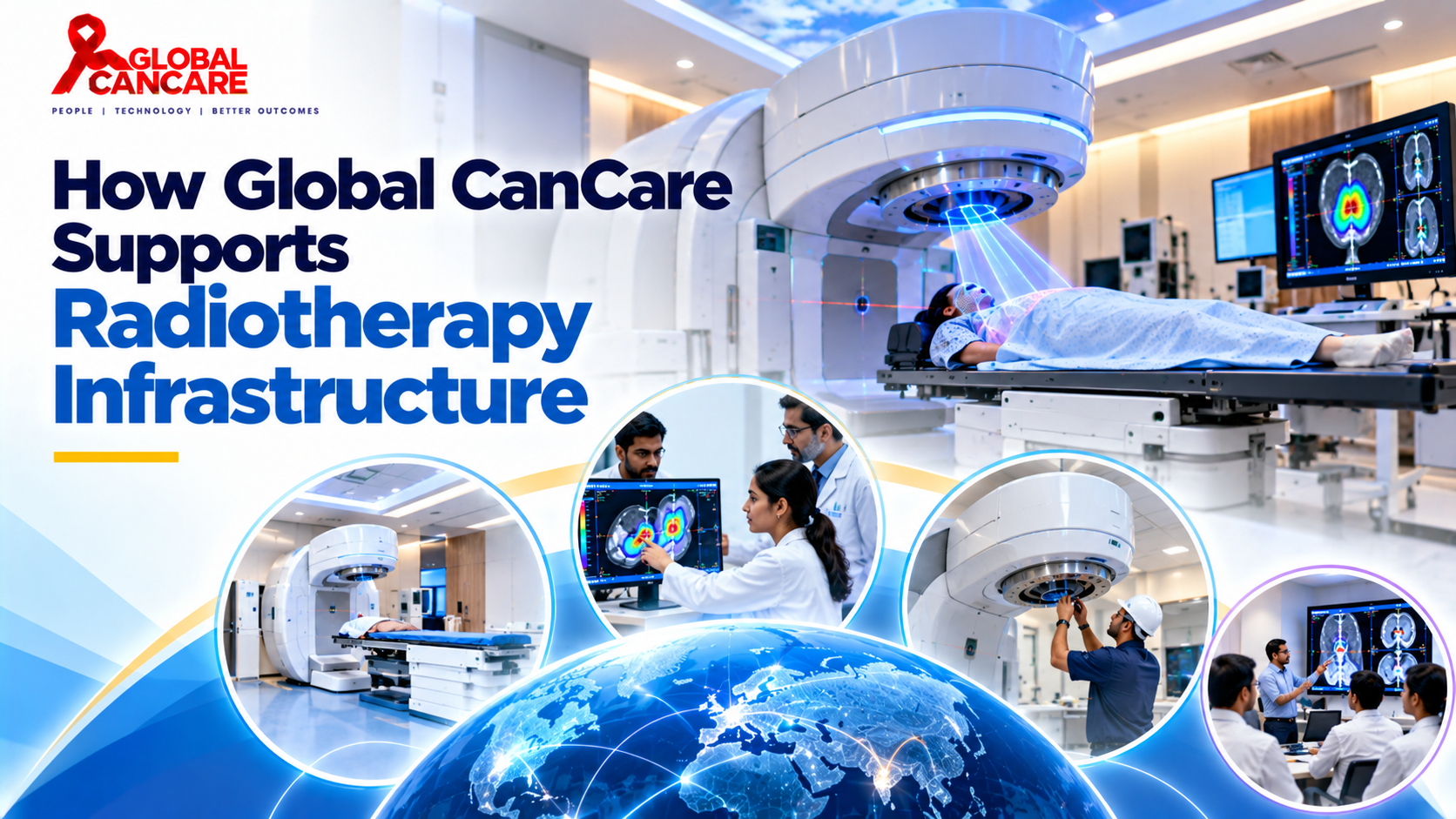
Its broader approach connects radiotherapy equipment with the infrastructure and expertise required to establish sustainable cancer-care services.
Explore the Global CanCare healthcare ecosystem to learn more about its work across oncology and medical technology. For project or healthcare-infrastructure enquiries, contact info@globalcancare.com or visit the Global CanCare Contact page.
Frequently Asked Questions
1. What is the difference between brachytherapy and EBRT?
Brachytherapy delivers radiation from a source placed inside or close to the tumour. EBRT, or External Beam Radiotherapy, delivers radiation from a machine outside the body.
2. Is brachytherapy better than external beam radiotherapy?
Neither treatment is universally better. The appropriate approach depends on the cancer type, tumour location, stage, anatomy, treatment objective, and individual patient factors.
3. What is the EBRT full form?
The EBRT full form is External Beam Radiotherapy. It uses a machine outside the body to direct radiation toward a defined treatment area.
4. Which cancers commonly use brachytherapy?
Brachytherapy has established applications in cancers including cervical and prostate cancer and may also be used for selected breast, skin, and other cancers depending on the clinical situation.
5. Can brachytherapy and EBRT be given together?
Yes. In selected treatment plans, particularly for certain cervical cancers, brachytherapy and EBRT may be used together to treat different aspects of the target region.
6. How is the right radiotherapy treatment selected?
A radiation oncology team considers the cancer type, stage, tumour size and location, imaging findings, nearby organs, previous treatment, and the patient's overall clinical situation before selecting a treatment approach.
Authoritative Sources
Conclusion | Brachytherapy vs EBRT
The key difference between brachytherapy vs EBRT is how radiation reaches the tumour. Brachytherapy places the radioactive source inside or near the treatment area, while EBRT (External Beam Radiotherapy) delivers radiation from outside the body. Both techniques have important roles in modern oncology, and some patients may receive both as part of an integrated treatment plan. The appropriate choice depends on the individual cancer and the clinical goals of treatment.
As radiotherapy becomes increasingly precise, successful cancer treatment depends on the combination of advanced technology, treatment planning, medical physics, trained professionals, and appropriate infrastructure.
Global CanCare supports this broader radiotherapy ecosystem, helping healthcare organisations connect technology and infrastructure with the requirements of modern cancer care.
Planning a Cancer Care project?
Our specialists can scope equipment, shielding, licensing and staffing for your facility.
Talk to our team