
Nuclear Medicine, Cyclotron, Radiopharmaceuticals
Before You Buy a Cyclotron for Your Hospital or Research Centre: 10 Costly Mistakes to Avoid
Planning to buy a cyclotron? Learn the 10 most expensive mistakes hospitals and research centres make—and how to ensure a successful project.
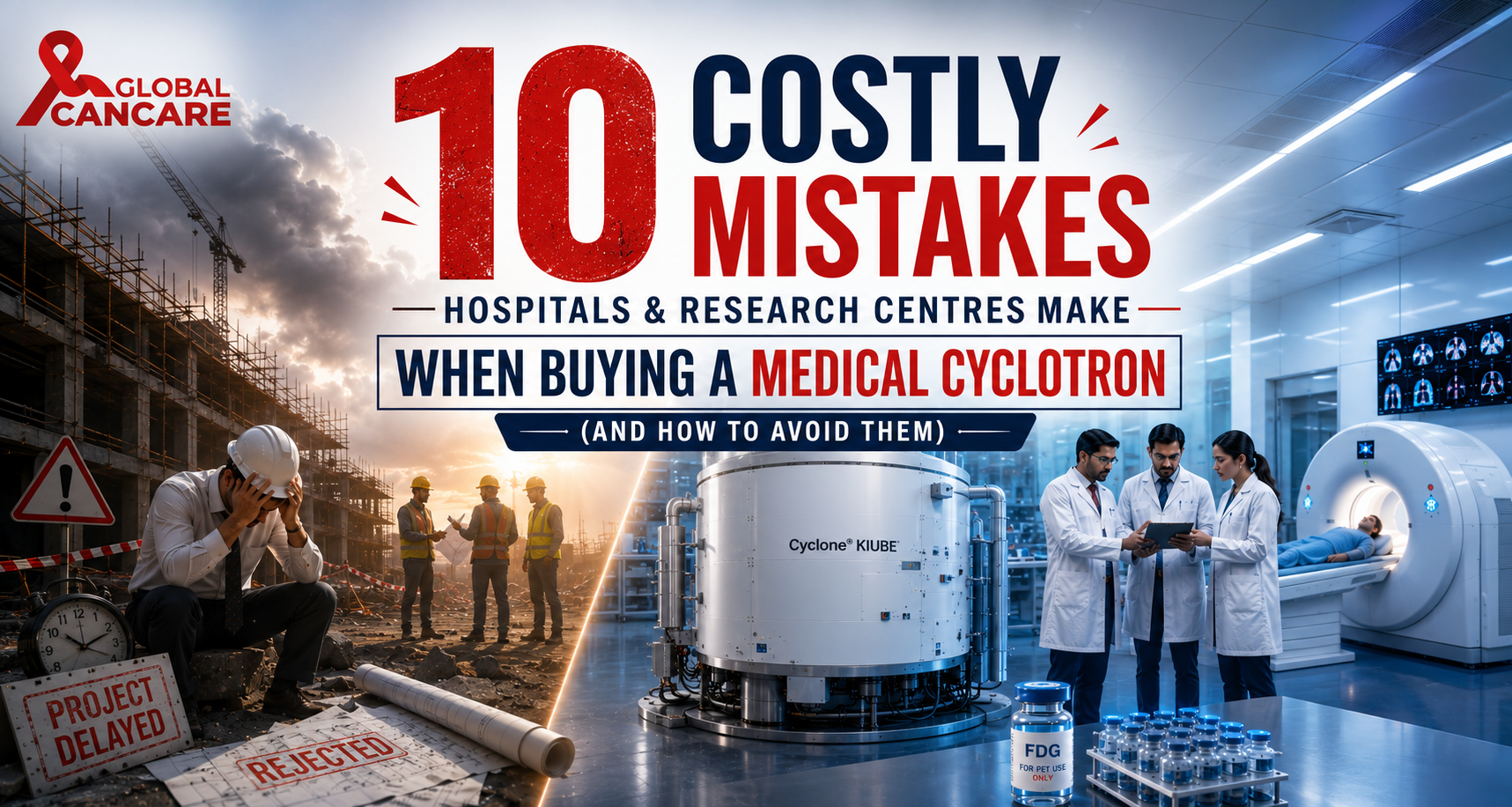
As demand for PET-CT imaging and theranostics continues to grow, more hospitals and research institutions are looking to buy a cyclotron to produce PET radioisotopes on-site. This reduces dependence on external suppliers, shortens turnaround times, and improves access to advanced molecular imaging.
However, buying a cyclotron is only the beginning. A successful project depends on regulatory approvals, specialised infrastructure, radiation shielding, radiopharmacy planning, trained personnel, and coordinated project execution. Overlooking these factors can lead to costly delays, budget overruns, and postponed clinical operations.
Here are ten expensive mistakes hospitals make when they buy a cyclotron—and how to avoid them.
1. Buying a Cyclotron Before Planning the Entire Facility
Many hospitals spend months comparing cyclotron models from different manufacturers but very little time planning the facility around them. Once construction begins, they discover the bunker, utilities, workflow, or radiopharmacy layout requires significant redesign.
A cyclotron is not a standalone machine—it's the centrepiece of a highly integrated nuclear medicine facility.
How to avoid it: Develop a comprehensive master plan covering facility layout, utilities, radiopharmacy, radiation shielding, regulatory compliance, and future expansion before you buy a cyclotron.
2. Buying a Cyclotron Without Understanding Regulatory Requirements
One of the biggest causes of project delays is assuming regulatory approvals can be handled after the purchase.
Everything—from bunker design and shielding calculations to ventilation and radioactive waste management—must comply with regulatory requirements from the very beginning.
How to avoid it: Incorporate regulatory planning into the earliest stages before you buy a cyclotron to minimise redesigns and approval delays.
3. Underestimating Infrastructure Requirements
Hospitals often focus on the equipment itself while overlooking the infrastructure required to support it.
A cyclotron requires specialised civil works, HVAC systems, chilled water, stable power, radiation shielding, hot cells, quality control laboratories, compressed gases, and radioactive waste management.
How to avoid it: Plan the project as a complete cyclotron and radiopharmacy facility—not simply an equipment purchase.
4. Buying the Wrong Cyclotron Capacity
Many organisations size their cyclotron based only on current PET scan volumes. However, patient demand, referral networks, and theranostics programmes often grow much faster than expected.
An undersized cyclotron can quickly become a production bottleneck.
How to avoid it: Before you buy a cyclotron, evaluate future isotope demand, expansion plans, and regional distribution opportunities—not just today's patient volumes.
5. Treating Radiation Shielding as a Construction Detail
Radiation shielding is one of the most critical aspects of any cyclotron facility. Poor shielding design can delay approvals, require expensive modifications, and compromise operational safety.
How to avoid it: Engage specialists with expertise in cyclotron bunker design, shielding calculations, and radiation protection from the planning stage.
6. Waiting Too Long to Build Your Team
Even after installation, a cyclotron cannot operate without experienced professionals. Recruiting cyclotron operators, radiopharmacists, medical physicists, Radiation Safety Officers (RSOs), and quality personnel often takes several months.
How to avoid it: Begin recruitment and staff training well before installation so your team is prepared for commissioning.
7. Ignoring Radiopharmacy Workflow
PET radioisotopes have extremely short half-lives. Every unnecessary step between production, synthesis, quality control, dispensing, and transport reduces usable radioactivity.
Poor workflow design directly affects productivity and patient scheduling.
How to avoid it: Design the cyclotron, radiopharmacy, hot cells, and quality control laboratories as one seamless workflow.
8. Considering Only at the Equipment Purchase Price
The cyclotron may be the largest capital investment, but it represents only part of the total project cost.
Maintenance, consumables, target materials, utilities, staffing, compliance, quality assurance, and service contracts significantly influence long-term operating expenses.
How to avoid it: Evaluate the total cost of ownership—not just the initial price—before you buy a cyclotron.
9. Managing Too Many Vendors Independently
Cyclotron projects involve architects, civil contractors, equipment suppliers, HVAC engineers, shielding consultants, utility specialists, radiopharmacy experts, and regulators.
Without experienced project coordination, communication gaps often translate into costly delays.
How to avoid it: Choose an experienced project management partner who can coordinate every stakeholder from planning through commissioning.
10. Assuming Buying a Cyclotron Means You're Ready to Operate
Purchasing and installing the equipment is not the final step.
Before clinical operations begin, hospitals must complete commissioning, equipment validation, radiation surveys, SOP implementation, quality assurance, staff training, and regulatory inspections.
Skipping these activities delays patient services and increases compliance risks.
How to avoid it: Build commissioning, validation, and operational readiness into the project timeline from day one.
Buy a Cyclotron with Confidence: From Planning to Operation
Choosing to buy a cyclotron is a strategic investment that can transform a hospital's nuclear medicine capabilities. But success depends on much more than selecting the right equipment.
Hospitals that achieve the best outcomes plan for infrastructure, regulatory compliance, radiation safety, radiopharmacy workflow, workforce readiness, and future growth before making the purchase.
By avoiding these common mistakes, hospitals and research centres can reduce project risks, control costs, accelerate commissioning, and maximise the long-term return on their cyclotron investment.
Planning to buy a cyclotron? Work with an experienced end-to-end project partner who can guide you through every stage—from feasibility and facility planning to regulatory approvals, installation, commissioning, and operational readiness—so your investment delivers clinical value from day one.
Contact Global CanCare
Email: info@globalcancare.com
Phone: +91 81201 15666 | +91 90987 93898 | +91 79746 67979
Planning a Cancer Care project?
Our specialists can scope equipment, shielding, licensing and staffing for your facility.
Talk to our team