
C Arm
C-Arm Imaging in Oncology: Applications Beyond Orthopaedics | Global CanCare
Discover how a C arm machine supports oncology procedures beyond orthopaedics, including image-guided interventions, tumour-related procedures and real-time imaging. Explore Global CanCare's medical technology solutions.
Why C Arm Imaging Matters Beyond Orthopaedics
When people hear about a C arm machine, they often associate it with orthopaedic surgery. However, this medical imaging technology has applications beyond bone and joint procedures. In oncology, C-arm imaging can support selected image-guided interventions, vascular procedures and other treatments where doctors need real-time X-ray guidance.
As cancer care becomes increasingly dependent on accurate imaging and minimally invasive procedures, access to suitable medical imaging equipment is an important part of hospital infrastructure. Global CanCare Pvt. Ltd. works across oncology technology and healthcare infrastructure, supporting hospitals as they develop and strengthen their diagnostic and treatment capabilities.
What Is the C Arm Full Form?
The C arm full form is simply a reference to the C-shaped arm of the imaging system. This curved structure connects the X-ray source on one side to the image detector on the other.
A C arm machine is a medical imaging system that uses X-rays to produce real-time images of internal body structures. Its movable design allows doctors to position the imaging system around patients during procedures without repeatedly changing the patient's position.
Depending on the model, a C-arm may provide fluoroscopy, digital images and image storage. These capabilities help clinicians observe instruments, anatomical structures and contrast movement during selected medical procedures.
How is a C Arm Machine Used in Oncology?
The role of a C-arm in oncology is particularly relevant when cancer treatment involves image-guided procedures. It can help clinicians visualise anatomy and guide instruments during certain interventions.
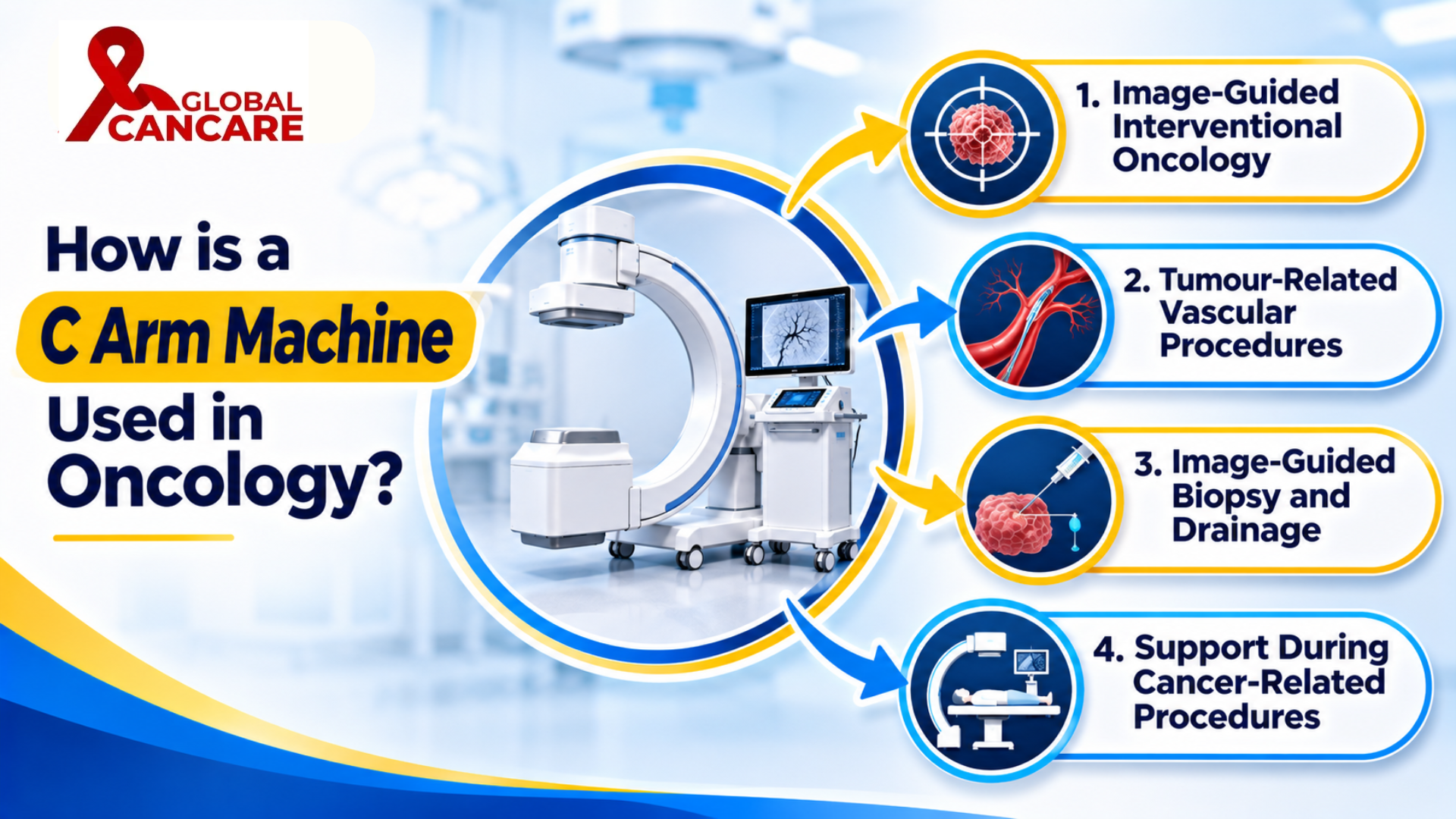
1. Image-Guided Interventional Oncology: Some cancer treatments involve placing catheters or other instruments inside blood vessels or targeted anatomical areas. Fluoroscopy from a C-arm can help clinicians guide these instruments during selected procedures. Examples include certain catheter-based interventions used in the management of liver tumours.
2. Tumour-Related Vascular Procedures: In interventional radiology, C-arm systems may support procedures involving blood vessels that supply tumours. With suitable equipment and clinical expertise, fluoroscopic imaging can assist procedures such as transarterial chemoembolization (TACE) and other catheter-based treatments. The exact imaging requirements depend on the procedure and may involve specialised angiography systems.
3. Image-Guided Biopsy and Drainage: Selected biopsy, drainage and access procedures may use C-arm fluoroscopy to help guide instruments. The choice of imaging modality depends on tumour location, visibility, clinical requirements and the expertise of the treating team. Ultrasound or CT may be more suitable in other cases.
4. Support During Cancer-Related Procedures: C-arm imaging can also assist with selected procedures involving vascular access devices, stent placement and other interventions needed during cancer care. These procedures can help support treatment delivery and management of complications.
Key Oncology Applications of C Arm Imaging
Application | How C-arm imaging helps | Clinical relevance |
|---|---|---|
Catheter-guided interventions | Provides real-time X-ray guidance | Supports selected interventional oncology procedures |
TACE procedures | Helps guide catheters during vascular treatment | Used in selected liver cancer treatments |
Vascular access | Helps visualise instruments and contrast flow | Supports placement of certain access devices |
Selected biopsies | Provides image guidance where appropriate | Helps clinicians reach targeted areas |
Stent placement | Shows instrument position during procedures | May help manage selected cancer-related blockages |
Drainage procedures | Supports instrument positioning | Can assist management of selected complications |
C Arm Imaging vs Other Imaging Systems in Oncology
A C-arm is not a replacement for CT, MRI or PET-CT. Each imaging technology has a different role in cancer diagnosis and treatment.
CT provides detailed cross-sectional images, MRI offers excellent soft-tissue assessment, and PET-CT helps evaluate metabolic activity in selected cancers. A C-arm primarily provides real-time X-ray imaging during procedures. Hospitals should select equipment according to their clinical services and procedural requirements.
How Global CanCare Supports Oncology Imaging Infrastructure
Global CanCare Pvt. Ltd. focuses on medical technology and specialised healthcare infrastructure, including oncology equipment, radiotherapy solutions and medical imaging.
Its approach recognises that successful cancer care requires more than individual machines. Hospitals must consider equipment selection, room planning, installation, commissioning, technical support, trained professionals and long-term maintenance.
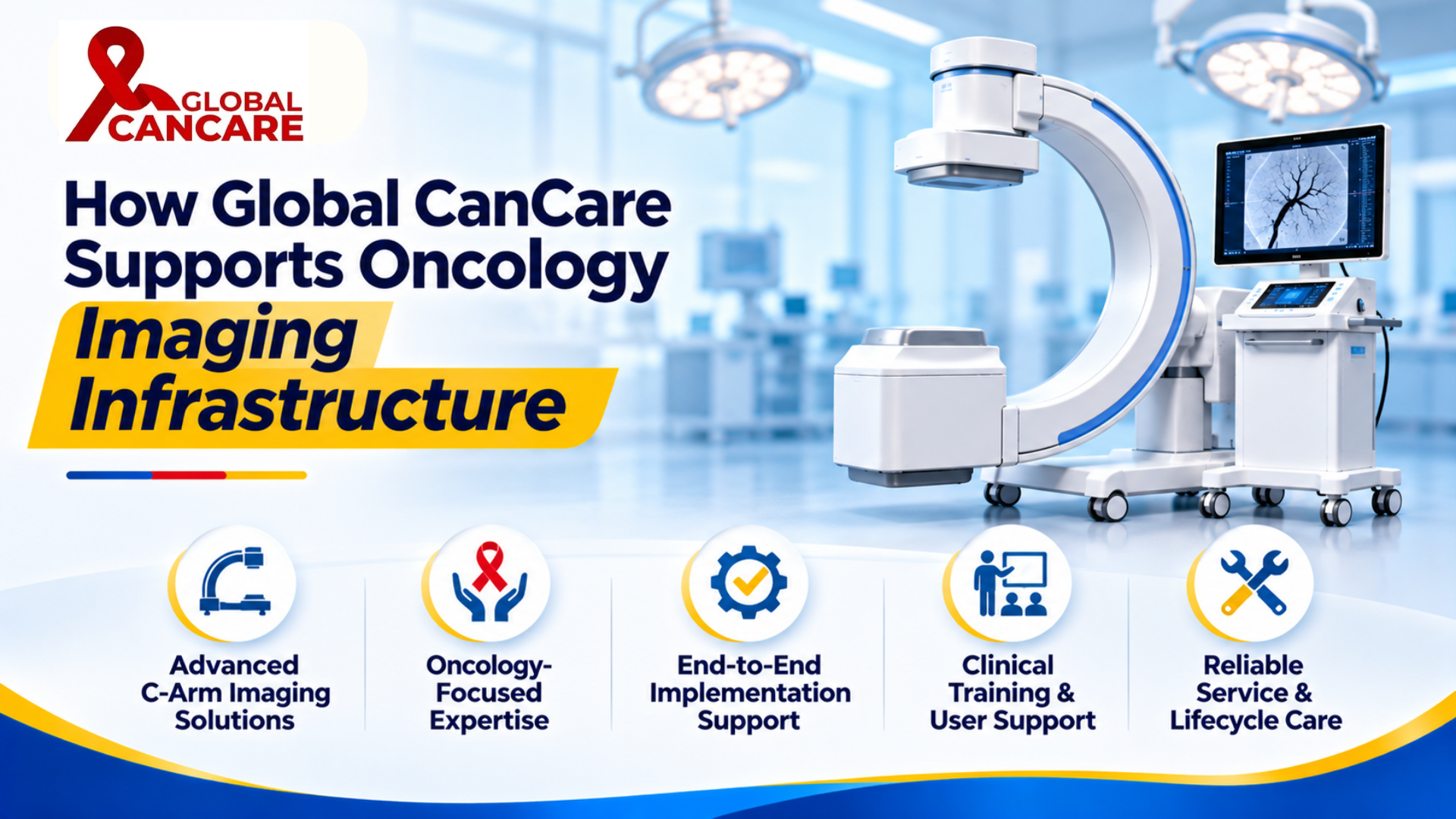
Through its healthcare technology ecosystem, Global CanCare supports hospitals exploring medical imaging and oncology equipment solutions, including C-arm requirements. The appropriate C-arm configuration depends on the intended clinical applications, imaging specifications, workflow and facility requirements.
To discuss medical imaging and oncology technology solutions, visit the Global CanCare website or contact Global CanCare.
Frequently Asked Questions
1. What is a C arm machine?
A C arm machine is a medical X-ray imaging system with a C-shaped structure. It provides real-time images during selected surgical and interventional procedures.
2. What is C arm?
C arm refers to the curved structure connecting the X-ray source and image detector. The system uses this design to capture images from different angles around the patient.
3. What is the C arm full form?
C arm is not an abbreviation. The name describes the C-shaped design of the imaging system.
4. Can a C arm machine be used in oncology?
Yes. It can support selected image-guided cancer-related interventions, including catheter-based vascular procedures, certain biopsies and stent placements.
5. Is a C arm better than CT for cancer diagnosis?
No. They serve different purposes. CT is used for detailed cross-sectional imaging, while a C-arm is mainly used for real-time guidance during procedures.
Authoritative Sources
Conclusion
The C arm machine has an important role in modern medical imaging beyond orthopaedics. In oncology, it can support selected image-guided interventions, vascular procedures and other clinical applications that require real-time X-ray visualisation.
For hospitals developing advanced cancer-care services, choosing appropriate imaging technology is an important infrastructure decision. Global CanCare Pvt. Ltd. brings medical imaging and oncology technology into a wider healthcare infrastructure ecosystem, helping healthcare providers explore solutions that align with their clinical and operational requirements.
The goal is to make imaging technology a meaningful part of coordinated, effective cancer care.
Planning a Cancer Care project?
Our specialists can scope equipment, shielding, licensing and staffing for your facility.
Talk to our team