
Digital Pathology
Digital Pathology and AI: The Next Evolution of Cancer Diagnostics
Discover how Digital Pathology and AI are transforming cancer diagnostics through whole-slide imaging, AI-assisted pathology, workflow automation, remote pathology, and precision diagnostics.
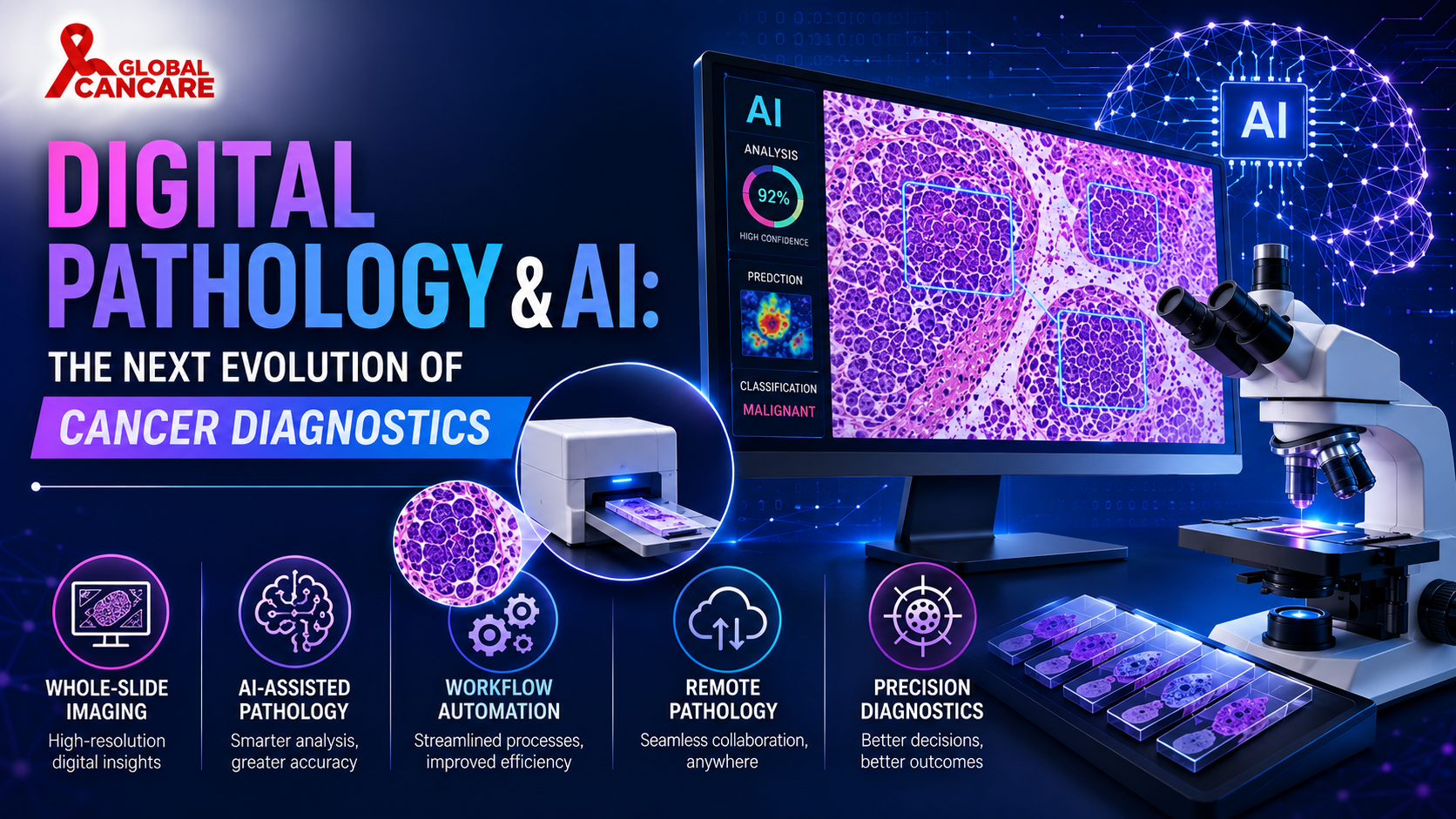
Cancer diagnosis is entering a major technological shift. For many years, pathologists have examined tissue samples under microscopes to identify cancer and understand how a tumour is developing. Today, Digital Pathology is changing this process by turning traditional glass slides into high-resolution digital images that can be stored, shared, analysed, and reviewed using advanced software.
When combined with artificial intelligence, Digital Pathology and AI can do more than simply display an image on a computer. Machine-learning systems can help identify abnormal cells, measure tissue features, assess biomarkers, and highlight areas that may need closer examination. The technology is becoming an important part of precision diagnostics, particularly as cancer cases and diagnostic workloads continue to grow.
For healthcare organisations developing modern diagnostic services, this transformation also creates a need for strong technology, infrastructure, workflow design, and specialist expertise. Global CanCare Pvt. Ltd. is building capabilities across medical imaging, AI Imaging, oncology, radiotherapy, nuclear medicine, clinical research, medical physics, and turnkey healthcare infrastructure to support the development of future-ready healthcare environments.
What Is Digital Pathology?
Digital Pathology converts glass microscope slides into large, high-resolution digital images through a process known as whole-slide imaging. Instead of viewing tissue only through a microscope, pathologists can examine the entire slide on a high-resolution screen.
Digital images can be stored securely and accessed when needed. They can also be shared with specialists in different locations, creating new possibilities for collaboration and remote pathology.
The transition is particularly valuable in cancer care because pathology plays a central role in confirming a diagnosis and guiding treatment decisions.
How Digital Pathology and AI Works in Pathology
The combination of digital slides and AI creates a powerful workflow. Digital pathology AI converts glass microscope slides into high-resolution digital images evaluated by machine learning. Depending on the software and its clinical validation, AI can assist with cell counting, detection of suspicious cancer cells, tissue grading, biomarker assessment, and other tasks.
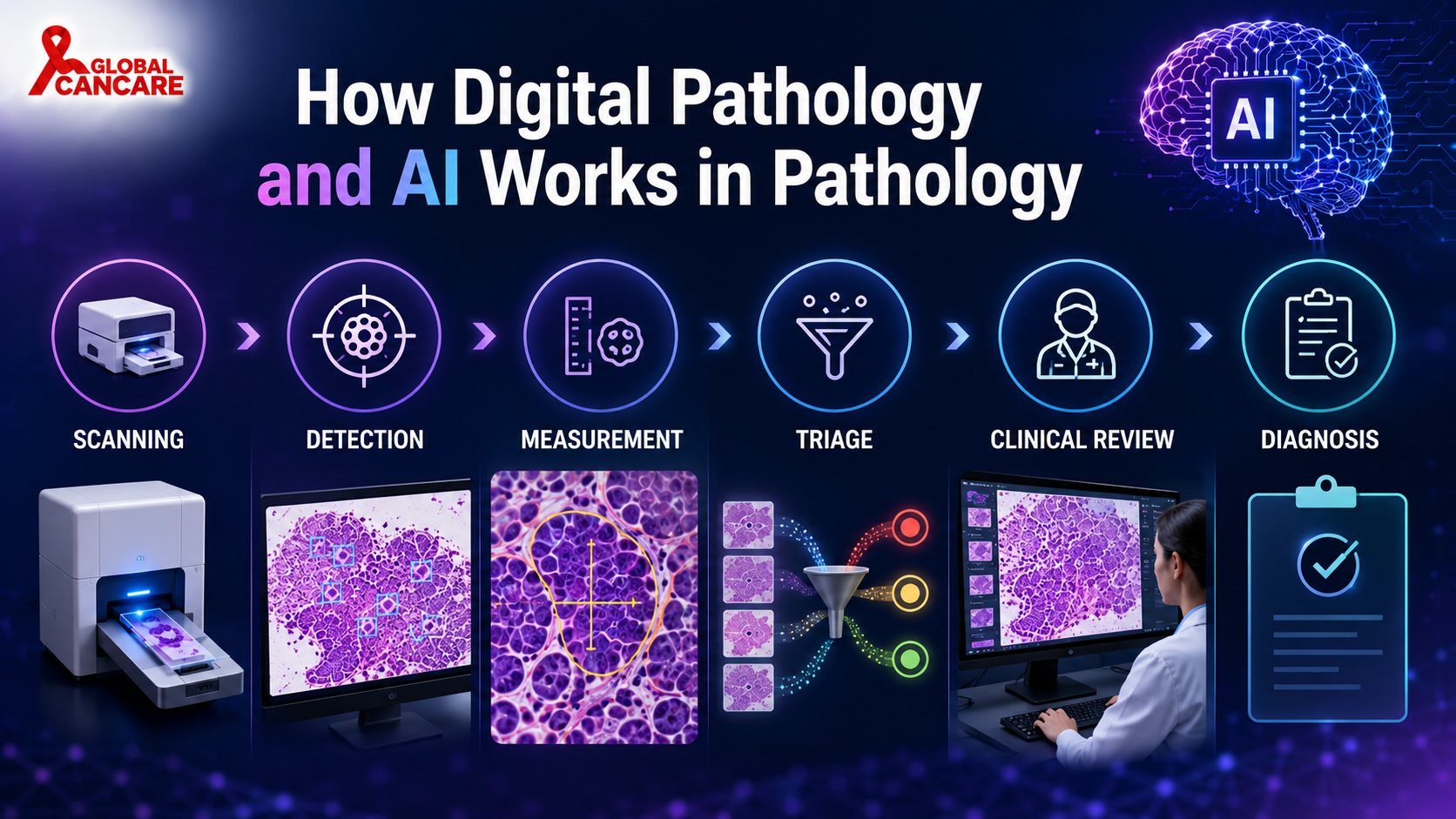
Step | What Happens |
|---|---|
Scanning | High-speed scanners convert glass slides into large digital files. |
Detection | Computer models identify abnormal cells, tissue patterns, or possible tumour margins. |
Measurement | Software can count cells and assist with scoring selected markers. |
Triage | Digital systems can help prioritise cases that may require earlier review. |
Clinical Review | A qualified pathologist reviews the images and makes the final diagnosis. |
This workflow shows why Digital Pathology and AI should be viewed as a clinical support system rather than a replacement for trained pathologists.
AI-Assisted Pathology and Cancer Diagnosis
AI-assisted pathology can analyse digital tissue images at a scale that would be difficult to achieve manually. Machine-learning algorithms can be trained to recognise patterns associated with particular diseases or tissue characteristics.
For example, AI may assist in identifying suspicious areas, measuring tumour-related features, counting cells, or supporting the assessment of specific biomarkers. In some settings, it can also help pathologists find small or subtle abnormalities that deserve closer attention.
However, performance depends on the algorithm, image quality, patient population, and clinical application. AI outputs must therefore be evaluated by qualified professionals and used within appropriate clinical and regulatory frameworks.
Main Benefits of Digital Pathology and AI
The adoption of Digital Pathology can improve more than diagnosis alone. It can also change how pathology departments organise their daily work.
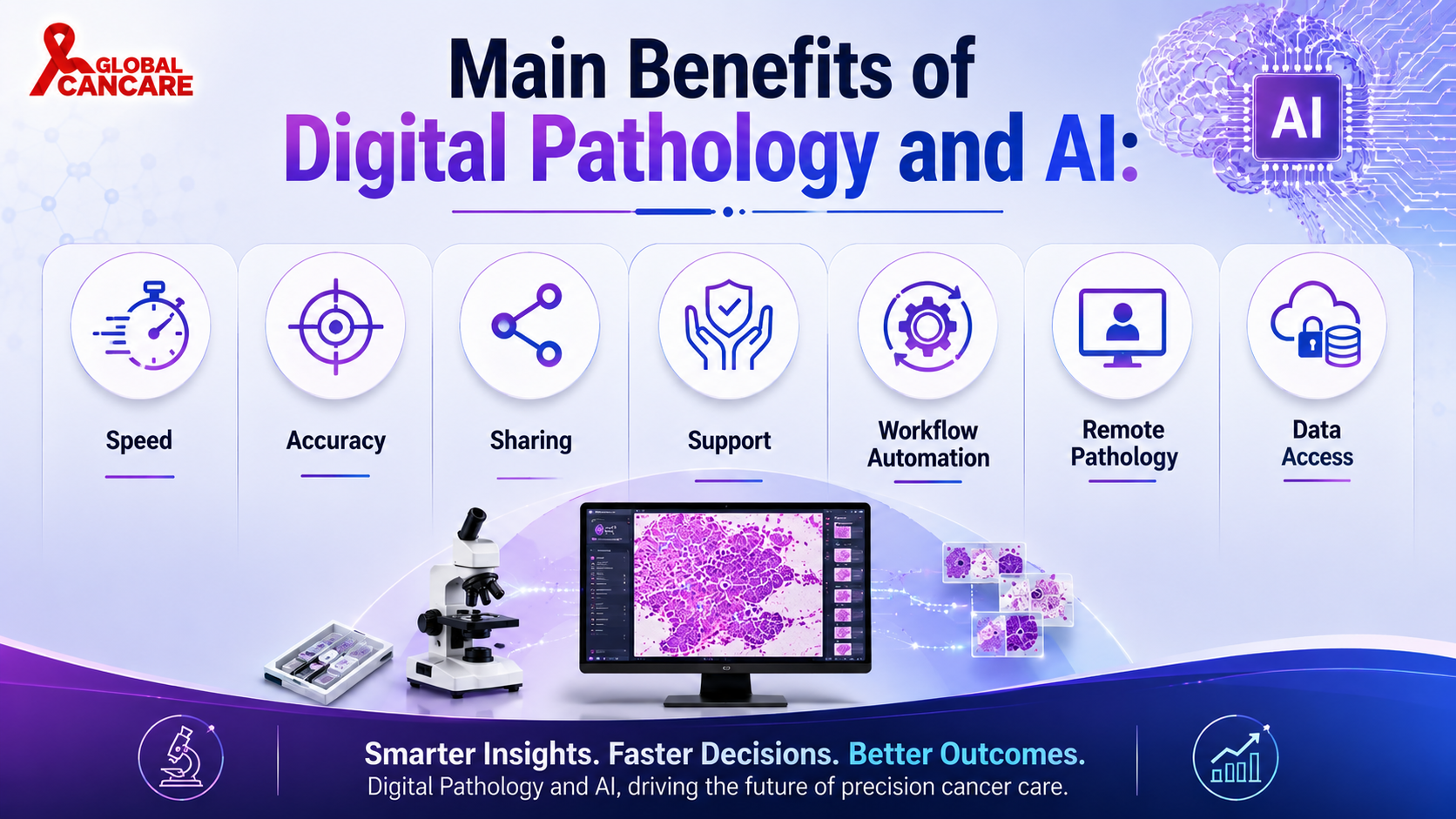
Main Benefit | Potential Value |
|---|---|
Speed | Reduces the time needed to review complex digital slides. |
Accuracy | Supports consistent measurements and may reduce variation between assessments. |
Sharing | Allows specialists in different locations to review the same slide digitally. |
Support | Helps identify patterns or areas that may be difficult to notice during manual review. |
Workflow Automation | Automates selected repetitive tasks such as counting and image analysis. |
Remote Pathology | Makes specialist consultation possible across hospitals and geographical boundaries. |
Data Access | Creates searchable digital records that can support research and clinical review. |
The result is a pathology environment where technology can support professionals while making the diagnostic process more connected and efficient.
Whole-Slide Imaging Enables Remote Pathology
One of the most important developments in Digital Pathology is remote pathology. Once a slide has been scanned, an authorised specialist can potentially review the digital image from another location.
This can be especially valuable when a hospital does not have access to a particular subspecialist. A complex case can be digitally shared with an expert for a second opinion or multidisciplinary discussion.
Remote access can also support teaching, research, quality assurance, and collaboration between hospitals. However, healthcare providers must address cybersecurity, data protection, image storage, network capacity, and regulatory requirements before implementing these systems.
Precision Diagnostics: From Images to Better Decisions
The real promise of Digital Pathology and AI lies in its contribution to precision diagnostics. Cancer is not one disease. Even tumours that look similar under a microscope can behave differently because of their molecular and genetic characteristics.
Digital pathology can connect tissue images with other clinical and molecular information. AI may then help identify relationships between visual patterns and disease characteristics.
Over time, the integration of pathology, molecular diagnostics, medical imaging, and clinical data could help doctors develop increasingly personalised treatment strategies.
Global CanCare and the Future of AI-Enabled Diagnostics
Building a modern pathology service requires more than purchasing a scanner or AI software. Hospitals need appropriate infrastructure, digital workflows, data management, trained teams, equipment integration, and long-term technical support.
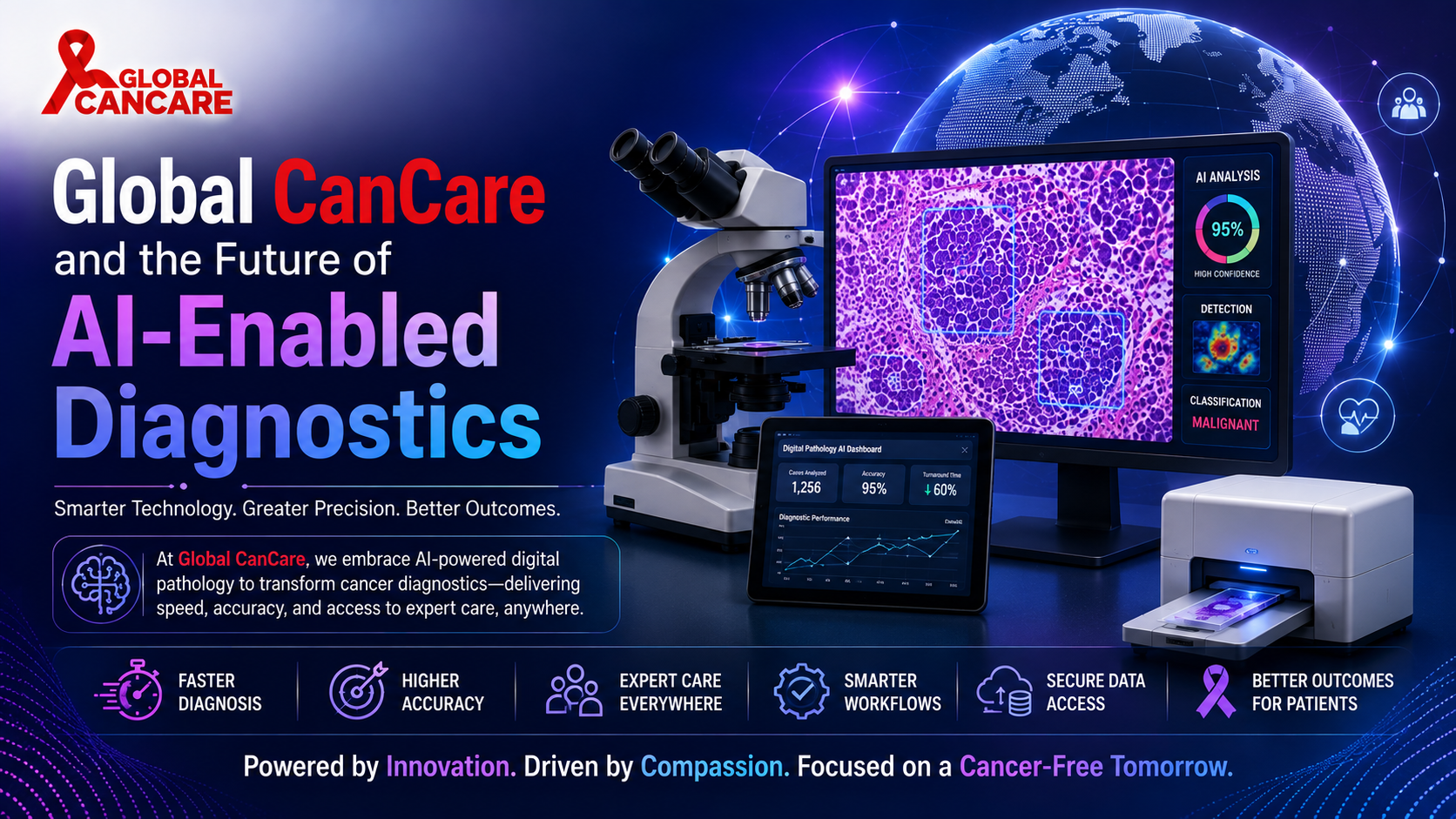
Global CanCare Pvt. Ltd. is developing its AI Imaging and broader healthcare technology capabilities as part of an integrated ecosystem. Its areas of expertise include medical imaging, oncology, radiotherapy, nuclear medicine, medical physics, clinical research, healthcare infrastructure, project management, installation, and technology integration.
This wider perspective can help healthcare institutions approach Digital Pathology as part of a connected diagnostic ecosystem rather than as an isolated technology.
For hospitals looking to introduce AI-enabled diagnostics, the focus should be on creating a practical environment where technology, clinical expertise, infrastructure, and patient safety work together.
The Future of Digital Pathology and AI
The evolution of Digital Pathology and AI is still underway. Future systems may combine whole-slide images with genomic data, clinical records, radiology images, and other information to provide a more complete picture of each patient's disease.
At the same time, better algorithms, stronger validation, improved scanners, and secure digital infrastructure will help expand the clinical use of AI.
The goal isn't to remove the human pathologist from cancer diagnosis. It is to give specialists better tools to analyse information, collaborate with colleagues, manage growing workloads, and make informed decisions.
For cancer care, that could mean a future where diagnosis becomes faster, more connected, and increasingly precise.
Frequently Asked Questions
1. What is Digital Pathology?
Digital Pathology is the process of scanning glass microscope slides into high-resolution digital images that can be viewed, stored, shared, and analysed electronically.
2. What is Digital Pathology and AI?
Digital Pathology and AI combines whole-slide imaging with artificial intelligence to help analyse tissue images. AI can assist with tasks such as cell detection, counting, tissue assessment, and identifying suspicious patterns.
3. Can AI replace pathologists?
No. AI is primarily a decision-support technology. Qualified pathologists remain responsible for interpreting findings and making clinical diagnoses.
4. What is whole-slide imaging?
Whole-slide imaging uses specialised scanners to create a complete digital version of a glass pathology slide at high resolution.
5. How does AI-assisted pathology help hospitals?
It can support image analysis, workflow automation, case prioritisation, quantitative measurements, and collaboration between specialists.
6. What is remote pathology?
Remote pathology allows authorised healthcare professionals to review digital pathology slides from different locations, supporting consultations and second opinions.
7. What is precision diagnostics?
Precision diagnostics uses detailed information about a patient's disease—including tissue, molecular, imaging, and clinical information—to support more personalised healthcare decisions.
8. How does Global CanCare support digital healthcare?
Global CanCare Pvt. Ltd. is developing capabilities across AI Imaging, medical imaging, oncology, radiotherapy, nuclear medicine, clinical research, medical physics, and turnkey healthcare infrastructure to support modern healthcare environments.
Sources
For strong EEAT and global credibility, link factual claims to authoritative sources:
College of American Pathologists – Digital and Computational Pathology:
https://www.cap.org/laboratory-improvement/accreditation/accreditation-checklistsU.S. Food & Drug Administration – Artificial Intelligence and Machine Learning:
https://www.fda.gov/medical-devices/software-medical-device-samd/artificial-intelligence-and-machine-learning-aiml-enabled-medical-devicesNational Cancer Institute – Pathology and Cancer Diagnosis:
https://www.cancer.govDigital Pathology Association:
https://digitalpathologyassociation.org/European Society of Pathology:
https://www.esp-pathology.org/
Global CanCare is helping bring together AI, imaging, healthcare infrastructure, and clinical technology to support the next generation of cancer diagnostics.
Planning a Cancer Care project?
Our specialists can scope equipment, shielding, licensing and staffing for your facility.
Talk to our team