
Lead-Free Apron
Lead Apron vs Lead-Free Apron: Radiation Shielding Solutions | Global CanCare
Compare lead apron and lead-free apron radiation shielding, including benefits, limitations, protection considerations and Global CanCare's radiation-shielding solutions.
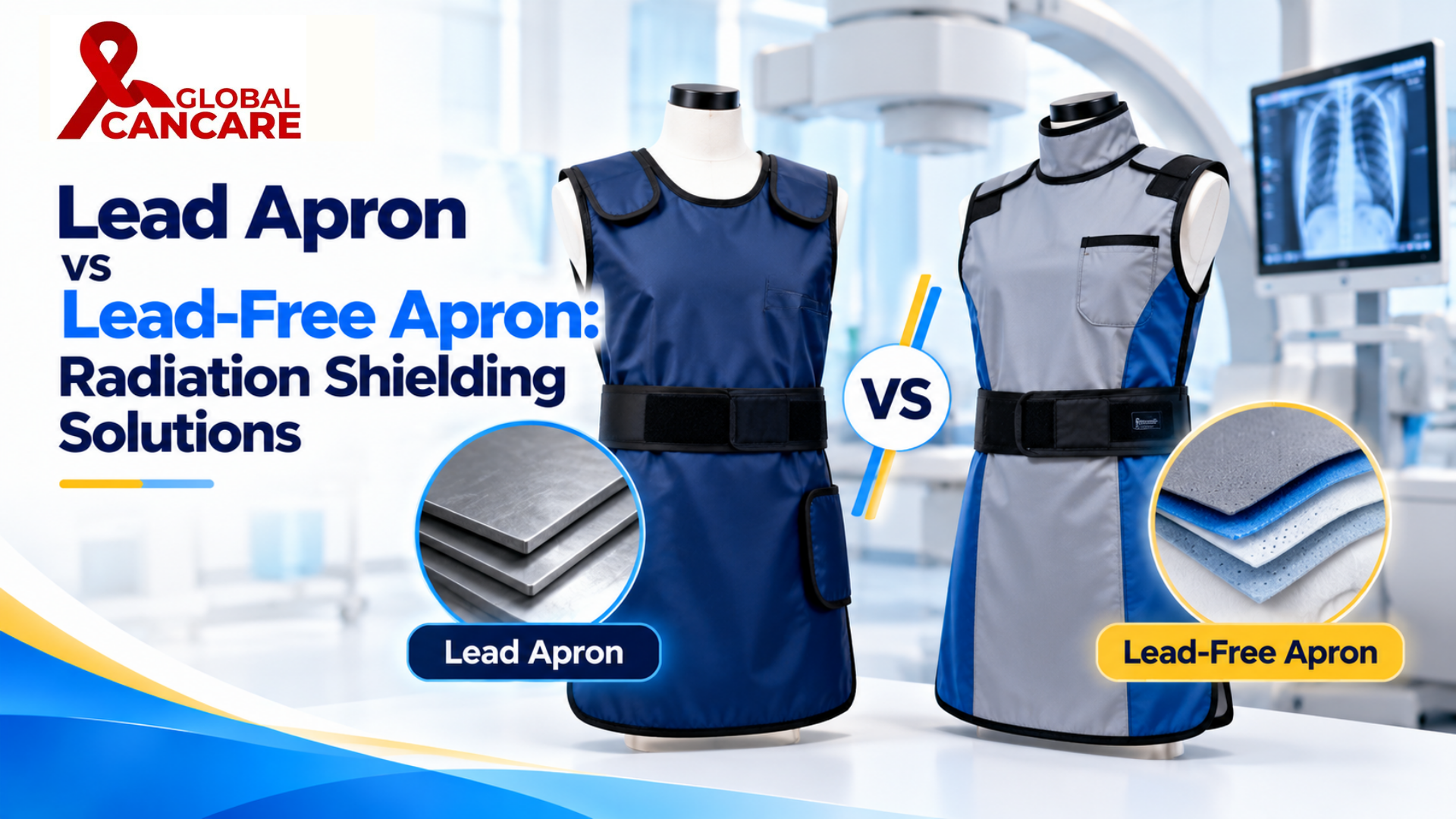
Why Radiation Shielding Matters in Healthcare
Radiation shielding is an important part of protecting healthcare professionals and patients during procedures involving X-rays and other sources of ionising radiation. In radiology, dental imaging, interventional procedures and related clinical settings, a properly selected protective apron can help reduce occupational exposure when used as part of a wider radiation-safety programme.
Global CanCare Pvt. Ltd. supports healthcare providers with radiation-shielding solutions, including lead-free aprons, helping facilities explore protective equipment suited to their clinical workflows. Choosing between a traditional lead apron and a lead-free alternative requires consideration of protection, weight, comfort, durability and the type of procedure being performed.
What Is a Lead Apron?
A lead apron is a protective garment containing lead or lead-based shielding material. Lead is effective at attenuating diagnostic X-rays, helping reduce radiation exposure to covered parts of the body when the apron is appropriately selected and used.
Lead aprons are widely used in settings such as fluoroscopy, interventional radiology and other procedures where staff may be exposed to scattered radiation. Their effectiveness depends on factors such as lead equivalence, garment coverage, correct fit and the radiation conditions involved.
However, lead is a dense material. Traditional aprons can be heavy, and repeated use may contribute to discomfort or musculoskeletal strain. They also require proper storage, regular inspection and replacement if shielding material becomes damaged.
Lead Apron: Advantages and Disadvantages
Advantages | Disadvantages |
|---|---|
Lead is an established material for attenuating diagnostic X-rays. | The garment may be heavy, particularly during long procedures. |
Available in different protective designs and lead-equivalence ratings. | Prolonged wear may contribute to back, shoulder or neck discomfort. |
Widely used across medical imaging and interventional settings. | Requires suitable storage to avoid folds and damage. |
Protection can be assessed using established inspection practices. | Cracks or damage to the shielding layer may reduce protective performance. |
What Is a Lead-Free Apron?
A lead-free apron uses alternative shielding materials instead of conventional lead. Depending on the product, these may include combinations of elements such as bismuth, tungsten, antimony or other materials designed to attenuate X-rays.
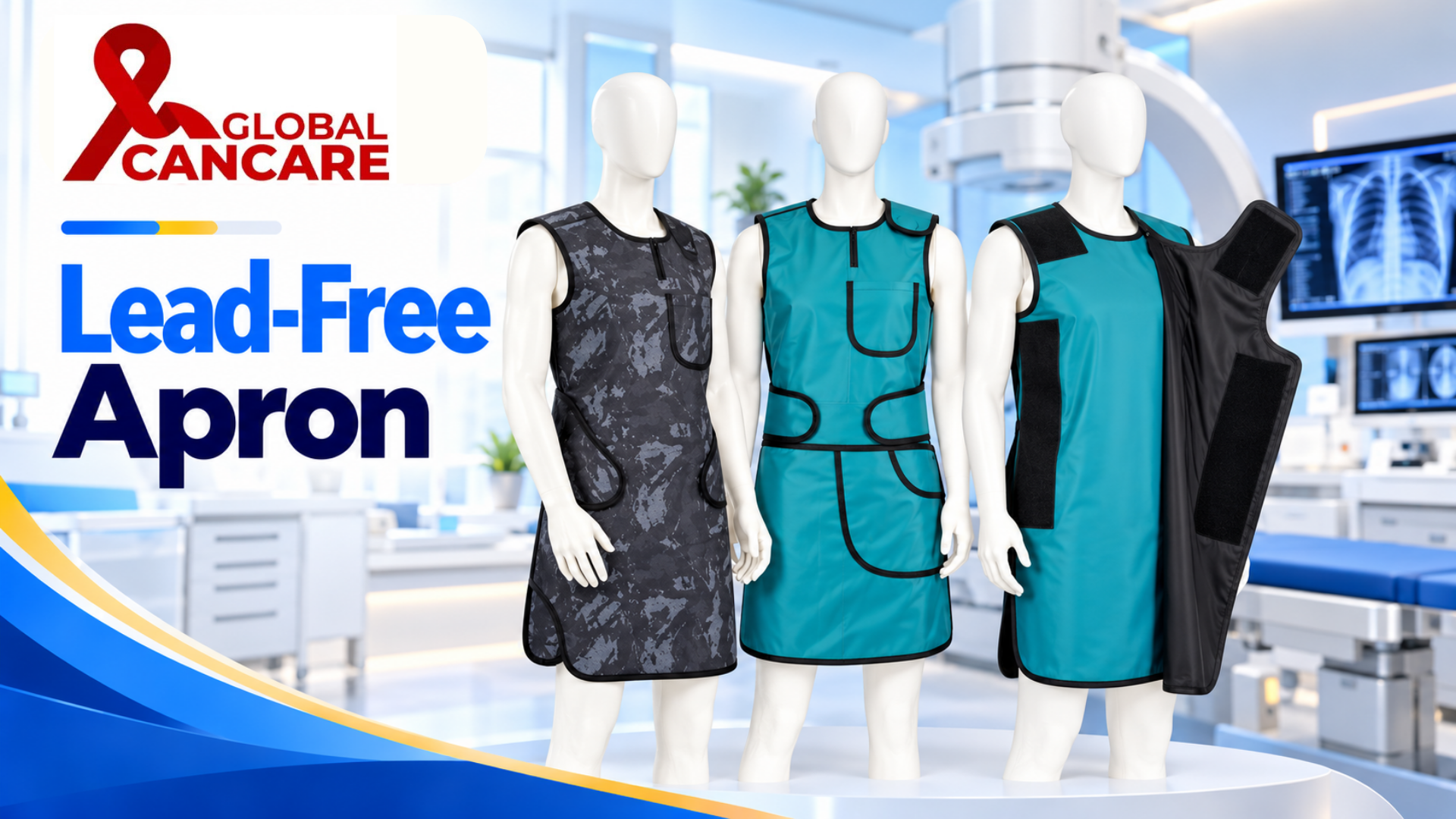
Lead-free does not mean radiation-free, nor does it automatically mean lighter or more protective. The performance and weight of an apron depend on its material composition, design, thickness, coverage and stated lead equivalence.
For healthcare facilities, the main appeal of a lead-free apron may be the opportunity to reduce reliance on conventional lead-based materials while maintaining suitable radiation protection. Product specifications and test documentation should be reviewed before selection.
Lead-Free Apron: Advantages and Disadvantages
Advantages | Disadvantages |
|---|---|
Avoids conventional lead as the primary shielding material. | Performance varies by material composition and product design. |
Some designs may offer improved comfort or reduced weight. | Not every lead-free apron is lighter than every lead apron. |
Can support facilities seeking alternatives to lead-based materials. | Purchase cost and availability may vary. |
May be suitable for clinical workflows when protection requirements are met. | Requires verification of protective performance and lead equivalence. |
Lead Apron vs Lead-Free Apron: How Should Hospitals Choose?
The right radiation shielding apron depends on the clinical environment and the protection required. Hospitals should compare the manufacturer's attenuation data, stated lead equivalence, garment coverage, weight, fit, durability, cleaning requirements and applicable safety standards.
A lighter apron can improve comfort, but comfort alone does not establish protective performance. Equally, a lead-free label does not guarantee superior shielding. Facilities should select products supported by appropriate test documentation and ensure that staff receive training on correct use, inspection and storage.
Aprons are also only one part of radiation protection. Appropriate equipment settings, distance, time, barriers, procedural techniques and local radiation-safety protocols remain essential.
How Global CanCare Supports Radiation Shielding
Global CanCare Pvt. Ltd. works across healthcare technology and infrastructure, including its Global Radiation Shielding vertical. Its focus includes radiation-shielding solutions for healthcare environments, with lead-free aprons forming part of the protective-equipment discussion for facilities seeking alternatives to conventional lead-based garments.
For hospitals, diagnostic centres and imaging departments, choosing suitable protective equipment is part of building a consistent radiation-safety programme. Global CanCare can help healthcare organisations enquire about available radiation-shielding solutions and assess product options according to their operational needs.
Explore Global CanCare's Global Radiation Shielding solutions or contact Global CanCare for product information and enquiries.
Frequently Asked Questions
1. Is a lead-free apron as effective as a lead apron?
It can provide appropriate protection when the specific product has suitable, verified attenuation performance for the intended application. Compare its test data and lead equivalence rather than relying on the label alone.
2. Is a lead-free apron always lighter?
No. Weight depends on the material, thickness, size and design. Check the product's stated weight and protective specifications.
3. Why is radiation shielding important?
It helps reduce unnecessary exposure to ionising radiation when used correctly within a broader radiation-protection programme.
4. Where can hospitals enquire about lead-free aprons?
Healthcare providers can contact Global CanCare to ask about its radiation-shielding solutions and product availability.
External Sources
Conclusion
Choosing between a lead apron and a lead-free apron requires more than comparing materials. Healthcare providers should assess verified shielding performance, weight, comfort, durability, fit and the demands of their clinical environment.
Global CanCare Pvt. Ltd. supports the wider radiation-shielding ecosystem by helping healthcare facilities explore protective-equipment solutions, including lead-free aprons. The priority is to select appropriate, verified protection that supports staff safety and practical day-to-day clinical use.
Planning a Cancer Care project?
Our specialists can scope equipment, shielding, licensing and staffing for your facility.
Talk to our team