
National Cancer Awareness Day
National Cancer Awareness Day in India: The Radiotherapy Gap, in Numbers
National Cancer Awareness Day in India, understand the radiotherapy access gap, government cancer-control efforts, and how stronger cancer-centre
7 November: Why Cancer Awareness Must Lead to Better Access
Every year, National Cancer Awareness Day in India is observed on 7 November to encourage people to understand cancer, recognise possible warning signs, seek timely medical advice, and learn about prevention and treatment. Known in Hindi as राष्ट्रीय कैंसर जागरूकता दिवस, the day is a reminder that awareness must lead to action.
For Global CanCare Pvt. Ltd., cancer awareness also means drawing attention to an important healthcare challenge: access to diagnosis and treatment. India needs not only greater public awareness but also stronger cancer-care infrastructure, including more accessible radiotherapy centres in India, trained professionals, imaging facilities, and properly designed treatment spaces.
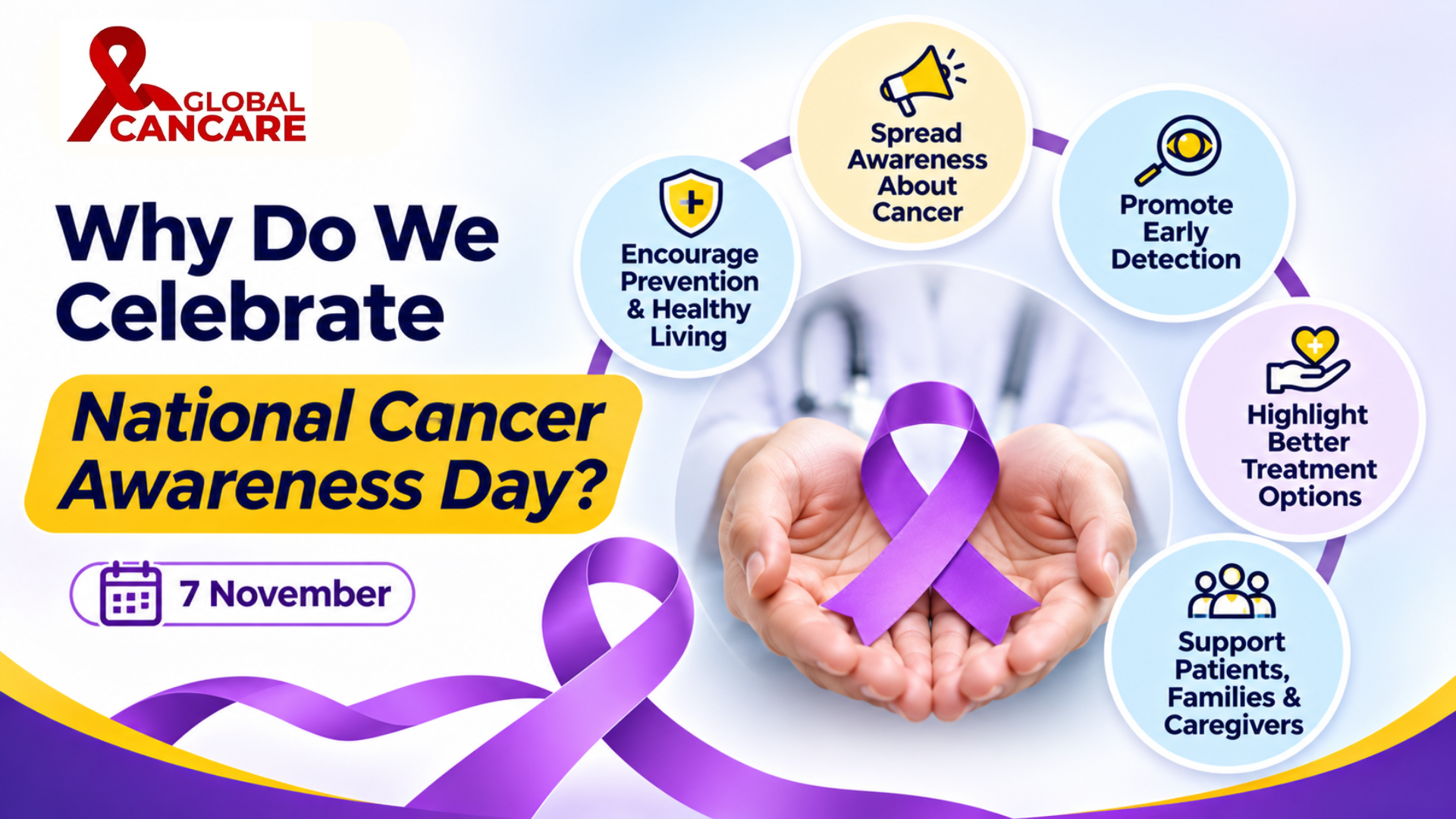
Why Do We Celebrate National Cancer Awareness Day?
Why do we celebrate National Cancer Awareness Day? The purpose is to improve public understanding of cancer, encourage early medical consultation, promote prevention, and reduce the fear and stigma that can delay care.
People should know that cancer is not one disease. Its symptoms, risk factors, diagnosis, and treatment differ according to the cancer type. Tobacco use, harmful alcohol consumption, unhealthy diets, physical inactivity, certain infections, and environmental exposures contribute to cancer risk.
Awareness also helps people understand that some cancers can be prevented, some can be detected early, and many can be treated. Persistent or unusual symptoms should be discussed with a qualified healthcare professional rather than ignored or self-diagnosed.
India's Radiotherapy Gap: Understanding the Numbers
Radiotherapy is an essential part of cancer treatment. It uses carefully planned radiation to destroy cancer cells or control tumour growth. It may be used on its own or alongside surgery, chemotherapy, immunotherapy, and other treatments, depending on the patient's condition.
The International Atomic Energy Agency (IAEA) has often used a planning benchmark of approximately one megavoltage radiotherapy machine per one million people. Applied to India's population of more than 1.4 billion, this suggests a broad planning requirement of around 1,400 machines.
This is a planning benchmark, not a statement that every district needs a machine or that one machine can meet every local treatment need. Actual requirements depend on cancer burden, treatment demand, machine capacity, staffing, geography, and referral networks. The current number of operational machines and centres should be checked against the latest IAEA DIRAC database and Indian government or regulatory records before quoting a national shortfall.
Planning consideration | Why it matters in India |
|---|---|
Population | A large population creates substantial demand for cancer services. |
Radiotherapy capacity | Machine numbers and treatment capacity influence patient access. |
Geographic distribution | Patients may need to travel long distances to reach a treatment centre. |
Workforce | Radiation oncologists, medical physicists and radiation therapists are essential. |
Infrastructure | Bunkers, power supply, imaging, safety systems and maintenance affect operations. |
The gap is therefore not just about the number of machines. It is also about where facilities are located, whether they are operational, and whether patients can access complete treatment services.
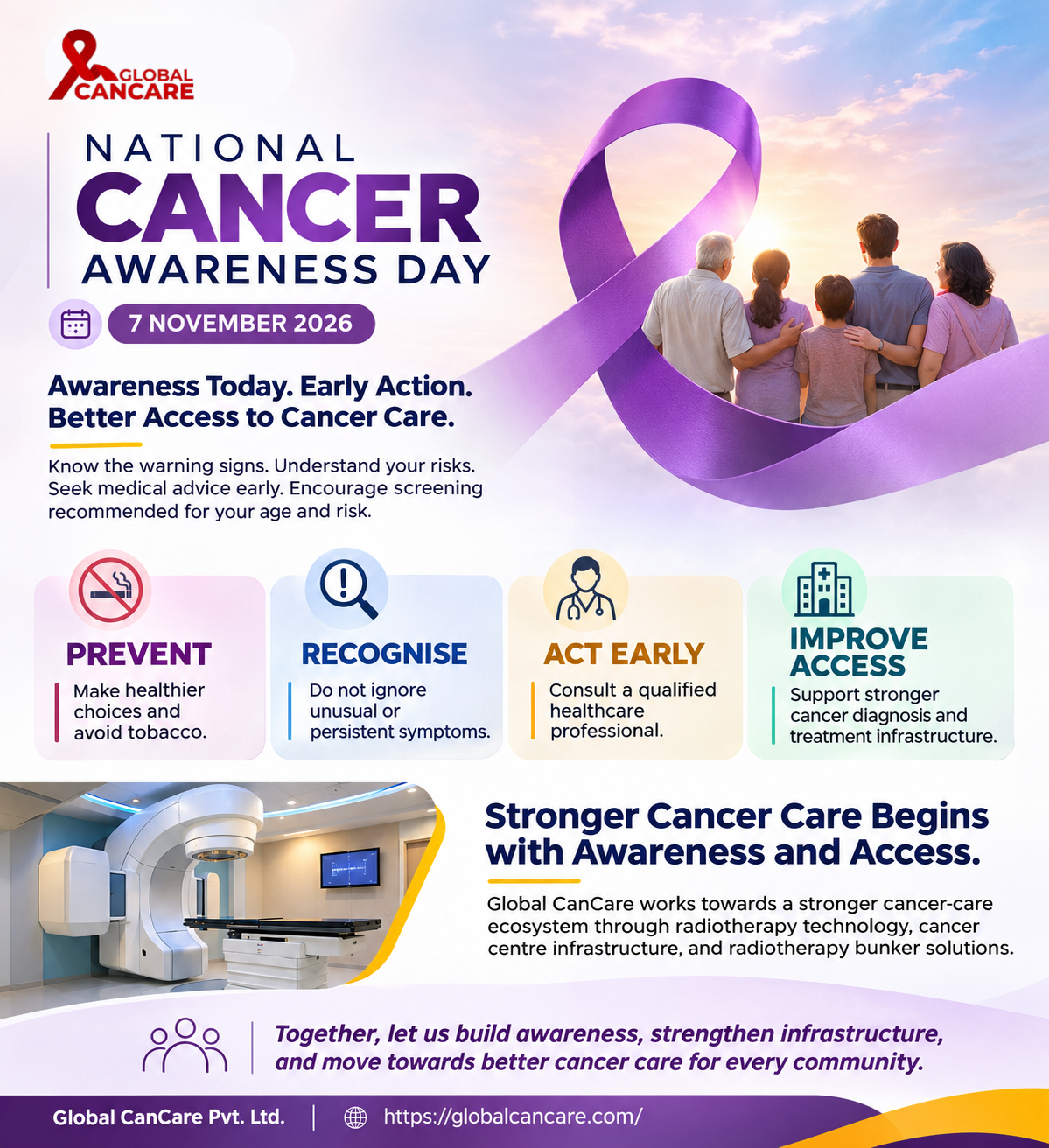
National Cancer Awareness Day 2026 Poster
What Is the Government of India Doing for Cancer Awareness?
India's public cancer-control efforts include prevention, screening, early detection, treatment services, and health education. The National Programme for Prevention and Control of Non-Communicable Diseases (NP-NCD) supports action on major non-communicable diseases, including cancer.
Under population-based screening through the public health system, people aged 30 years and above are targeted for screening for common conditions, including oral, breast, and cervical cancers. These services are linked with primary healthcare facilities, including Ayushman Arogya Mandirs. The appropriate screening method depends on the cancer type and applicable government guidelines.
Government health communication also promotes tobacco control, healthy lifestyles, awareness of warning signs, and timely referral. For the latest programme guidelines, screening coverage, budgets, and facility updates, readers should consult the Ministry of Health and Family Welfare and official Press Information Bureau releases.
Importantly, population-based screening for oral, breast, and cervical cancer should not be confused with a universal national lung cancer screening programme. People should follow screening advice relevant to their age, risk, and medical history.
Why Cancer Centre Setup and Radiotherapy Bunkers Matter
Expanding radiotherapy access requires coordinated infrastructure. A cancer centre needs suitable treatment equipment, a properly designed radiotherapy bunker, imaging and treatment-planning systems, radiation safety arrangements, trained staff, reliable utilities, commissioning, and long-term maintenance.
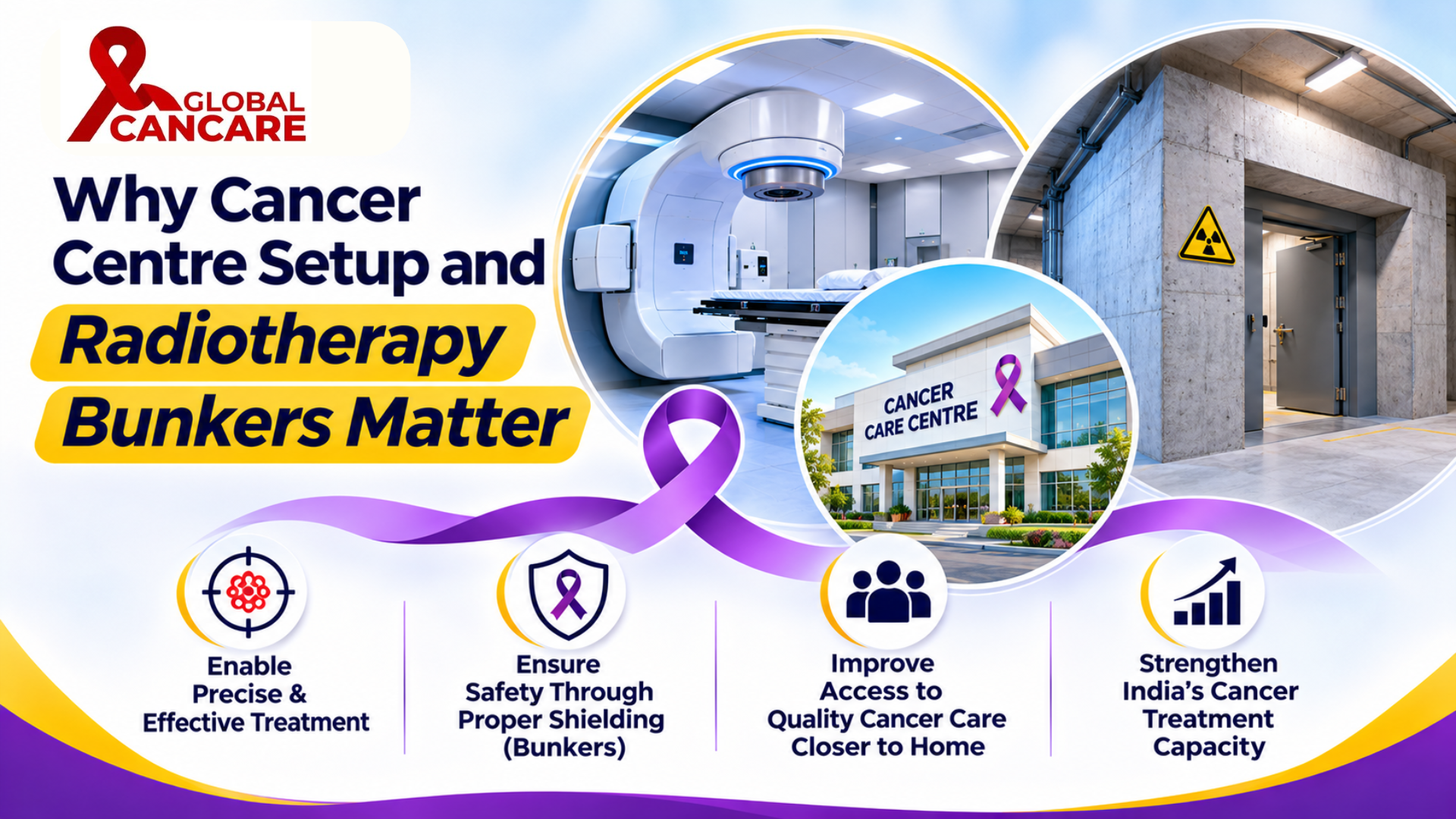
The bunker is particularly important because it provides the shielding required for safe radiotherapy operations. Its design must be based on the selected equipment, radiation energy, workload, room layout, surrounding occupancy, and applicable regulatory requirements.
Global CanCare Pvt. Ltd. works across cancer-care technology and infrastructure, including radiotherapy equipment, cancer centre setup, medical imaging, project implementation, and radiotherapy bunker solutions. Through The Bunker Company, Global CanCare highlights the importance of purpose-planned radiotherapy infrastructure as part of wider cancer-care development.
Hospitals and healthcare organisations can also explore the company's cancer infrastructure and healthcare ecosystem.
How Global CanCare Spreads Cancer Awareness
Cancer awareness is not limited to a single day. It involves sharing understandable health information, encouraging timely medical consultation, explaining available diagnostic and treatment pathways, and helping communities recognise the importance of accessible cancer services.
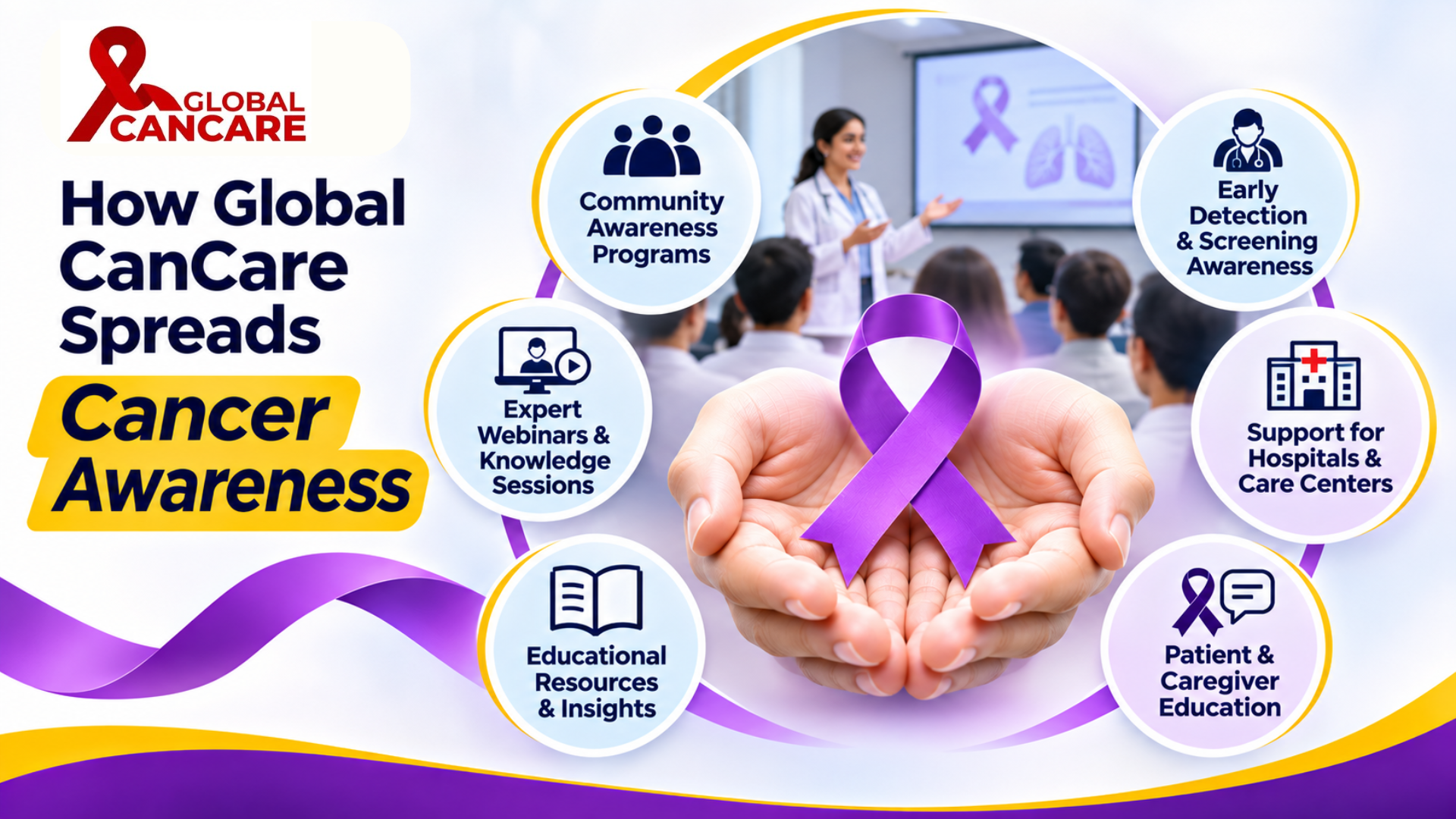
Global CanCare supports this wider conversation by highlighting cancer-care needs, radiotherapy infrastructure, medical technology, and the role of properly planned treatment facilities. Awareness and infrastructure must move together: people need to know when and where to seek care, while healthcare systems need the capacity to provide it.
Frequently Asked Questions
1. When is National Cancer Awareness Day in India?
It is observed every year on 7 November.
2. What is National Cancer Awareness Day in Hindi?
It is called राष्ट्रीय कैंसर जागरूकता दिवस.
3. Why do we celebrate National Cancer Awareness Day?
To improve cancer awareness, encourage prevention and early detection, reduce stigma, and promote timely access to medical care.
4. How many radiotherapy centres are there in India?
The exact number changes as facilities are commissioned, upgraded, or become non-operational. Check the latest IAEA DIRAC database and official Indian records for a current count.
5. Why are radiotherapy bunkers important?
They provide the radiation shielding needed for safe operation of radiotherapy equipment. Their design must meet equipment-specific and regulatory requirements.
Authoritative Sources
Conclusion
National Cancer Awareness Day in India is a reminder that cancer awareness must go beyond sharing information. Prevention, early detection, timely referral, trained professionals, and accessible treatment facilities all play an important role.
India's radiotherapy challenge should be understood through both capacity and access: the number of machines matters, but so do their location, staffing, safety infrastructure, and ability to serve patients reliably.
Through its work in cancer-care technology, cancer centre setup, and radiotherapy bunker infrastructure, Global CanCare Pvt. Ltd. supports the broader effort to strengthen India's cancer-care ecosystem. Because awareness can encourage people to seek help, but accessible infrastructure helps turn that decision into treatment.
Planning a Cancer Care project?
Our specialists can scope equipment, shielding, licensing and staffing for your facility.
Talk to our team