
RT People
Oncology Workforce Shortage: How Countries Are Training RT Technologists Faster
The oncology workforce shortage is deepening across every region, and the pace of training is struggling to keep up with the pace of cancer.
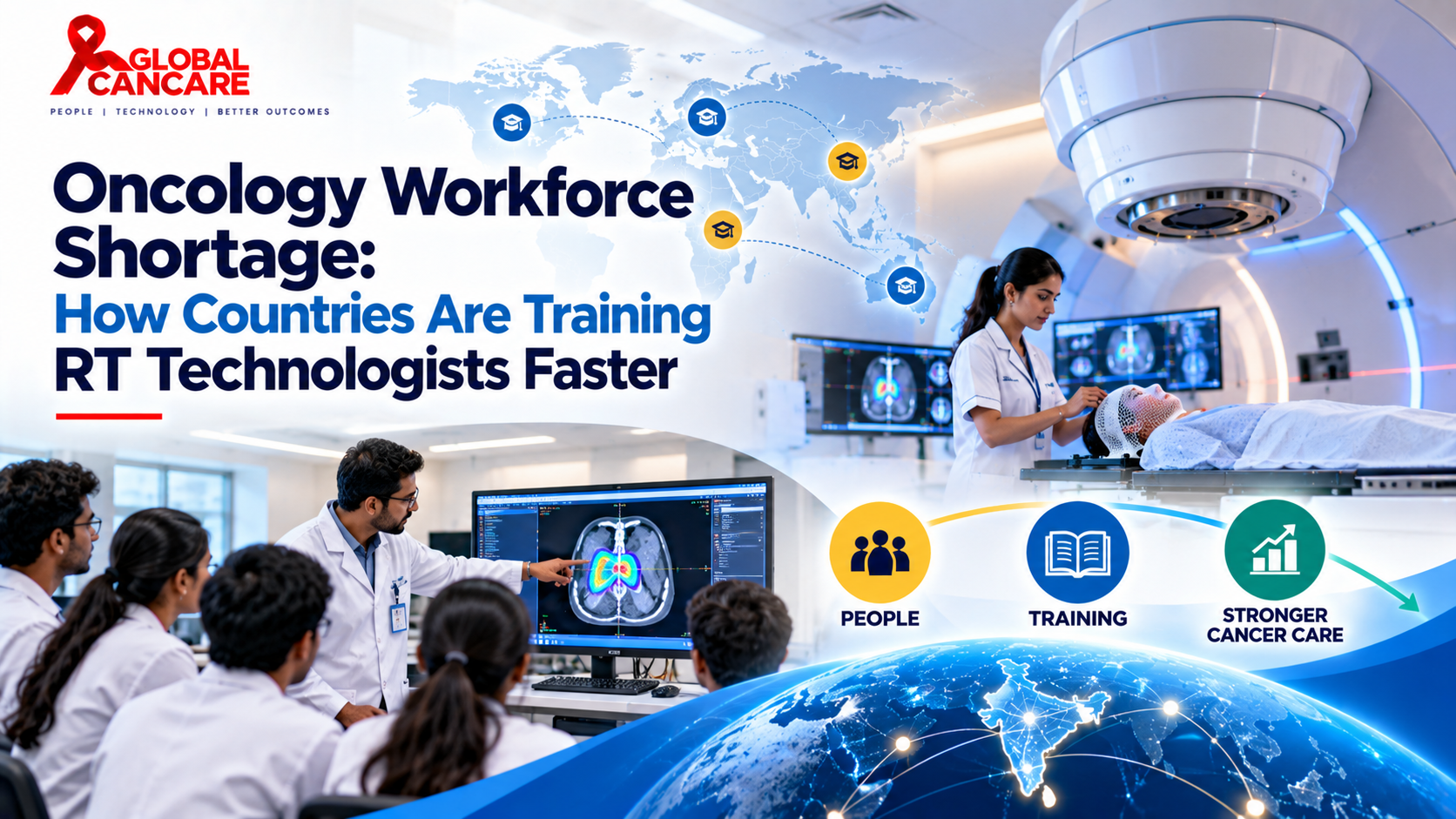
Introduction oncology workforce shortage: There is a quiet crisis running parallel to the rise in global cancer cases — and it has nothing to do with equipment or technology. It is about people. Specifically, the trained radiation therapy technologists, medical physicists, and dosimetry specialists without whom the most advanced radiotherapy equipment in the world simply cannot function.
The oncology workforce shortage is deepening across every region, and the pace of training is struggling to keep up with the pace of cancer. Global CanCare is one of the organisations working directly to close this gap — through its specialist radiation oncology staffing and workforce development arm, RT People.
Oncology Workforce Shortage The Scale of the Problem
The Lancet Oncology Commission's 2026 report on cancer workforce projects a global shortage of approximately 3.1 million radiologic technologists and technicians by 2050, with Africa and Asia absorbing the overwhelming majority of that deficit. A 75% increase in global cancer incidence is projected over the same period — translating to approximately 35 million new cancer cases annually by 2050, with over 70% occurring in low- and middle-income countries.
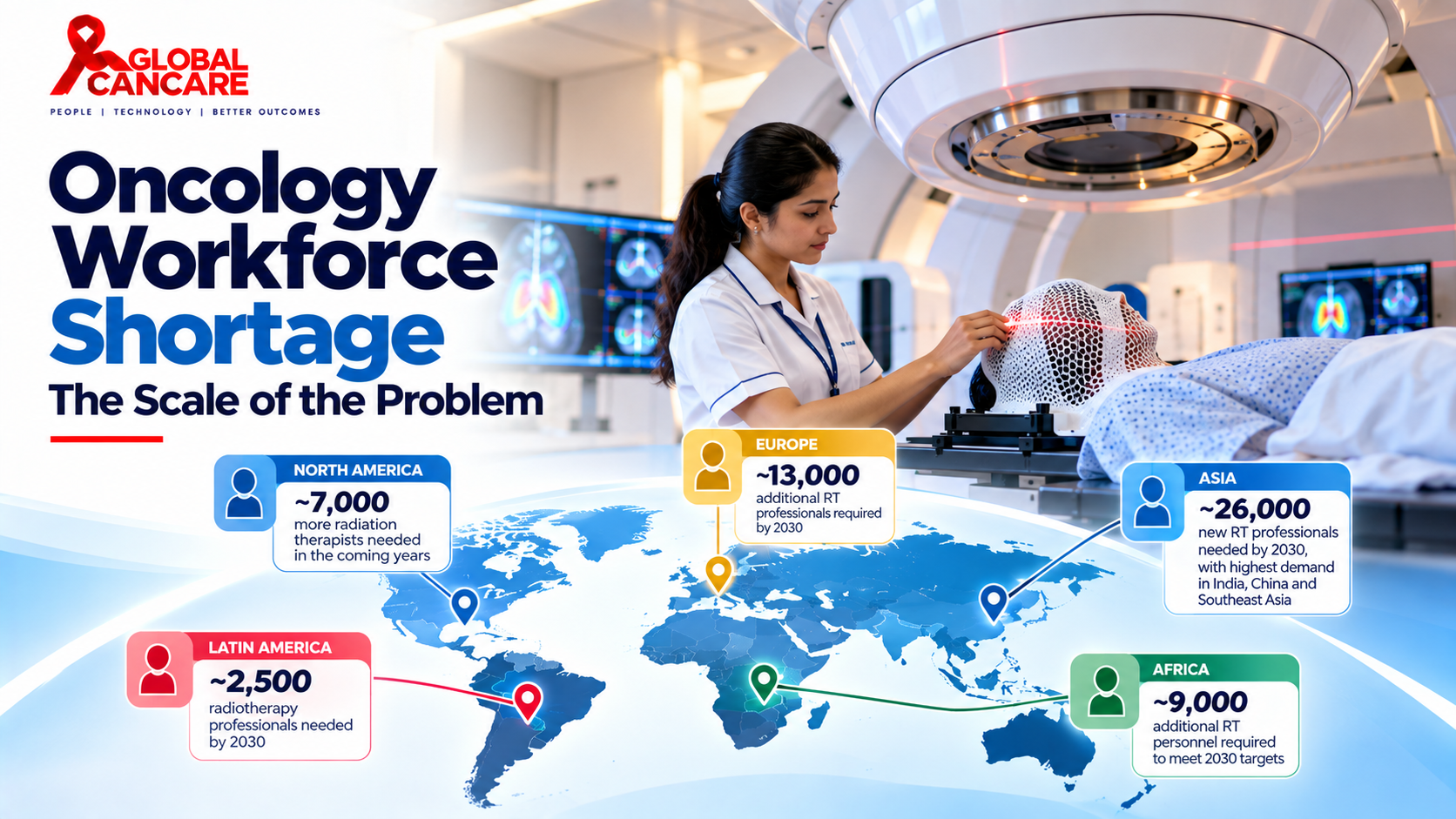
The radiation therapy technologist shortage is not a future risk. It is operational today. The Royal College of Radiologists' Clinical Oncology Workforce Census 2025 found that 9 in 10 UK cancer leaders report delays in starting radiotherapy or chemotherapy because of workforce gaps — and that every month of delay in beginning cancer treatment increases the risk of death by approximately 10%. The UK's shortage of clinical oncologists, currently at 17%, is projected to reach 26% by 2030 without significant intervention.
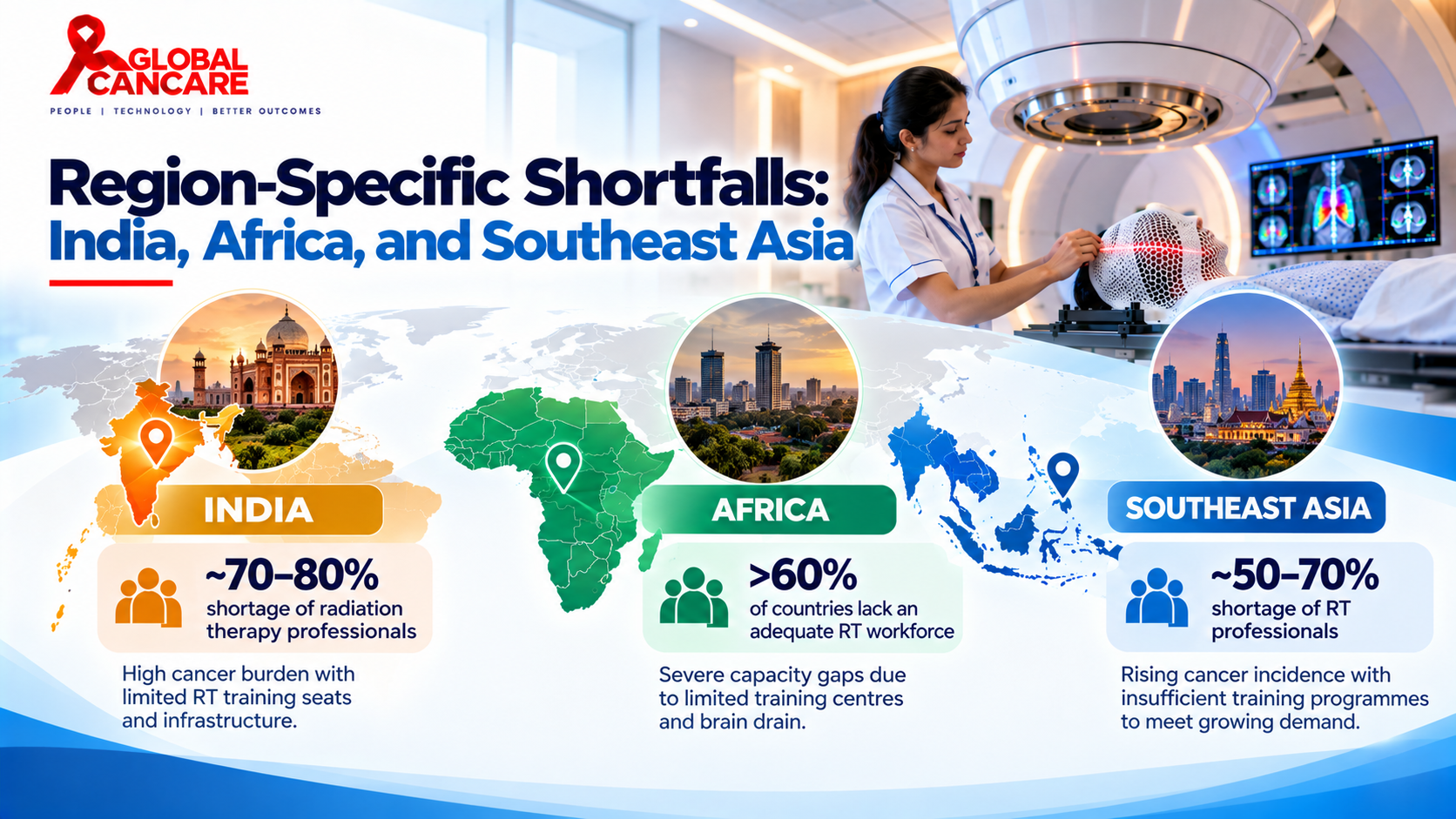
Region-Specific Shortfalls: India, Africa, and Southeast Asia
1. India
India's cancer burden is projected to rise from 1.6 million cases in 2025 to 2.1 million by 2035, intensifying pressure on an already under-resourced radiotherapy sector. A policy analysis published in JCO Global Oncology identifies workforce shortages exceeding 12,000 trained radiation oncology professionals as one of the primary barriers to expanding radiation therapy access. Radiation therapy remains underutilised and geographically uneven — concentrated in urban tertiary centres while rural populations go largely unserved.
2. Sub-Saharan Africa
The ASTRO international workforce report identifies Sub-Saharan Africa as facing one of the most critical radiation therapy technologist shortages in the world. The RT workforce in the region is so severely depleted that a greater than 200% increase would be needed just to give cancer patients access to radiotherapy at facilities with functioning equipment. Many African countries have no radiation therapy facilities at all — and in some, such as Nigeria, equipment is being purchased and new centres are opening despite there being no national RT training programme in place to staff them.
3. Southeast Asia
In the Philippines — a lower-middle-income country of 100 million people — there are only 113 radiation oncologists across 55 radiotherapy centres, according to a 2024 study published in JCO Global Oncology. Across the Asia-Pacific region, a shortage of qualified educators to teach radiation therapists compounds the training gap. The Lancet projects Asia will face a shortfall of approximately 389,000 radiologists by 2050. More than 40 countries across Asia and Africa do not have even a single trained radiation oncologist.
How Countries Are Responding: Accelerating RT Training Programs
The international response to the oncology workforce shortage is taking several practical forms.
The International Atomic Energy Agency (IAEA) has established structured RT training programmes through initiatives including AMPLE (Advanced Medical Physics Learning Environment), AFRONET (the African Radiation Oncology Network), and APRONET (the Asia Pacific Radiation Oncology Network) — all designed to support education and training in regions where formal training infrastructure is weakest.
India's JCO Global Oncology policy blueprint proposes AI-enabled remote treatment planning and South-South collaboration — specifically pairing Indian training institutions with counterparts in Africa and Southeast Asia to support technology transfer and joint training exchanges. The model draws on India's precedent in scaling vaccine and diagnostics manufacturing as a template for RT workforce development.
Across Europe and North America, the response has focused on streamlining credentialing pathways, expanding online and hybrid learning formats, and creating structured accelerated pathways for qualified workers from countries with surplus training capacity to fill roles in shortage markets.
How RT People by Global CanCare Addresses the Oncology Workforce Shortage
Understanding the depth of the oncology workforce shortage is one thing. Responding to it in a practical, facility-specific way is another — and this is where RT People, the specialist staffing and workforce development vertical of Global CanCare, plays a direct role.
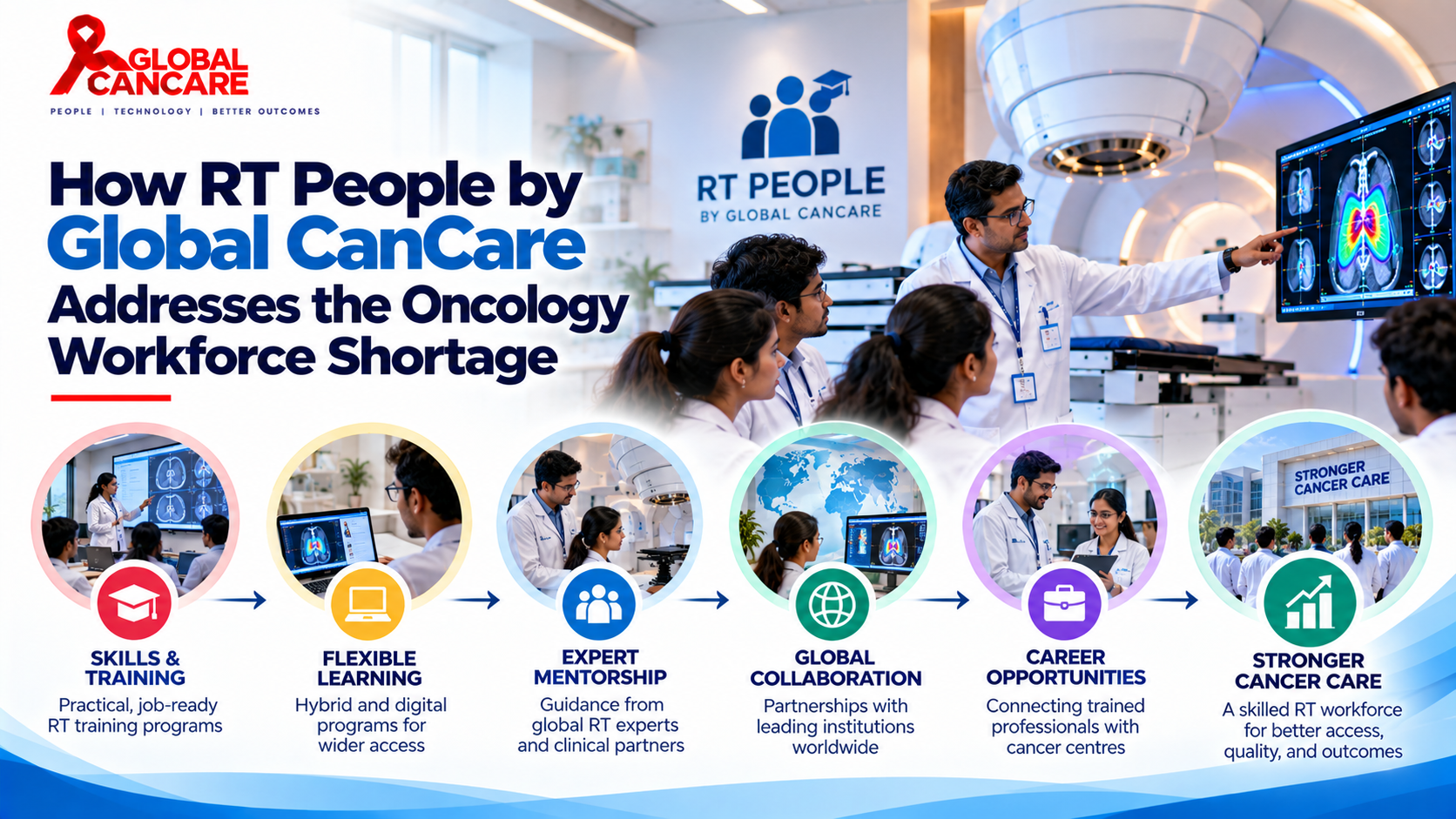
RT People connects hospitals, cancer centres, and new radiotherapy facilities with qualified radiation oncology professionals across every major staffing category — radiotherapy technologists, radiation therapists, medical physicists, dosimetry specialists, nuclear medicine professionals, and specialist technical personnel. Whether a centre is building its team from the ground up, replacing a key specialist, or scaling capacity ahead of a new treatment programme, RT People provides end-to-end recruitment support matched to the facility's clinical and regulatory context.
This includes navigating the certification requirements that vary by country — the AERB in India, the ABR in the United States, HCPC registration with IPEM approval in the United Kingdom — and sourcing candidates who are pre-vetted against these standards. For new centres or those expanding into advanced techniques such as IMRT and IGRT, RT People also supports structured training and workforce development programmes that help existing teams master new technologies.
The staffing shortage in radiation oncology cannot be resolved by equipment procurement alone. Every new LINAC, every new treatment bunker, every new cancer centre requires a team of trained, credentialed professionals to operate it. RT People ensures that team is in place — aligned with go-live timelines and built for the long-term demands of the service.
To explore staffing solutions for your cancer centre, visit globalcancare.com/ecosystem/rt-people or contact the Global CanCare team at globalcancare.com.
Frequently Asked Questions
1. What is causing the oncology workforce shortage in radiation therapy?
The oncology workforce shortage in radiation therapy is driven by three overlapping factors: rapidly rising cancer incidence globally (a projected 75% increase by 2050), insufficient training infrastructure particularly in low- and middle-income countries, and workforce attrition in high-income countries due to inadequate career pathways and pay structures. The result is a global deficit of trained radiation therapists, medical physicists, and dosimetry specialists that is widening faster than existing RT training programmes can close.
2. What is the radiation therapy technologist shortage in India?
India faces a workforce gap exceeding 12,000 trained radiation oncology professionals, with radiation therapy coverage concentrated in urban centres and largely absent in rural areas. Cancer cases are projected to rise to 2.1 million annually by 2035, increasing the pressure on an already strained system. India's government and clinical institutions are responding through policy reform, AI-assisted remote planning, and South-South collaboration with other training-short regions.
3. What are the best RT training programmes for low- and middle-income countries?
The IAEA's structured RT training programmes — including AMPLE, AFRONET, and APRONET — are among the most established initiatives for LMICs. These combine virtual learning platforms, fellowship support, and in-country curriculum development to build local training capacity. India's JCO Global Oncology blueprint also proposes a scalable, modular RT training model designed specifically for replication across Africa and Southeast Asia.
4. How does RT People by Global CanCare help with the radiation therapy technologist shortage?
RT People provides specialist radiation oncology recruitment and workforce development services for hospitals and cancer centres globally. The service connects facilities with pre-vetted, credentialled radiation therapists, medical physicists, dosimetry specialists, and nuclear medicine professionals — aligned with regional certification requirements and facility go-live timelines. For centres facing a radiation therapy technologist shortage, RT People provides both immediate placement support and longer-term workforce planning.
Sources:
Lancet Oncology Commission — Cancer Workforce: A Global Crisis (June 2026)
Royal College of Radiologists — Clinical Oncology Workforce Census 2025 (June 2026)
JCO Global Oncology — National Public Health Policy Blueprint to Expand RT Access in India (2025)
The Lancet Global Health — Global Radiotherapy Workforce Requirements 2022–2050 (October 2024)
ASTRO — International Perspective on Medical Physicists and Radiation Therapist Workforce (2024)
JCO Global Oncology — Radiation Oncology Training in the Philippines (May 2024)
JCO Global Oncology — Access to Radiation Therapy: From Local to Global
Applied Radiation Oncology — Global Radiation Oncology Workforce in 2030
RT People by Global CanCare — Radiation Oncology Staffing and Recruitment
Planning a Cancer Care project?
Our specialists can scope equipment, shielding, licensing and staffing for your facility.
Talk to our team