
Radiation Shielding Materials
Radiation Shielding Materials Compared: Concrete, Lead, and Modular Tiles for Cancer Centres
Understanding what radiation shielding materials are available, how they compare, and what the right choice looks like for radiotherapy bunkers is a critical competency for every oncology facility developer.
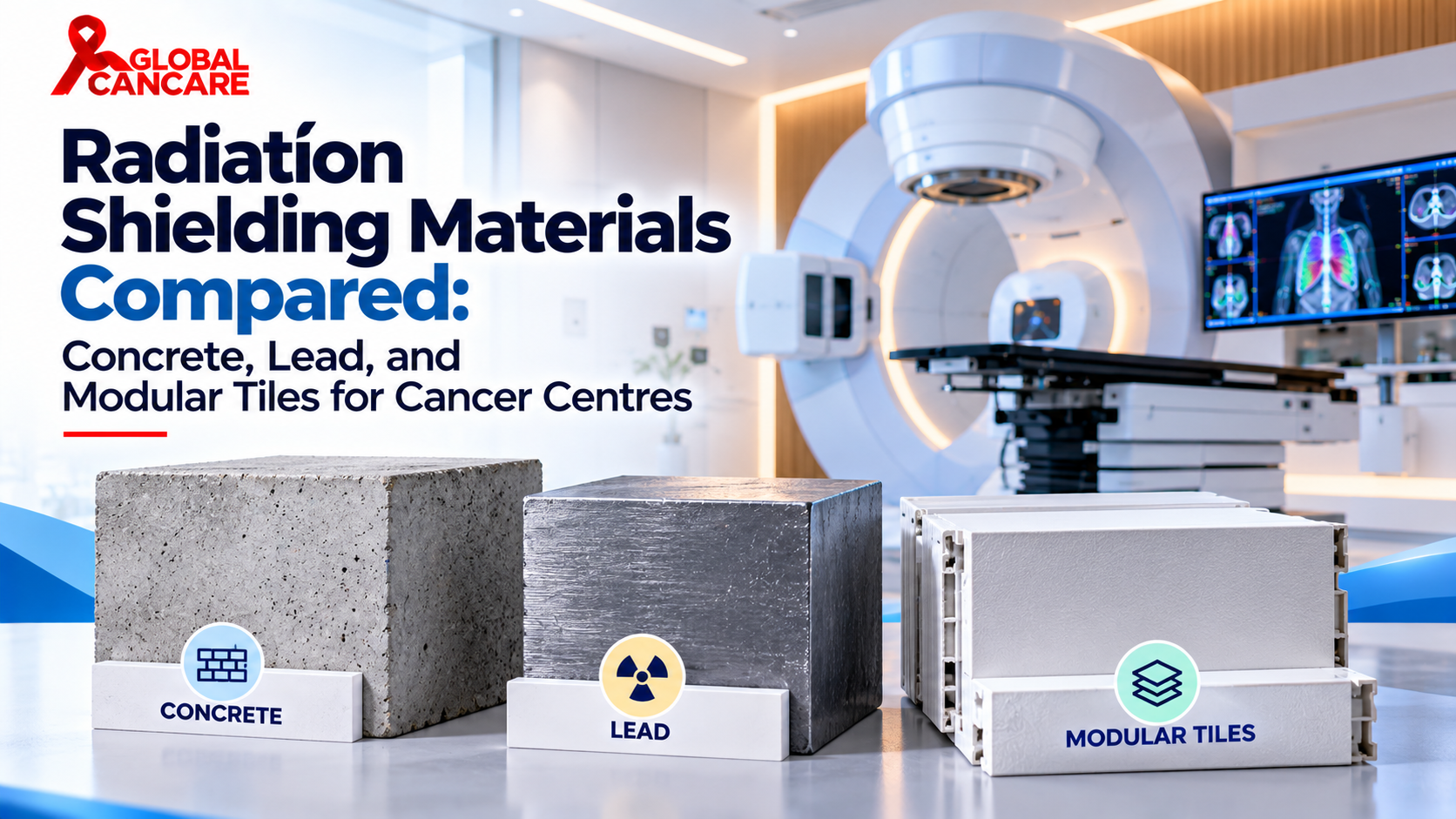
When a cancer centre is being designed or upgraded, one of the most technically demanding decisions the project team faces is radiation shielding. Get it wrong and you risk exposing patients, clinical staff, and the general public to radiation. Get it right — through the correct material choice for the correct radiation type — and you create a facility that is safe, compliant, and built to operate for decades.
Global CanCare Pvt. Ltd., one of India's leading oncology infrastructure companies, works across the full spectrum of cancer centre development — including the critical engineering decisions around radiation shielding design and bunker construction.
The global medical radiation shielding market was valued at USD 1.72 billion in 2025 and is projected to reach USD 2.94 billion by 2035, growing at a CAGR of 5.49%. That growth is being driven by the rapid expansion of oncology infrastructure — particularly radiotherapy facilities — in India and across Asia. Understanding what radiation shielding materials are available, how they compare, and what the right choice looks like for radiotherapy bunkers is a critical competency for every oncology facility developer.
Why No Single Material Works for All Radiation Types
The first thing to understand about radiation shielding is that it is not one-size-fits-all.
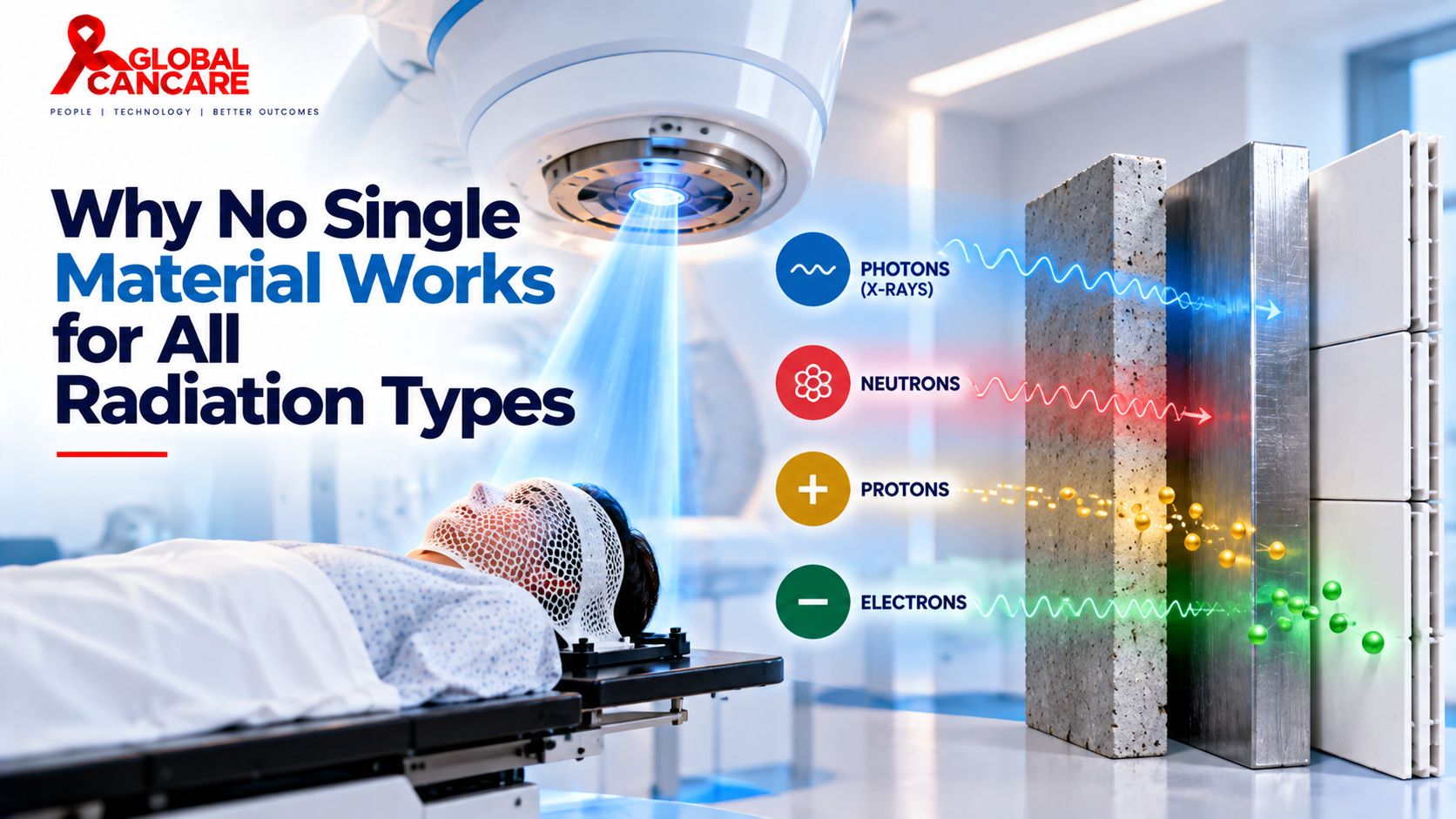
Different radiation types interact with matter in fundamentally different ways, and no single substance blocks all of them equally:
Alpha particles are stopped by something as thin as a sheet of paper or the outer layer of skin. They pose no external shielding challenge.
Beta particles must be stopped by low-atomic-number materials like aluminium. Using high-density materials like lead for beta shielding is counterproductive — it generates secondary bremsstrahlung X-rays.
Gamma rays and X-rays require high-density, high-atomic-number elements — lead, tungsten, or dense concrete.
Neutrons (produced by LINACs operating at or above 10 MV) require a two-step approach: hydrogen-rich materials to slow them down, followed by an absorber such as boron.
This material-specificity is why proper radiation shielding for radiotherapy bunkers requires detailed shielding calculations by a certified medical physicist before construction begins.
Comparison of Common Radiation Shielding Materials
The table below summarises the primary materials used in radiation shielding for radiotherapy bunkers and oncology facility construction:
Material | Best Used For | Advantages | Disadvantages |
|---|---|---|---|
Lead (Pb) | X-rays and gamma radiation | High density, high atomic number (Z=82), affordable, excellent attenuation | Heavy and cumbersome; toxic, requiring careful handling and disposal |
Tungsten (W) | Compact X-ray and gamma shielding | Extremely high density (19.3 g/cm³), non-toxic, allows thinner profiles | Significantly more expensive than lead |
Concrete | Large-scale structural gamma and neutron shielding | Cost-effective, durable, enhanceable with high-density aggregates (magnetite, barite) or boron | Requires massive thickness to achieve high attenuation |
Aluminium (Al) | Beta radiation and low-Z structural layers | Lightweight, inexpensive, minimises secondary bremsstrahlung | Low atomic number (Z=13) — ineffective against gamma or X-ray loads alone |
HDPE / Borated PE | Fast and thermal neutron moderation | Hydrogen-rich, slows neutrons effectively; lightweight and non-toxic | Minimal protection against high-energy gamma without heavy additive reinforcement |
Lead Composites / Polymers | Personal protective equipment (PPE) | Flexible, lighter than pure lead; blends bismuth, tungsten, and tin into vinyl or rubber | Higher cost than raw lead options |
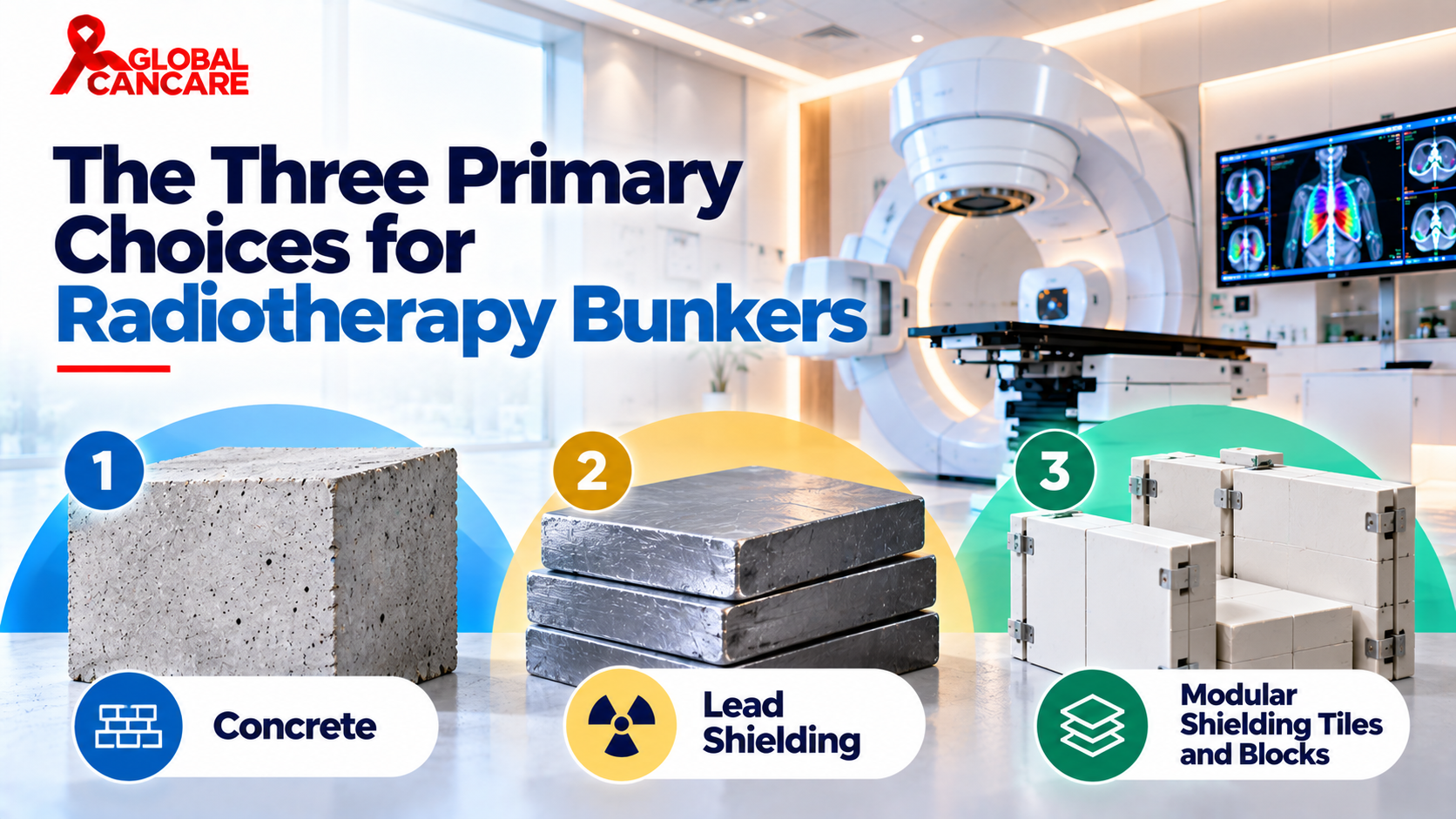
The Three Primary Choices for Radiotherapy Bunkers
1. Concrete
Concrete remains the most widely used structural radiation shielding material for radiotherapy bunkers worldwide. Approximately 23% of radiotherapy installations rely on high-density concrete block walls. A LINAC operating at 10 MV, for example, requires approximately 2,300 mm of standard concrete to achieve adequate attenuation. For comparison, a recent UK LINAC bunker project (completed by Morgan Sindall) required 2.6 m thick concrete walls and a 1.4 m thick roof to contain radiation from a high-energy linear accelerator. Concrete can be significantly enhanced with high-density aggregates — magnetite and barite are commonly specified — to reduce required thickness while maintaining or improving shielding performance.
2. Lead Shielding
In the lead vs concrete shielding comparison, lead offers a clear advantage in space-constrained environments. A 10 MV radiotherapy bunker requires approximately 450 mm of lead versus 2,300 mm of concrete — a reduction of over 80% in wall thickness. This matters considerably in urban hospital settings where floor space is a premium. However, lead's toxicity, weight, and waste disposal requirements add complexity. Lead bricks are used in approximately 22% of radiotherapy installations, typically for localised reinforcement and supplemental shielding in flexible or high-energy layouts.
3. Modular Shielding Tiles and Blocks
The fastest-growing segment in the radiation shielding market is modular high-density concrete or composite tiles. These systems offer a compelling answer to the traditional lead vs concrete shielding trade-off. Interlocking modular blocks with sine-wave or tongue-and-groove profiles eliminate straight-line seams — which are a known weakness in conventional concrete pours. They can be installed in a fraction of the time: some modular systems allow a complete radiotherapy bunker to be commissioned in less than a week, compared to months for traditional cast-in-place concrete. The modular approach also allows disassembly and reconfiguration as technology upgrades or facility layouts change — an important consideration given the 15 to 20-year replacement cycle of LINAC equipment.
India's CSIR has also developed lead-free X-ray shielding tiles specifically for the domestic market — an important innovation for facilities looking to eliminate lead-related environmental and occupational health risks from their build programmes.
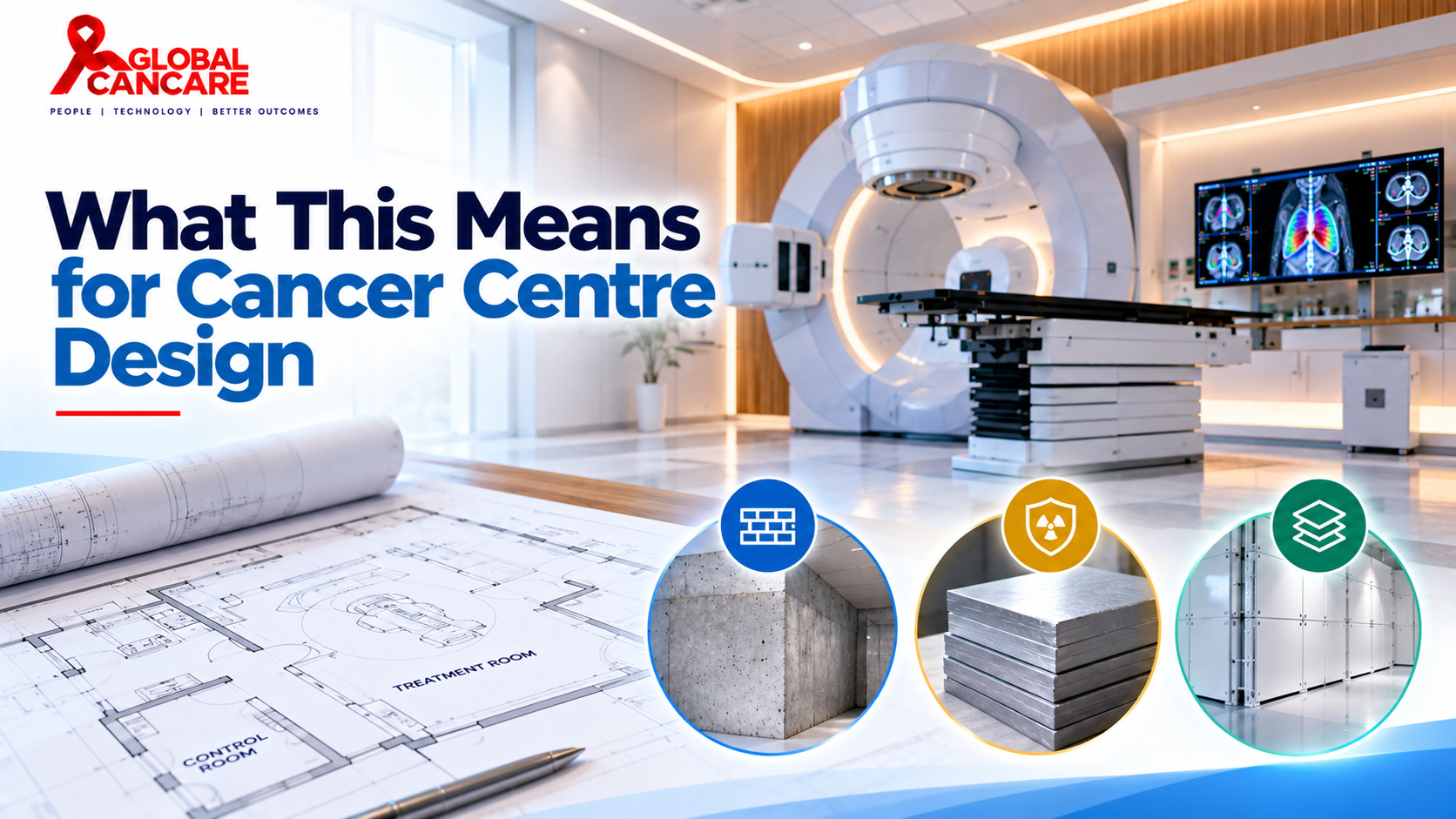
What This Means for Cancer Centre Design
The selection of radiation shielding for radiotherapy bunkers is never made in isolation. It must account for:
The energy level and modality of the treatment equipment (photon, electron, proton, or neutron therapy)
Available floor space and structural load-bearing capacity
Project timeline and construction methodology
Long-term facility flexibility and equipment upgrade planning
Regulatory compliance with AERB (India), BAERA, IAEA, or relevant national authority standards
As the Health Facility Guidelines for Oncology Units note, the radiation protection assessment "shall be assessed by a certified physicist" and "incorporated into the final plans and specifications." No material decision should precede this assessment.
The most effective radiation shielding strategies in modern cancer centres typically combine materials: structural concrete for primary walls, supplemental lead or lead composites at specific interface points, borated HDPE or board for neutron moderation at entry doors, and boron-paint finishes on internal surfaces in high-energy LINAC bunkers.
How Global CanCare Supports Radiation Shielding Design for Cancer Centres in India
Translating shielding physics into a compliant, cost-efficient, and construction-ready design requires oncology-specific infrastructure expertise — not just general civil engineering capability.
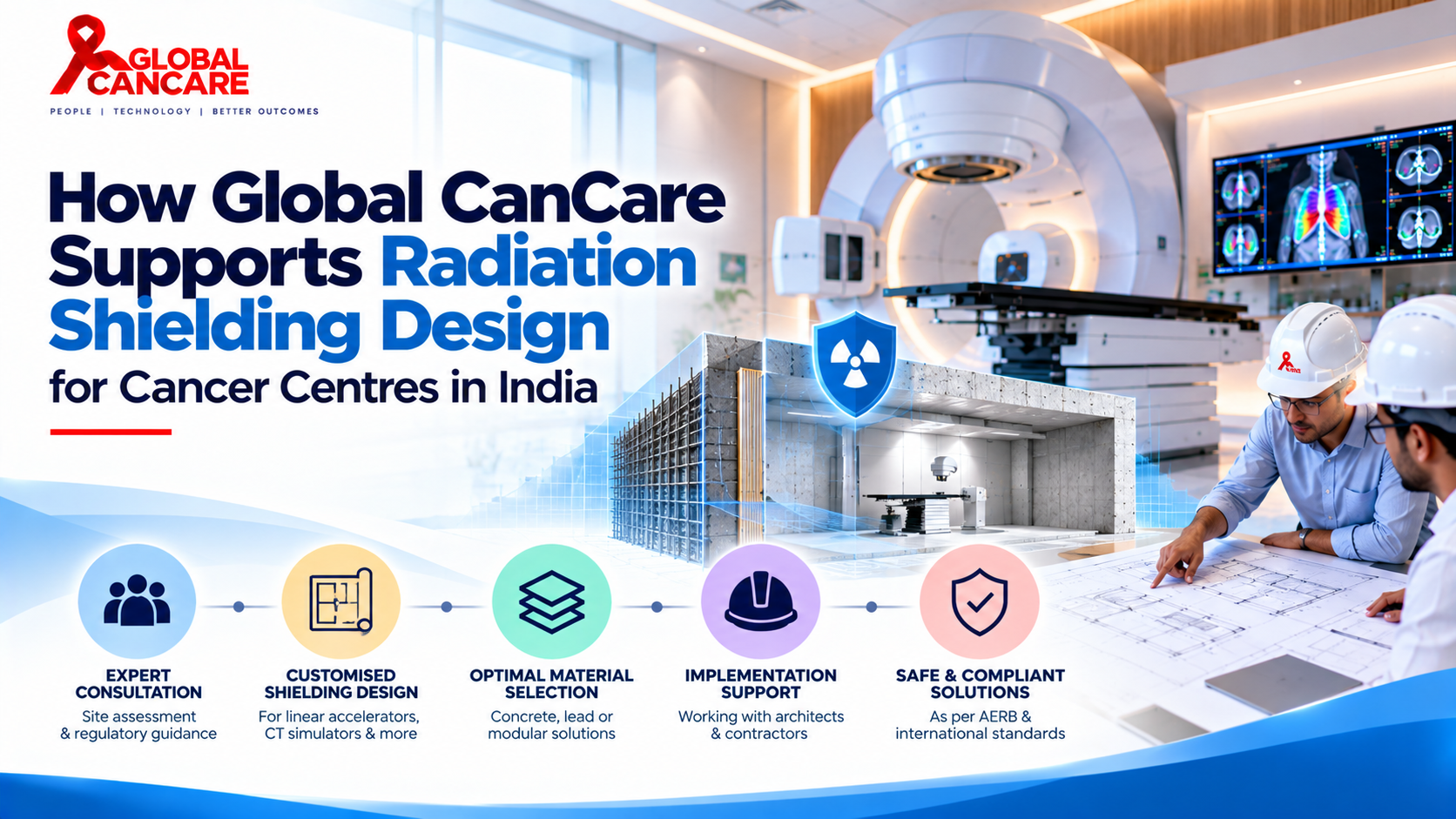
Global CanCare Pvt. Ltd. is an India-based oncology infrastructure company operating across nine specialised verticals, including radiotherapy bunker design, medical linear accelerator installation, and cancer centre project development. The company works with hospital groups, trust-run cancer programmes, and government health initiatives to plan, build, and commission oncology facilities that meet AERB regulatory requirements and international best practice standards.
For cancer centres evaluating radiation shielding for radiotherapy bunkers, Global CanCare provides end-to-end support — from initial shielding feasibility assessments and material specification through to construction oversight and commissioning. The company's multi-vertical capability means that shielding decisions are made in the context of the full facility: treatment equipment selection, layout efficiency, patient flow, and long-term upgrade planning are all factored in before a single specification is fixed.
For oncology infrastructure enquiries, project consultation, or to understand how Global CanCare can support your cancer centre development, visit globalcancare.com or contact the team directly.
Frequently Asked Questions
1. What is the best radiation shielding material for a radiotherapy bunker?
There is no single best material. Effective radiation shielding for radiotherapy bunkers requires a combination of materials matched to the radiation types being produced. Structural concrete handles primary gamma and neutron loads; supplemental lead addresses space-constrained areas; borated HDPE manages neutron exposure at entry points. A certified medical physicist must determine the specification for each specific installation.
2. What is the difference between lead vs concrete shielding in a cancer centre?
In the lead vs concrete shielding comparison, lead requires far less thickness — around 450 mm versus 2,300 mm of concrete for a 10 MV LINAC — making it the preferred choice where floor space is limited. Concrete is significantly more cost-effective for large-scale structural shielding and is typically enhanced with high-density aggregates to improve performance. Most cancer centres use both in combination.
3. What are modular radiation shielding tiles and when should they be used?
Modular radiation shielding tiles or interlocking blocks are pre-fabricated, high-density concrete or composite units that can be assembled rapidly without curing time. They are particularly suited to projects with tight timelines, existing facilities being upgraded, or layouts that may need to change as treatment technology evolves. Some modular systems allow full bunker installation in under a week.
4. Are there lead-free radiation shielding options for cancer centres in India?
Yes. India's CSIR has developed lead-free X-ray shielding tiles that offer comparable attenuation without the toxicity and disposal challenges of conventional lead. Tungsten-based composites and borated polymer systems also provide lead-free alternatives for specific radiation types and shielding zones within a radiotherapy facility.
5. How does Global CanCare support radiation shielding design for cancer centres in India?
Global CanCare Pvt. Ltd. provides end-to-end oncology infrastructure services including radiation shielding for radiotherapy bunkers, LINAC installation, and full cancer centre project development. For Indian hospital groups and health organisations planning new oncology facilities or upgrading existing ones, Global CanCare offers feasibility assessments, material specification, AERB compliance support, and construction oversight — integrating shielding design into the broader facility planning process from day one.
Sources:
Global Growth Insights — Medical Radiation Shielding Market 2025–2035 (March 2026)
MarShield — High-Density Concrete in Medical Radiation and Industrial Facilities (October 2024)
Building Better Healthcare — Morgan Sindall Completes LINAC Bunker (2025)
Natural Sciences Publishing — Radiotherapy Bunker Shielding Calculations and Design
Wiley Online Library — A Comprehensive Review of Radiation Shielding Concrete (October 2024)
Health Facility Guidelines — Part B: Oncology Unit — Radiation
USPTO — Radiation Therapy Systems Including Primary and Modular Secondary Radiation Shields
Planning a Cancer Care project?
Our specialists can scope equipment, shielding, licensing and staffing for your facility.
Talk to our team