
Radiopharmaceuticals: The Next Revolution in Cancer Treatment
Discover how Radiopharmaceuticals are transforming cancer treatment through targeted radionuclide therapy, theranostics, and nuclear medicine. Learn how Global CanCare is supporting the future of precision oncology with integrated healthcare solutions.
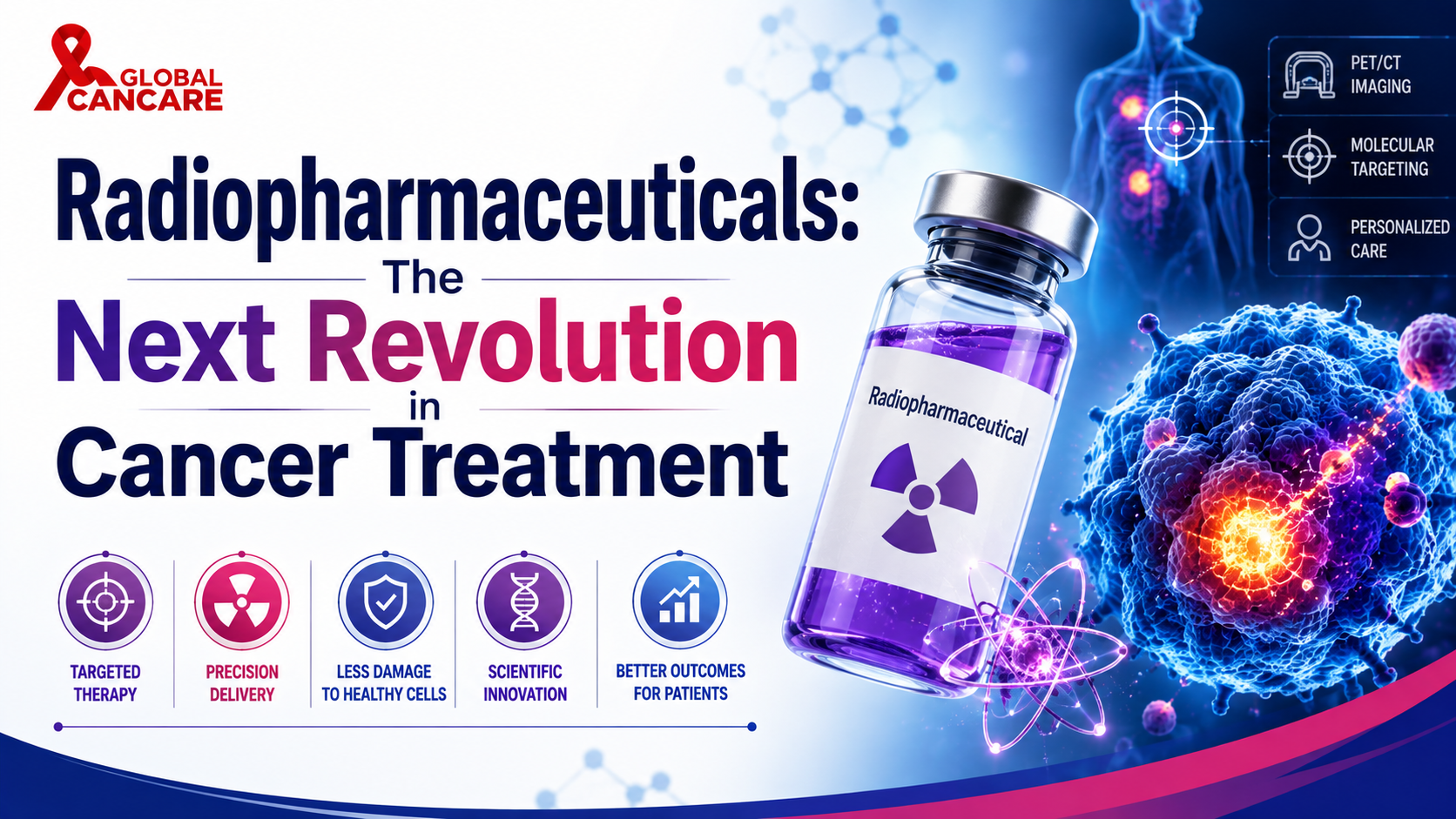
Cancer treatment is entering a new era. Instead of relying only on surgery, chemotherapy, or conventional radiation therapy, doctors are now using highly targeted treatments that attack cancer cells while protecting healthy tissue. One of the most exciting developments leading this transformation is Radiopharmaceuticals.
Over the past few years, major oncology and nuclear medicine conferences have highlighted Radiopharmaceuticals as one of the fastest-growing areas in precision medicine. Supported by advances in theranostics, molecular imaging, and targeted radionuclide therapy, these innovative medicines are changing how cancer is diagnosed and treated across the world.
As healthcare systems invest in precision oncology, organisations like Global CanCare Pvt. Ltd. are helping hospitals prepare for this future by supporting nuclear medicine infrastructure, cyclotron facilities, radiopharmaceutical networks, medical physics, and turnkey healthcare projects.
What Are Radiopharmaceuticals?
Radiopharmaceuticals are specialised medicines that contain small amounts of radioactive material. Unlike conventional drugs, they are designed to travel directly to specific cancer cells or organs inside the body.
Depending on the isotope used, radiopharmaceuticals can either:
Detect disease through molecular imaging.
Deliver targeted treatment directly to cancer cells.
This dual role makes Radiopharmaceuticals one of the foundations of modern nuclear medicine and precision oncology.
How Radiopharmaceutical Therapy Works
Radiopharmaceutical therapy uses radioactive medicines to destroy cancer cells from within the body. Instead of exposing large areas to radiation, these medicines bind to specific tumour cells and release radiation only where it is needed.
This targeted approach offers several advantages:
Traditional Cancer Treatment | Radiopharmaceutical Therapy |
|---|---|
Treats a broader area | Targets cancer cells specifically |
May affect healthy tissue | Minimises damage to surrounding tissue |
Standard treatment approach | Personalised treatment strategy |
Limited molecular targeting | Uses tumour-specific biological targets |
As a result, radiopharmaceutical therapy is becoming an increasingly important treatment option for cancers such as prostate cancer, neuroendocrine tumours, thyroid cancer, and is being investigated for several other malignancies.
Targeted Radionuclide Therapy and Theranostics
One of the biggest breakthroughs in nuclear medicine is the combination of theranostics with targeted radionuclide therapy.
The process begins with diagnostic imaging using radiopharmaceuticals to determine whether a tumour expresses a specific biological target. If the target is confirmed, a therapeutic radiopharmaceutical is administered using the same pathway to deliver radiation directly to the cancer.
This personalised approach improves treatment precision while reducing unnecessary side effects.
Some of the most widely used examples include:
Technology | Clinical Role |
Gallium-68 (Ga-68) | PET imaging for tumour detection and patient selection |
Lutetium-177 (Lu-177) | Targeted radionuclide therapy for treating specific cancers |
PET Imaging | High-resolution molecular imaging for diagnosis and treatment planning |
Theranostics | Combines diagnosis and therapy using the same molecular target |
These innovations are making Radiopharmaceuticals a central component of next-generation cancer care.
Recent Research Is Driving Rapid Growth
Research in Radiopharmaceuticals is advancing rapidly. In recent years, studies published in leading oncology and nuclear medicine journals have demonstrated encouraging results using Lutetium-177 PSMA therapy for advanced prostate cancer and peptide receptor radionuclide therapy (PRRT) for neuroendocrine tumours.
Research is also expanding into breast cancer, lung cancer, pancreatic cancer, and brain tumours, with scientists developing new radiopharmaceuticals capable of targeting previously difficult-to-treat diseases.
International organisations including the International Atomic Energy Agency (IAEA) and the Society of Nuclear Medicine and Molecular Imaging (SNMMI) continue to support research, education, and global access to advanced nuclear medicine technologies.
Building the Infrastructure Behind Radiopharmaceuticals
Successful radiopharmaceutical therapy requires much more than specialised medicines. Hospitals need integrated infrastructure that supports every stage of diagnosis, production, treatment, and patient safety.
Essential components include:
Cyclotron facilities
Radiopharmaceutical production
cGMP laboratories
PET/CT imaging centres
Nuclear medicine departments
Medical physics services
Radiation safety systems
Regulatory compliance
Quality assurance laboratories
Developing this ecosystem requires expertise across engineering, healthcare planning, and clinical operations.
Global CanCare: Supporting the Future of Nuclear Medicine
As demand for Radiopharmaceuticals continues to grow, healthcare providers are looking for partners capable of delivering complete solutions rather than standalone equipment.
Global CanCare Pvt. Ltd. supports hospitals, research institutions, and cancer centres through expertise in:
Global CanCare Capability | Healthcare Solution |
Nuclear Medicine | Infrastructure planning and department development |
Cyclotrons | Project planning and implementation |
Radiopharmaceutical Networks | cGMP laboratory planning and workflow integration |
Medical Physics | Radiation safety and quality assurance |
Turnkey Healthcare Infrastructure | Project management, installation, and commissioning |
Radiotherapy & Imaging | Integrated cancer care technologies |
By bringing together advanced technology, engineering expertise, regulatory support, and healthcare infrastructure, Global CanCare helps institutions prepare for the future of precision medicine.
The Future of Cancer Care
The future of oncology is becoming increasingly personalised. As Radiopharmaceuticals, theranostics, and targeted radionuclide therapy continue to evolve, patients will benefit from treatments that are more accurate, less invasive, and tailored to the biology of their disease.
Hospitals investing in nuclear medicine today are building the foundation for tomorrow's cancer care. Through integrated healthcare infrastructure and advanced technology solutions, organisations like Global CanCare are helping make this future more accessible.
Frequently Asked Questions (FAQs)
1. What are Radiopharmaceuticals?
Radiopharmaceuticals are medicines containing radioactive isotopes that are used to diagnose or treat diseases, especially cancer, through targeted molecular imaging and therapy.
2. What is radiopharmaceutical therapy?
Radiopharmaceutical therapy uses radioactive medicines to deliver radiation directly to cancer cells while minimising damage to healthy tissues.
3. What is targeted radionuclide therapy?
Targeted radionuclide therapy is a form of treatment where radioactive isotopes are attached to molecules that specifically bind to cancer cells, providing precise treatment.
4. How does theranostics relate to Radiopharmaceuticals?
Theranostics combines diagnosis and treatment using the same biological target. Radiopharmaceuticals are central to this approach because they enable both imaging and targeted therapy.
5. Which cancers can be treated using Radiopharmaceuticals?
Radiopharmaceuticals are currently used for prostate cancer, neuroendocrine tumours, thyroid cancer, and are being researched for several other cancers, including breast and lung cancer.
6. Why is nuclear medicine important in cancer treatment?
Nuclear medicine allows doctors to detect diseases earlier, personalise treatments, monitor patient response, and deliver targeted therapies with greater precision.
7. How does Global CanCare support nuclear medicine?
Global CanCare supports hospitals with nuclear medicine infrastructure, cyclotron projects, radiopharmaceutical planning, medical physics, cGMP laboratories, and turnkey healthcare solutions that enable advanced cancer care.
Planning a Cancer Care project?
Our specialists can scope equipment, shielding, licensing and staffing for your facility.
Talk to our team