
Setting Up a Cancer Centre
Setting Up a Cancer Centre in a Developing Country: Infrastructure Checklist for Hospitals and Governments
Learn how to build a cancer centre in a developing country with a practical checklist covering bunkers, imaging, radiotherapy, shielding, workforce, infrastructure, and planning.
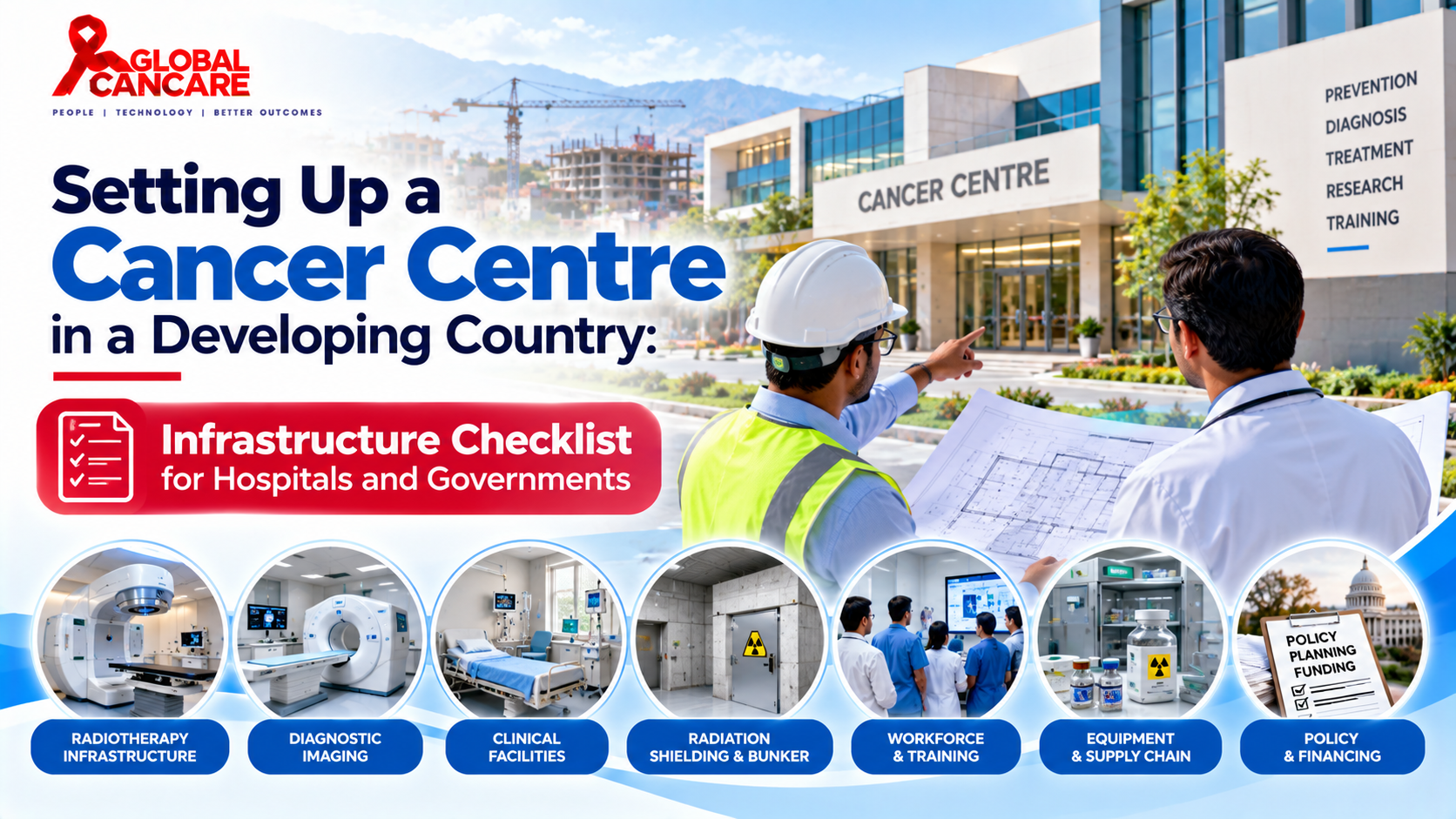
Introduction: Setting up a cancer centre
Cancer care is becoming a major healthcare priority in developing countries. As cancer cases increase, governments and hospitals are investing in new treatment facilities to bring diagnosis and therapy closer to patients.
However, how to build a cancer centre successfully is a complex question. A cancer centre must be designed as an integrated clinical system rather than as a collection of individual machines.
The building, shielding, imaging systems, radiotherapy equipment, medical physics, workforce, patient pathways, safety systems, and maintenance strategy all need to work together.
Quick Answer: What Does It Take to Build a Cancer Centre?
Setting up a cancer centre requires much more than purchasing cancer-treatment equipment. Hospitals and governments need coordinated cancer infrastructure planning covering the site, radiotherapy bunker, radiation shielding, medical imaging, treatment systems, nuclear medicine, laboratories, trained workforce, regulatory approvals, utilities, commissioning, and long-term operations.
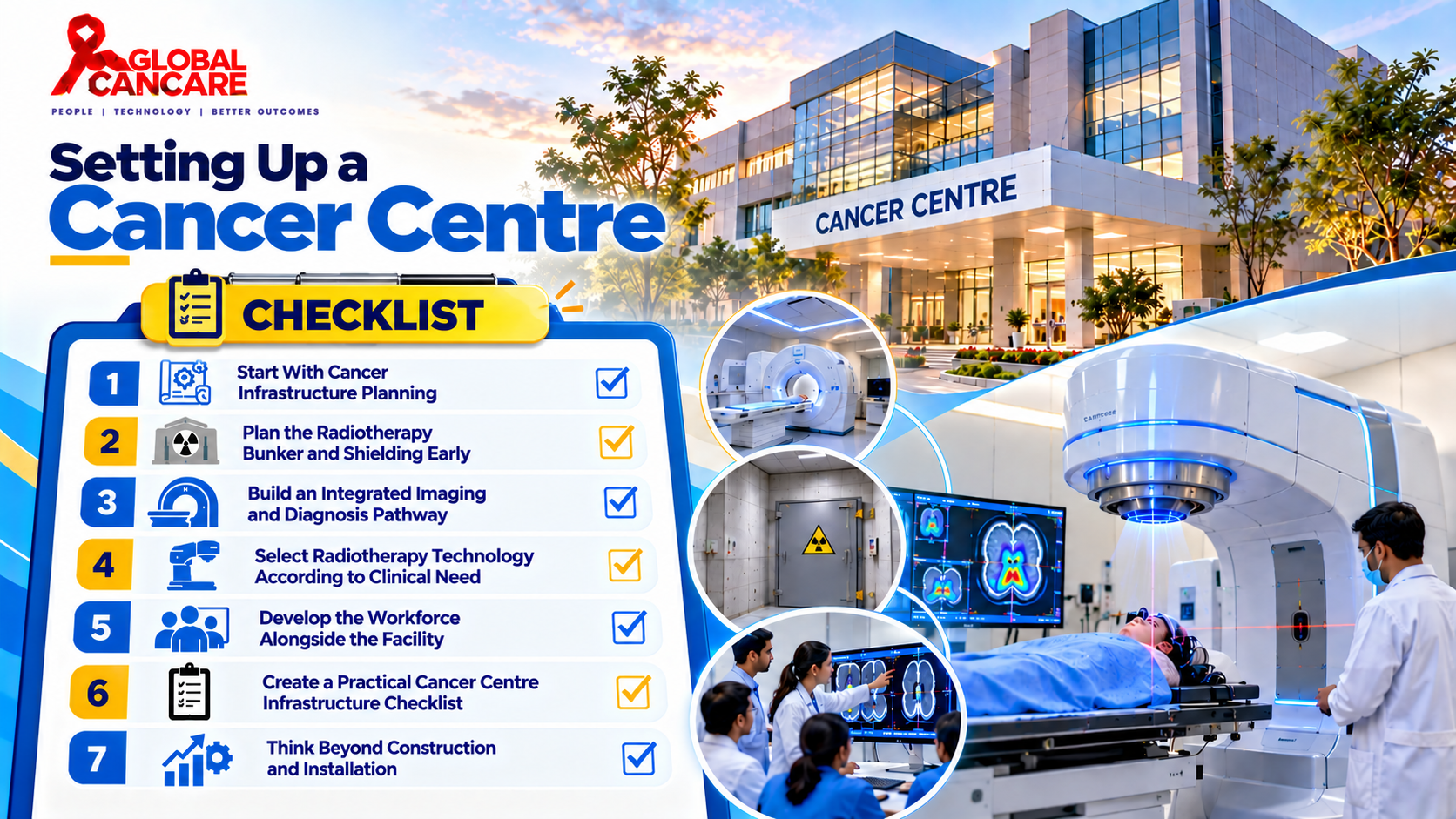
1. Start With Cancer Infrastructure Planning
The first step in setting up a cancer centre is understanding the healthcare needs of the population it will serve. Planning should consider cancer incidence, referral patterns, existing treatment capacity, expected patient volumes, available specialists, accessibility, and future demand.
A feasibility study can help determine which services should be developed initially and which can be added later. A smaller regional centre, for example, may begin with diagnostic imaging and radiotherapy before expanding into nuclear medicine, advanced oncology services, research, or other specialised areas.
Good planning also considers future expansion. Building a facility that cannot accommodate additional treatment machines, imaging systems, or clinical services can create expensive limitations later.
2. Plan the Radiotherapy Bunker and Shielding Early
Radiotherapy requires carefully designed radiation-protection infrastructure. The treatment bunker must be planned according to the equipment, workload, radiation energy, room layout, occupancy of surrounding areas, and applicable regulatory requirements.
This is why the bunker should not be treated as a construction project that happens after equipment selection. The room, shielding design, equipment specifications, patient movement, access control, and safety systems need to be coordinated from the beginning.
Global CanCare's The Bunker Company vertical focuses specifically on radiotherapy bunker infrastructure and supports the development of cost-conscious, purpose-built radiotherapy environments.
Hospitals and governments can explore the Global CanCare Bunker Company as part of their cancer infrastructure planning.
3. Build an Integrated Imaging and Diagnosis Pathway
Cancer treatment depends on accurate diagnosis and staging. A new centre may therefore require imaging capabilities such as CT, MRI, ultrasound, mammography, or other appropriate modalities depending on its clinical scope.
For radiotherapy, imaging also plays an important role in simulation, treatment planning, image guidance, and follow-up.
The key principle is integration. Imaging equipment should be selected according to clinical requirements and connected to appropriate information, planning, and workflow systems.
4. Select Radiotherapy Technology According to Clinical Need
A major decision in setting up a cancer centre is selecting the appropriate radiotherapy technology.
Linear accelerators may support modern techniques such as IMRT, VMAT, SBRT, and IGRT when clinically appropriate and when the centre has the required planning, imaging, physics, and workforce capabilities.
The goal should not be to purchase the most advanced machine available simply because it is advanced. Technology should match patient needs, expected workload, available expertise, infrastructure, budget, and long-term sustainability.
5. Develop the Workforce Alongside the Facility
A cancer centre cannot operate successfully without trained professionals. Workforce planning should cover radiation oncologists, medical physicists, radiation therapists or technologists, radiologists, nuclear medicine professionals, nurses, engineers, technicians, administrators, and other support staff.
Training should begin before commissioning wherever possible. Professionals need appropriate education, equipment familiarity, clinical training, safety knowledge, and continuing development.
This is one reason cancer infrastructure planning must include people as well as buildings and equipment.
6. Create a Practical Cancer Centre Infrastructure Checklist
A useful planning framework can help hospitals and governments identify gaps before construction or procurement begins.
Infrastructure Area | Key Planning Requirement |
|---|---|
Site and facility | Location, accessibility, patient flow, future expansion |
Radiotherapy bunker | Shielding, equipment specifications, safety and regulatory requirements |
Imaging | CT, MRI, ultrasound, mammography or other required modalities |
Radiotherapy | LINACs, treatment planning and image-guidance capabilities |
Medical physics | Dosimetry, calibration, quality assurance and safety |
Workforce | Clinicians, technologists, physicists, nurses and technical staff |
Utilities | Reliable electricity, HVAC, water, networking and backup systems |
IT infrastructure | Hospital information systems, imaging and treatment data workflows |
Regulatory compliance | Radiation safety, licensing and applicable healthcare regulations |
Maintenance | Preventive maintenance, service support and spare-parts planning |
Patient services | Reception, consultation, waiting, treatment and supportive-care areas |
Future expansion | Space and infrastructure for additional services |
This checklist provides a starting point. The final requirements should be developed through detailed clinical, engineering, architectural, medical physics, financial, and regulatory planning.
7. Think Beyond Construction and Installation
One of the most common mistakes in how to build a cancer centre is treating project completion as the day equipment is installed.
A sustainable centre needs commissioning, acceptance testing, staff training, quality assurance, maintenance, operational procedures, and continuous performance monitoring.
Hospitals should also establish a realistic financial model for staffing, consumables, maintenance, utilities, upgrades, and service delivery. A technically advanced facility is valuable only when it can operate reliably over the long term.
How Global CanCare Supports Cancer Infrastructure Planning
Global CanCare Pvt. Ltd. approaches cancer infrastructure as an interconnected ecosystem.
Its work spans radiotherapy equipment, oncology technology, radiotherapy bunkers, medical imaging, nuclear medicine, cyclotrons, radiopharmaceutical infrastructure, medical physics, project management, installation, commissioning, and other specialised healthcare infrastructure.
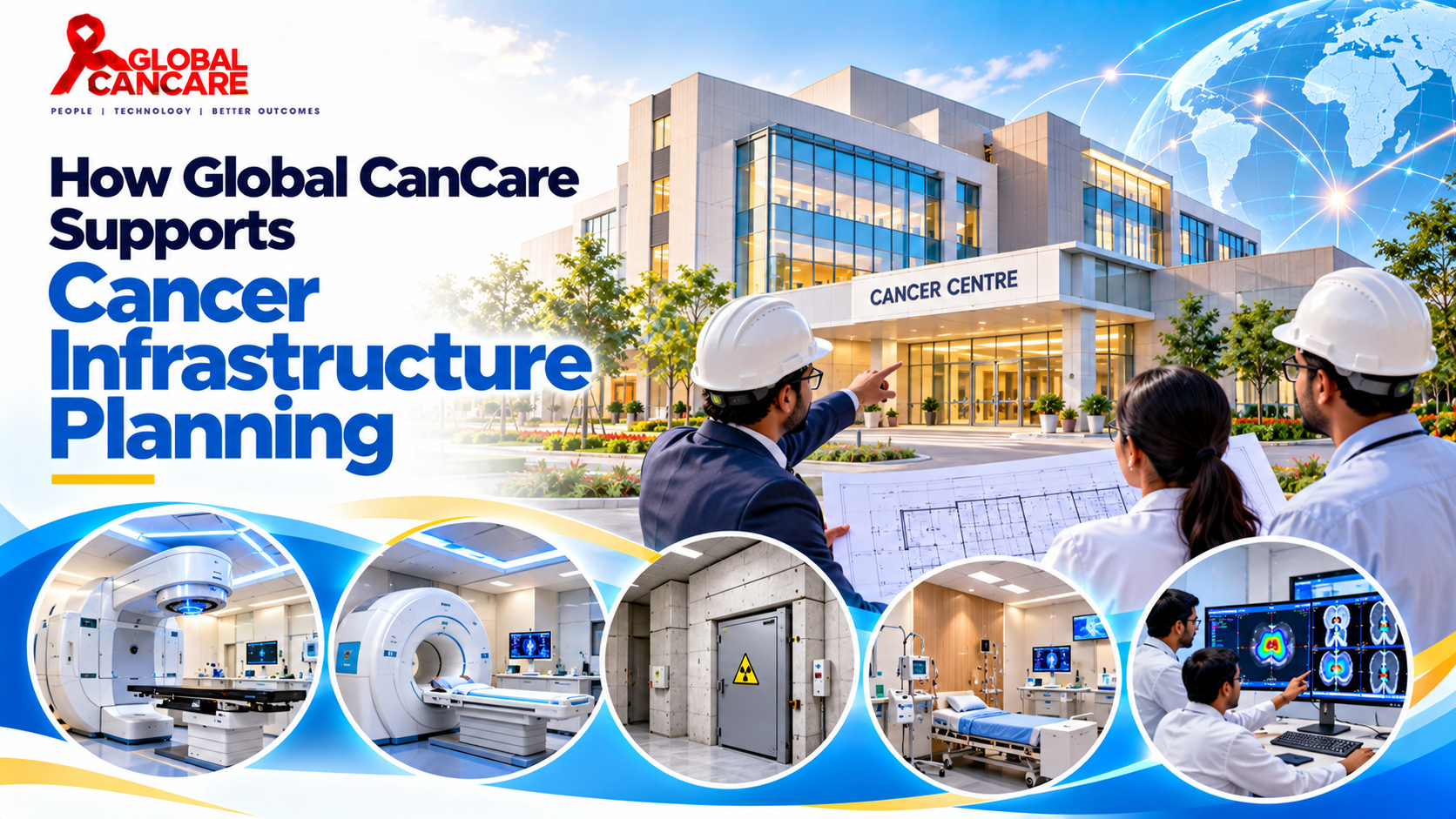
The company's The Bunker Company vertical adds a focused infrastructure capability for radiotherapy environments, helping hospitals consider shielding and bunker requirements as part of a broader project rather than as an isolated construction activity.
This integrated perspective is important for developing countries, where every infrastructure investment needs to deliver practical, sustainable clinical value.
Hospitals, governments, and healthcare organisations can learn more about Global CanCare's broader capabilities through the Global CanCare website.
Frequently Asked Questions
What is the first step in setting up a cancer centre?
The first step is a structured feasibility and needs assessment. It should examine the local cancer burden, patient population, referral patterns, existing services, clinical requirements, workforce availability, budget, site, and future expansion needs.
How much does it cost to build a cancer centre?
There is no single standard cost. Investment depends on the centre's size, location, treatment technologies, imaging systems, bunker requirements, construction standards, workforce, utilities, regulatory requirements, and intended clinical services.
Why is a radiotherapy bunker important?
A radiotherapy bunker provides the controlled environment required for radiation treatment and shielding. Its design must account for the treatment equipment, radiation energy, workload, surrounding occupancy, and applicable safety requirements.
What equipment is needed for a cancer centre?
Requirements vary by clinical scope. A centre may need diagnostic imaging, radiotherapy systems, treatment-planning systems, medical physics equipment, laboratory facilities, patient-monitoring systems, IT infrastructure, and supporting clinical equipment.
Why is workforce planning important?
Advanced equipment cannot deliver cancer treatment without appropriately trained professionals. Workforce planning should therefore happen alongside facility design, procurement, installation, commissioning, and operational planning.
How can Global CanCare help with cancer centre development?
Global CanCare supports the broader oncology infrastructure ecosystem, including radiotherapy, medical imaging, bunkers, nuclear medicine, medical physics, project implementation, installation, commissioning, and related healthcare infrastructure.
Authoritative Sources
Conclusion
Setting up a cancer centre in a developing country requires coordinated planning across clinical services, construction, radiation safety, technology, people, and long-term operations. The most successful projects begin with a clear understanding of local healthcare needs and then build the infrastructure around those needs.
A strong cancer infrastructure planning strategy should bring together the radiotherapy bunker, shielding, imaging, treatment technology, medical physics, workforce, utilities, regulatory requirements, IT systems, maintenance, and future expansion.
For hospitals and governments asking how to build a cancer centre, the central lesson is simple: cancer care infrastructure should be planned as one connected ecosystem.
Global CanCare Pvt. Ltd. supports this ecosystem approach by bringing together oncology technology, radiotherapy infrastructure, bunker solutions, imaging, nuclear medicine, medical physics, project implementation, and long-term healthcare infrastructure expertise.
The goal is not simply to build a cancer centre. It is to build a cancer-care system that can serve patients safely, efficiently, and sustainably for years to come.
Planning a Cancer Care project?
Our specialists can scope equipment, shielding, licensing and staffing for your facility.
Talk to our team