
Turnkey Projects for Cancer Centres
Turnkey Projects for Cancer Centres: What ‘Single Accountable Partner’ Really Means for Hospitals
Discover how Global CanCare approaches turnkey projects for cancer centres through coordinated oncology infrastructure, radiotherapy bunkers, medical equipment, installation, commissioning and project support.
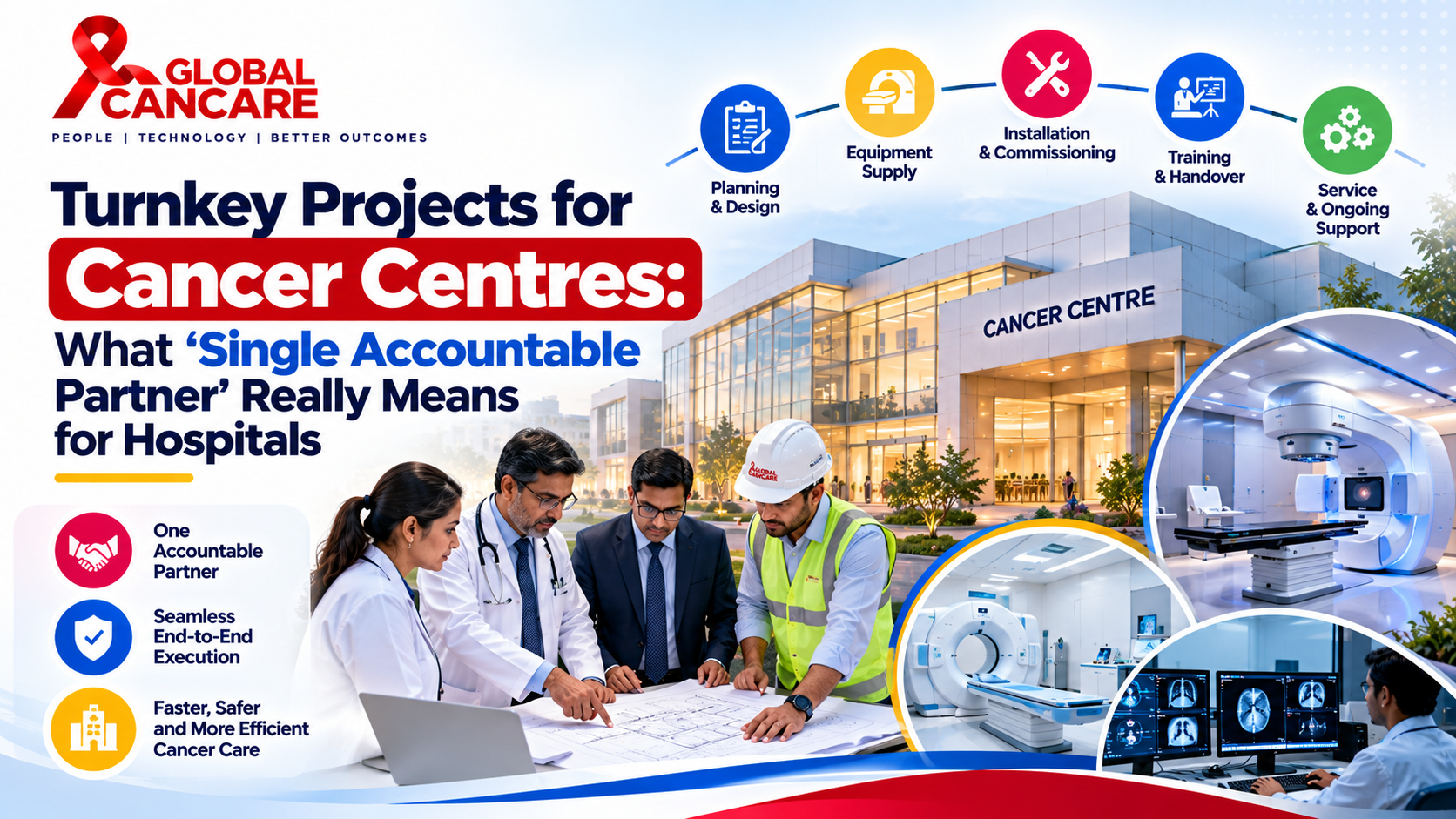
Turnkey projects are an important part of modern healthcare infrastructure planning, particularly when hospitals need to develop specialised cancer treatment facilities. Global CanCare Pvt. Ltd. approaches oncology infrastructure as a connected ecosystem, bringing together radiotherapy technology, bunker solutions, medical imaging and related implementation requirements to support hospitals planning or expanding cancer care services.
Why Cancer Centre Projects Need an Integrated Approach
Developing a cancer centre involves much more than constructing a building and installing medical equipment. Hospitals must coordinate architectural design, radiation shielding, radiotherapy systems, diagnostic imaging, utilities, regulatory requirements, installation and commissioning. When these activities are managed separately, communication gaps and poorly coordinated schedules can delay implementation and increase project complexity.
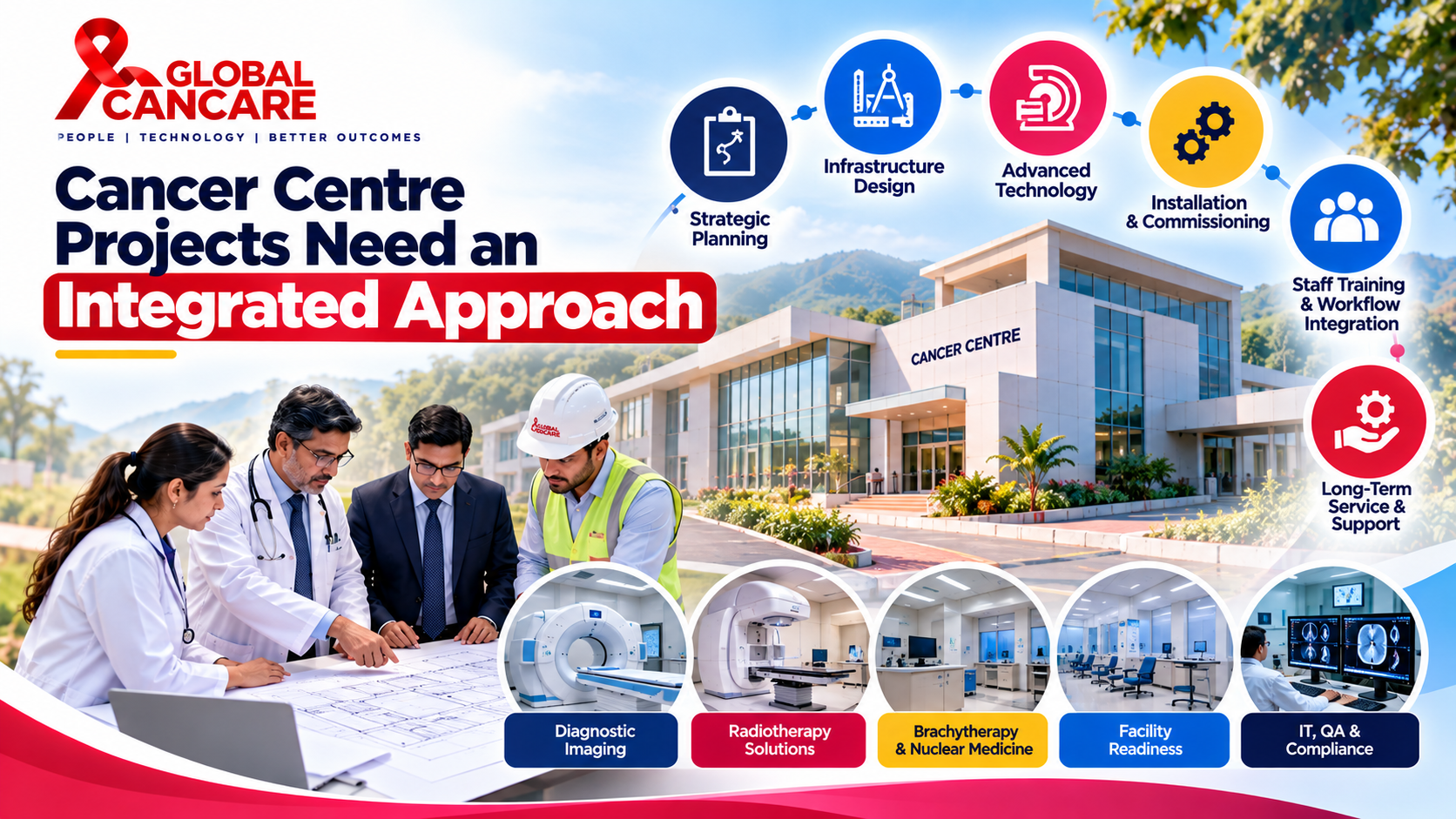
This is where turnkey delivery can offer a practical advantage. A hospital appoints a lead partner to coordinate an agreed scope of work, helping connect different technical and infrastructure components within one project plan. For oncology facilities, the value lies in aligning the building, equipment, clinical requirements and operational readiness from the beginning.
What Does a Single Accountable Partner Actually Mean?
A single accountable partner provides a coordinated point of responsibility for the services and deliverables defined in the project contract. Rather than independently managing every supplier and contractor, the hospital works with a lead partner that coordinates the agreed workstreams, interfaces, schedules and handover requirements.
Single accountability does not necessarily mean one company manufactures every device or performs every specialist activity itself. The lead partner may coordinate equipment manufacturers, engineering consultants, construction teams and other specialist providers. The contract should clearly define responsibilities, exclusions, milestones, acceptance criteria, warranties and ongoing support.
For hospitals considering an oncology infrastructure single vendor approach, the objective is not simply to reduce the number of vendors. It is to establish clear project coordination and ensure that critical components work together.
What Should a Turnkey Cancer Centre Project Include?
A well-planned turnkey cancer centre EPC project should begin with an assessment of clinical needs, patient volumes, budget, site conditions and long-term service goals. EPC generally stands for Engineering, Procurement and Construction, although the precise scope varies by contract.
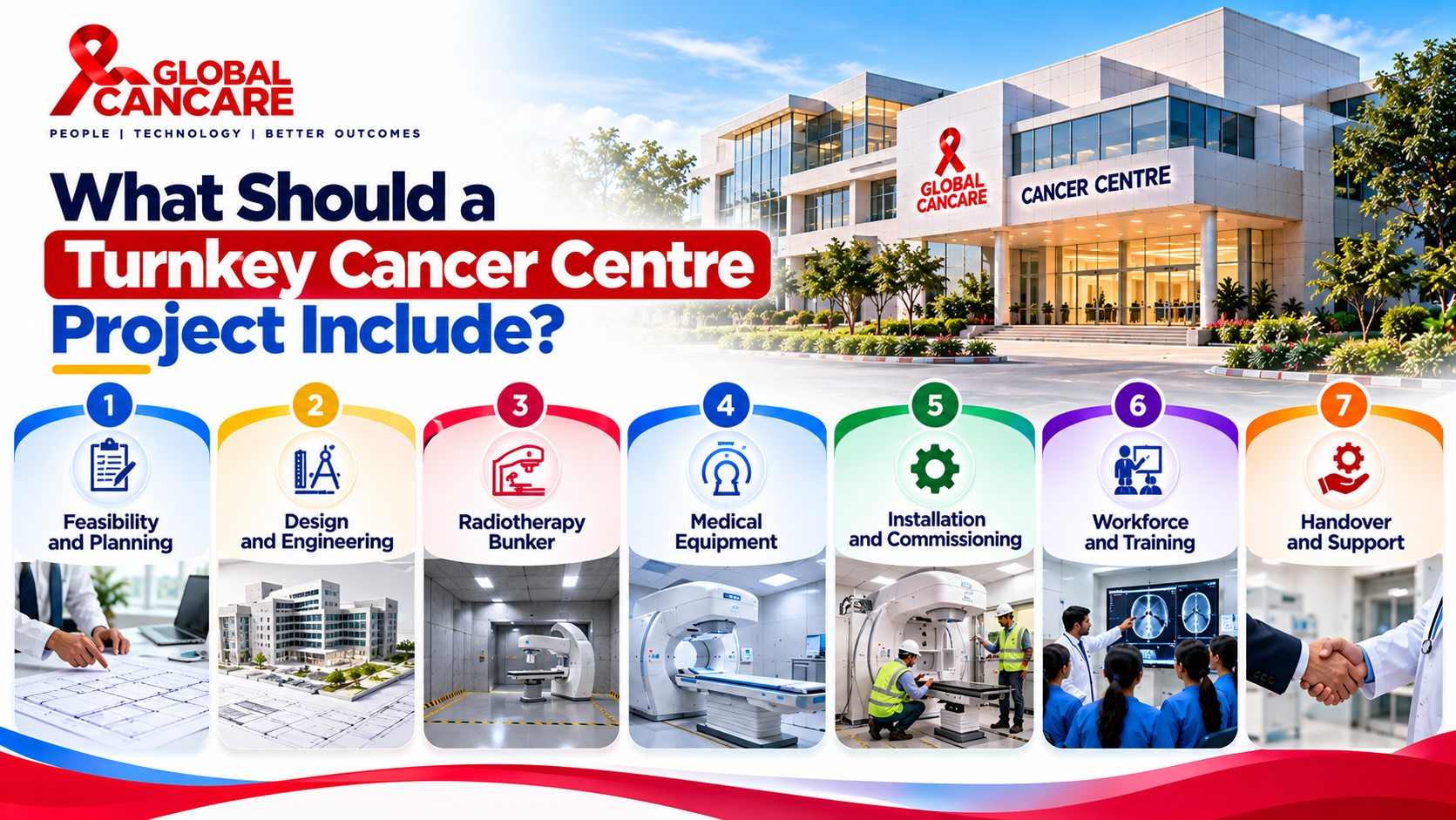
Depending on the project, turnkey solutions may cover facility planning, civil and electrical works, radiation shielding, medical equipment procurement, installation, testing, commissioning and staff training. Maintenance and technical support may also be included when specified in the agreement.
Project component | What must be coordinated | Value for the hospital |
|---|---|---|
| Clinical demand, site assessment, budget and service scope | A project aligned with healthcare needs |
| Room layouts, utilities, equipment specifications and workflow | Fewer conflicts between building and equipment requirements |
| Shielding design, equipment specifications and safety requirements | A coordinated radiation-treatment environment |
| Selection, procurement, delivery and compatibility | Better alignment with clinical requirements |
| Installation, acceptance testing and safety checks | A structured route towards operational readiness |
| Training plans, operating procedures and role allocation | Better preparation for safe clinical operations |
| Documentation, warranties, maintenance and service responsibilities | Clearer ownership after project completion |
The final scope depends on the contract, local regulations, equipment configuration and hospital requirements. Radiation facilities also require specialist design, regulatory review and appropriate authorisation before clinical use.
Why Radiotherapy Bunkers Require Early Coordination
Radiotherapy infrastructure demonstrates why turnkey solutions can be valuable. A bunker cannot be planned independently of the treatment machine it is intended to house. Equipment specifications, radiation energy, workload, room geometry, shielding calculations, access routes and surrounding occupancy all influence the design.
Late changes can affect construction, equipment installation and project schedules. Hospitals therefore benefit when bunker specialists, equipment providers, architects, engineers and medical physicists coordinate their work early.
Global CanCare's ecosystem includes The Bunker Company, a dedicated radiotherapy bunker infrastructure vertical. Hospitals can explore the Global CanCare Bunker Company to learn more about this area of its healthcare infrastructure ecosystem.
How Global CanCare Approaches Turnkey Healthcare Infrastructure
Global CanCare Pvt. Ltd. works across oncology equipment and healthcare infrastructure, with capabilities spanning radiotherapy technology, bunker solutions, medical imaging, nuclear medicine and related project implementation requirements.
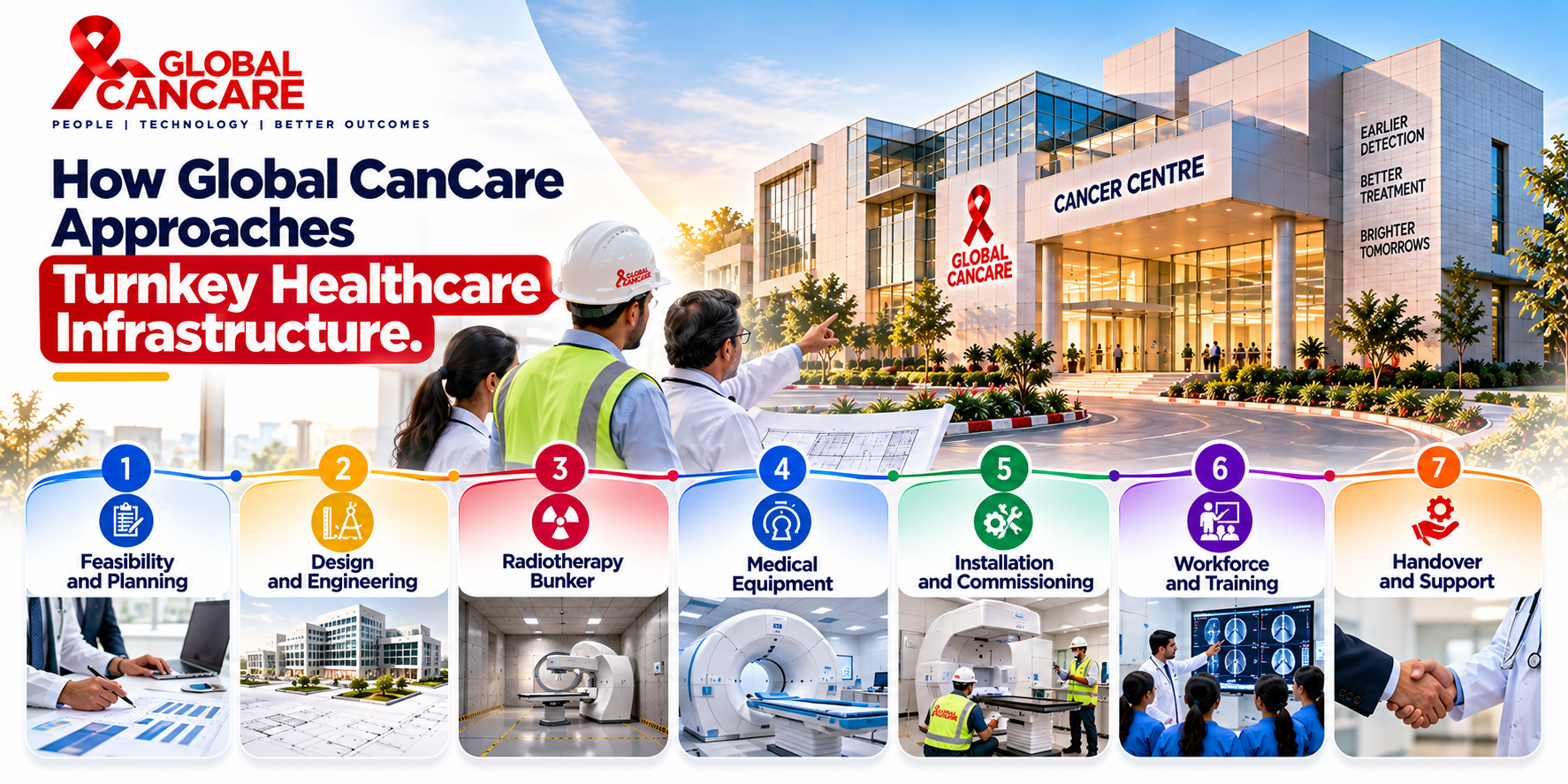
Its ecosystem-based approach reflects an important principle: a cancer centre should be planned as a connected clinical and technical environment, not as a collection of independent purchases. Equipment, shielding, utilities, installation, commissioning and long-term maintenance requirements need to be considered together.
For hospitals evaluating turnkey projects, Global CanCare can be part of discussions about aligning radiotherapy infrastructure and medical technology with wider facility development needs. The exact services, responsibilities and deliverables should be confirmed for each project and documented in the agreed scope.
Learn more about Global CanCare's healthcare infrastructure capabilities through the official Global CanCare website.
What Hospitals Should Check Before Appointing a Turnkey Partner
The right partner should demonstrate relevant technical understanding, transparent project planning, clear scope definition and the ability to coordinate specialist stakeholders. Hospitals should also review regulatory responsibilities, equipment compatibility, commissioning procedures, service arrangements, warranty terms and escalation processes.
A competitive proposal should clarify what is included, what is excluded, who is responsible for each approval and what conditions must be met before handover. This helps hospitals compare proposals on delivery capability and lifecycle value rather than headline price alone.
Frequently Asked Questions
1. What is a turnkey cancer centre project?
It is a coordinated project for developing a cancer care facility under an agreed scope, potentially covering design, construction, equipment, installation and commissioning.
2. Does a turnkey project mean one vendor supplies everything?
Not necessarily. A lead partner may coordinate several specialist suppliers and contractors while remaining responsible for the deliverables assigned under the contract.
3. What is the benefit of an oncology infrastructure single vendor model?
It can simplify communication, improve coordination between workstreams and clarify project responsibilities, provided the scope and accountability arrangements are clearly defined.
4. Does turnkey delivery include maintenance?
Maintenance is included only when specified in the agreement. Hospitals should confirm service coverage, response commitments, spare parts, training and warranty terms before signing.
Authoritative Reference
World Bank – Public-Private Partnerships for general background on infrastructure project planning and delivery models.
The Bunker Company Radiotherapy Bunker Design & Construction
Conclusion
Successful cancer centre development depends on coordinating infrastructure, technology, safety requirements and clinical operations. Turnkey solutions can help hospitals manage these connected requirements through a defined project scope and a central coordination partner.
For hospitals evaluating turnkey cancer centre EPC, the real value of a single accountable partner is not simply having fewer vendors. It is having clearer responsibilities, better coordination between specialist teams and a more structured route from project planning to operational handover.
Global CanCare Pvt. Ltd. brings oncology technology and healthcare infrastructure into the same planning conversation, supporting the broader goal of building cancer care facilities that are coordinated, practical and sustainable.
Planning a Cancer Care project?
Our specialists can scope equipment, shielding, licensing and staffing for your facility.
Talk to our team