Research
AI Cancer Screening vs Traditional Cancer Screening: What Hospitals Need to Know
Discover how AI Cancer Screening is changing cancer detection through faster image analysis, early detection, workflow efficiency, and smarter hospital screening.
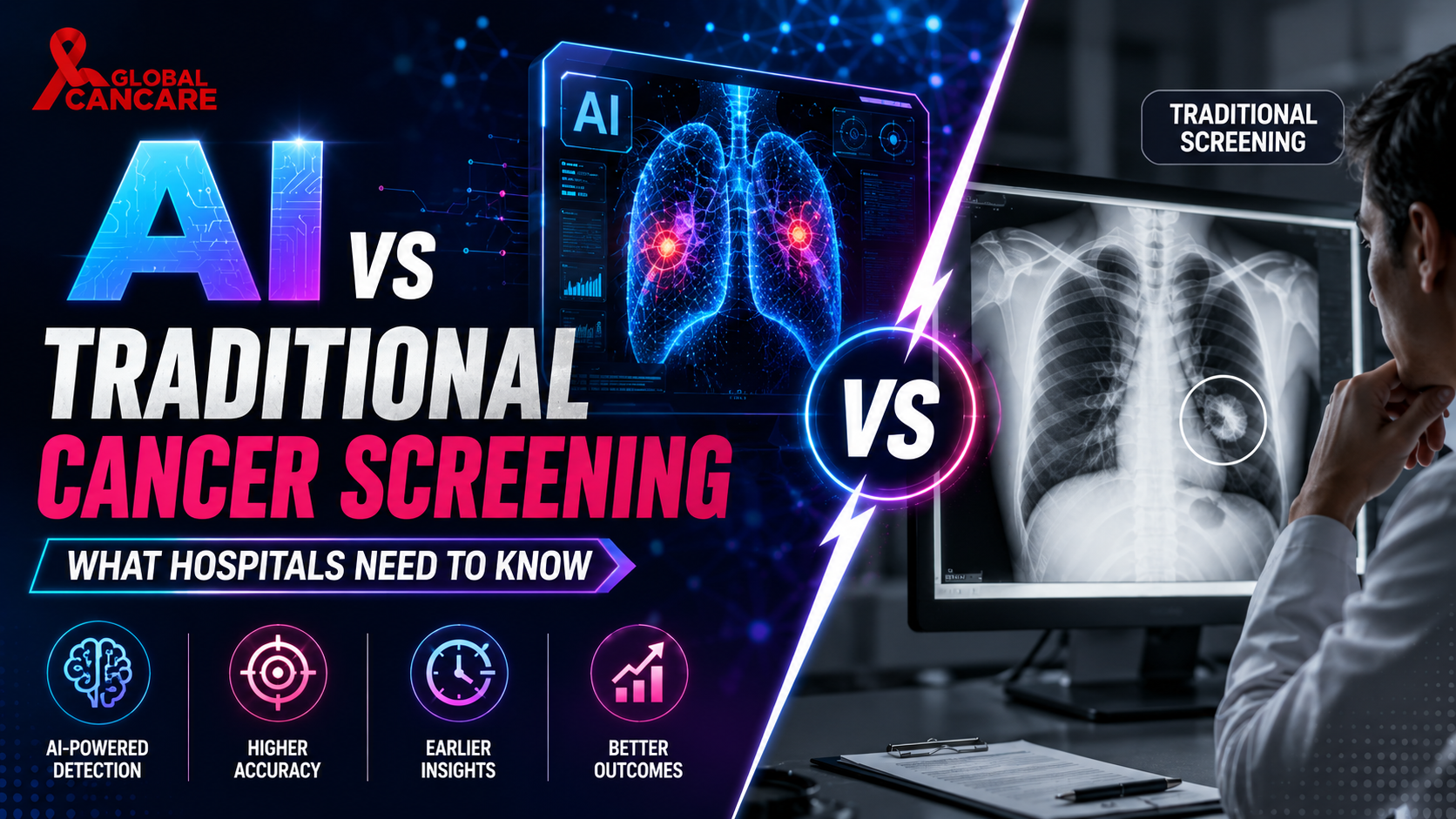
Cancer screening is changing rapidly. For decades, hospitals have relied on experienced doctors, radiologists, pathologists, imaging systems, and established screening guidelines to find cancer early. These traditional methods remain essential, but artificial intelligence is adding a powerful new layer to the process.
AI Cancer Screening can examine medical images, identify subtle patterns, support tissue analysis, and help healthcare teams manage large volumes of patient information. The goal is not to replace doctors. Instead, AI can act as an additional tool that helps clinical teams detect possible abnormalities earlier and work more efficiently.
For hospitals planning the next generation of diagnostic services, understanding the difference between traditional cancer screening and AI-assisted screening is becoming increasingly important. This is also creating new opportunities for integrated healthcare technology providers such as Global CanCare Pvt. Ltd., including its focus on AI Imaging and modern diagnostic infrastructure.
Traditional Cancer Screening vs AI-Assisted Screening
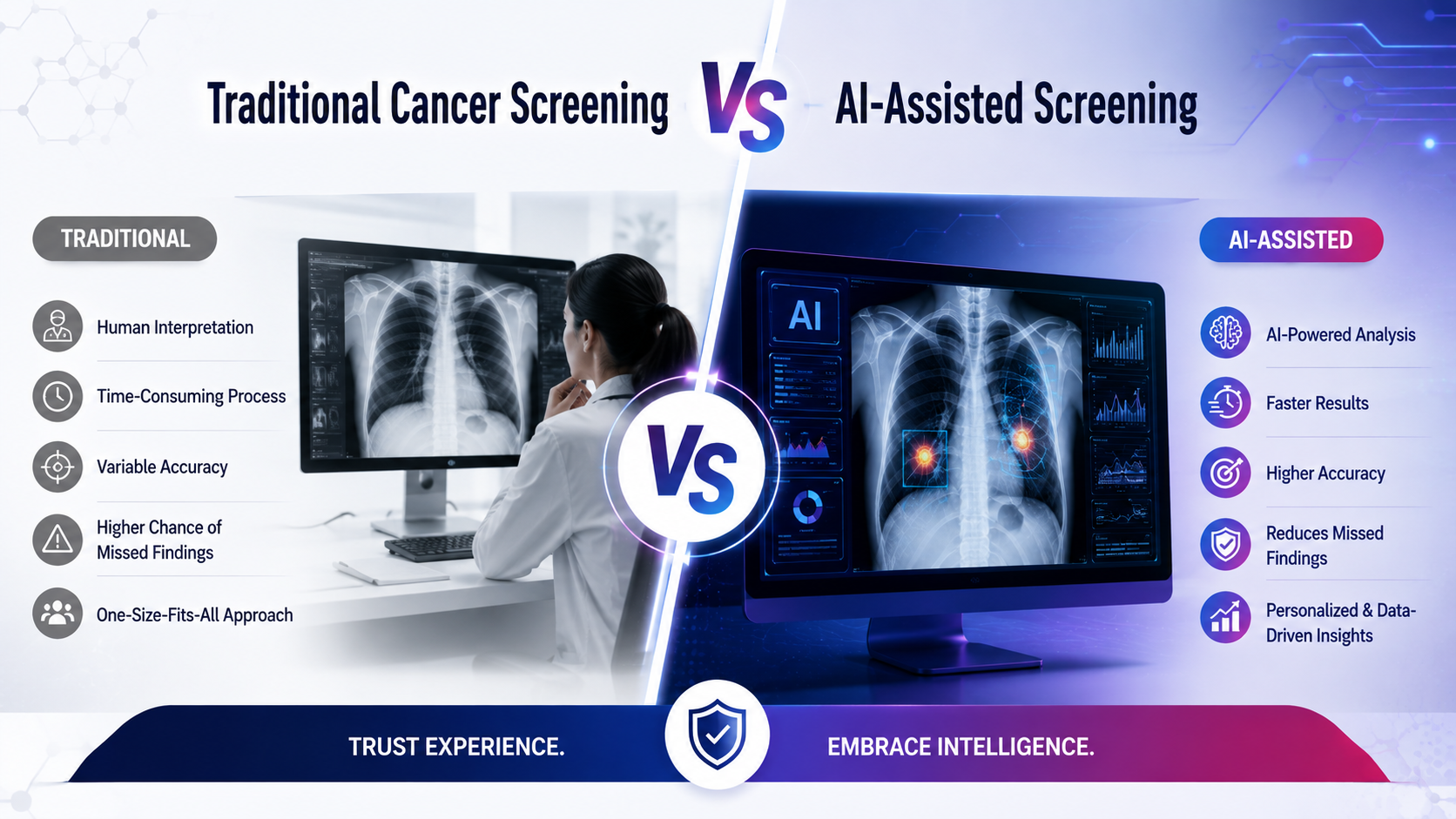
Traditional cancer screening depends heavily on established clinical protocols and trained specialists. For example, radiologists examine mammograms for signs of breast cancer, while clinicians assess lung imaging and other diagnostic tests based on established criteria.
AI-assisted screening adds computational analysis to this workflow. An AI system can review large numbers of images and highlight areas that may require closer attention.
Traditional Cancer Screening | AI-Assisted Cancer Screening |
|---|---|
Relies primarily on trained specialists | Supports specialists with AI-based analysis |
Images are reviewed individually | Large volumes of images can be analysed rapidly |
Subtle findings may require additional review | AI can highlight potentially important patterns |
Workflow depends heavily on specialist availability | Can support workload management |
Clinical judgement remains central | AI provides additional decision-support information |
AI does not make the final diagnosis. A qualified healthcare professional must interpret the findings alongside the patient's history, examination, imaging, laboratory results, and applicable clinical guidelines.
AI-Assisted Mammography
Breast cancer screening is one of the areas where artificial intelligence is receiving significant attention. Mammography produces detailed images that require careful interpretation, and AI tools can help identify suspicious patterns that warrant further assessment.
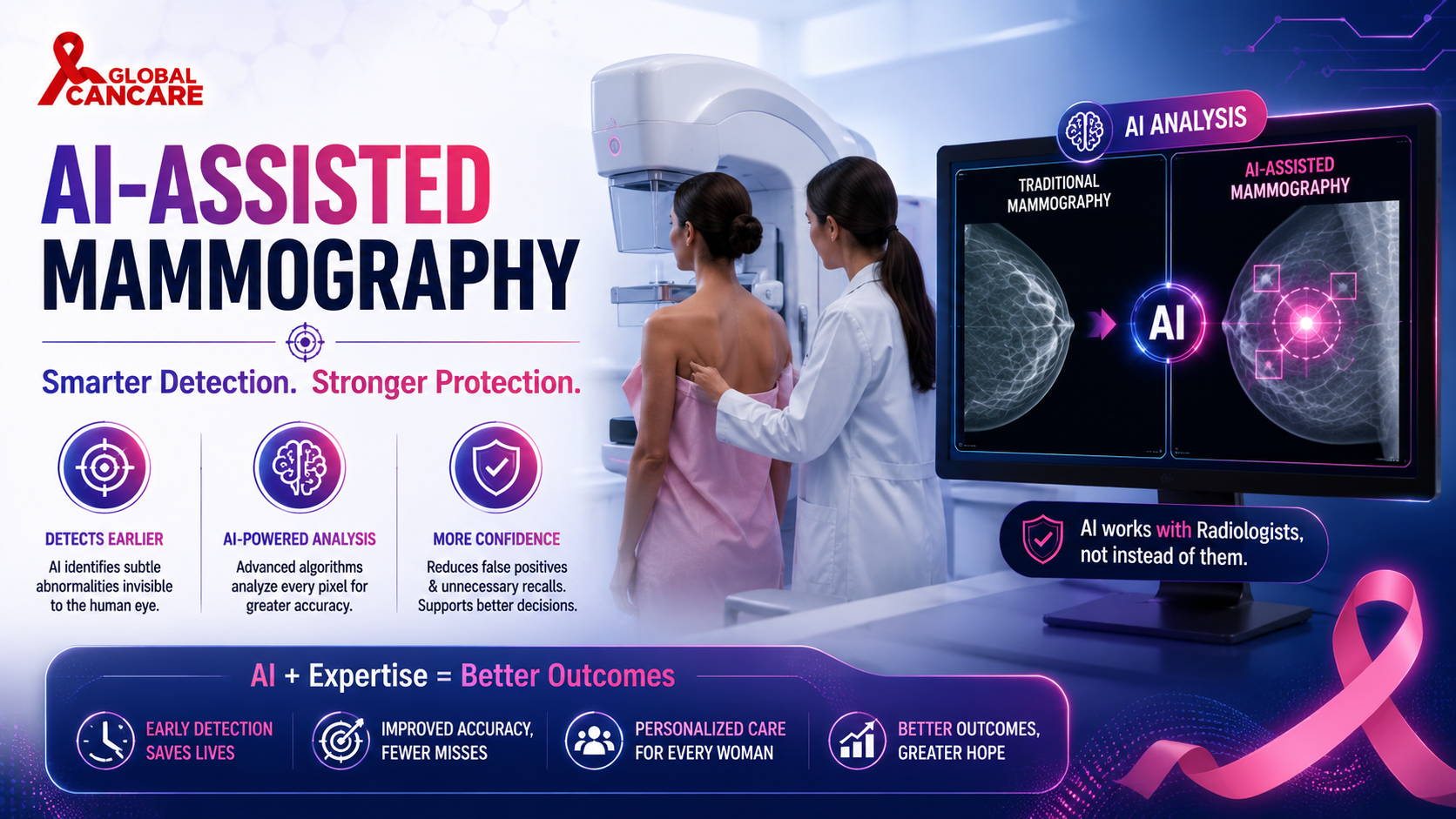
Research has shown that AI can support radiologists in mammography workflows, although performance varies by system, population, screening program, and clinical setting.
For hospitals, the opportunity is not simply to install an AI tool. The technology needs to fit into existing imaging systems and clinical workflows.
A well-planned AI-assisted mammography program can help with:
Image analysis and prioritisation
Workflow support
Detection assistance
Quality monitoring
Reducing repetitive workload
Supporting specialist decision-making
AI and Lung Cancer Screening
Lung cancer screening is another important area for AI development. Low-dose CT scans can produce large amounts of information, and reviewing these images requires time and specialist expertise.
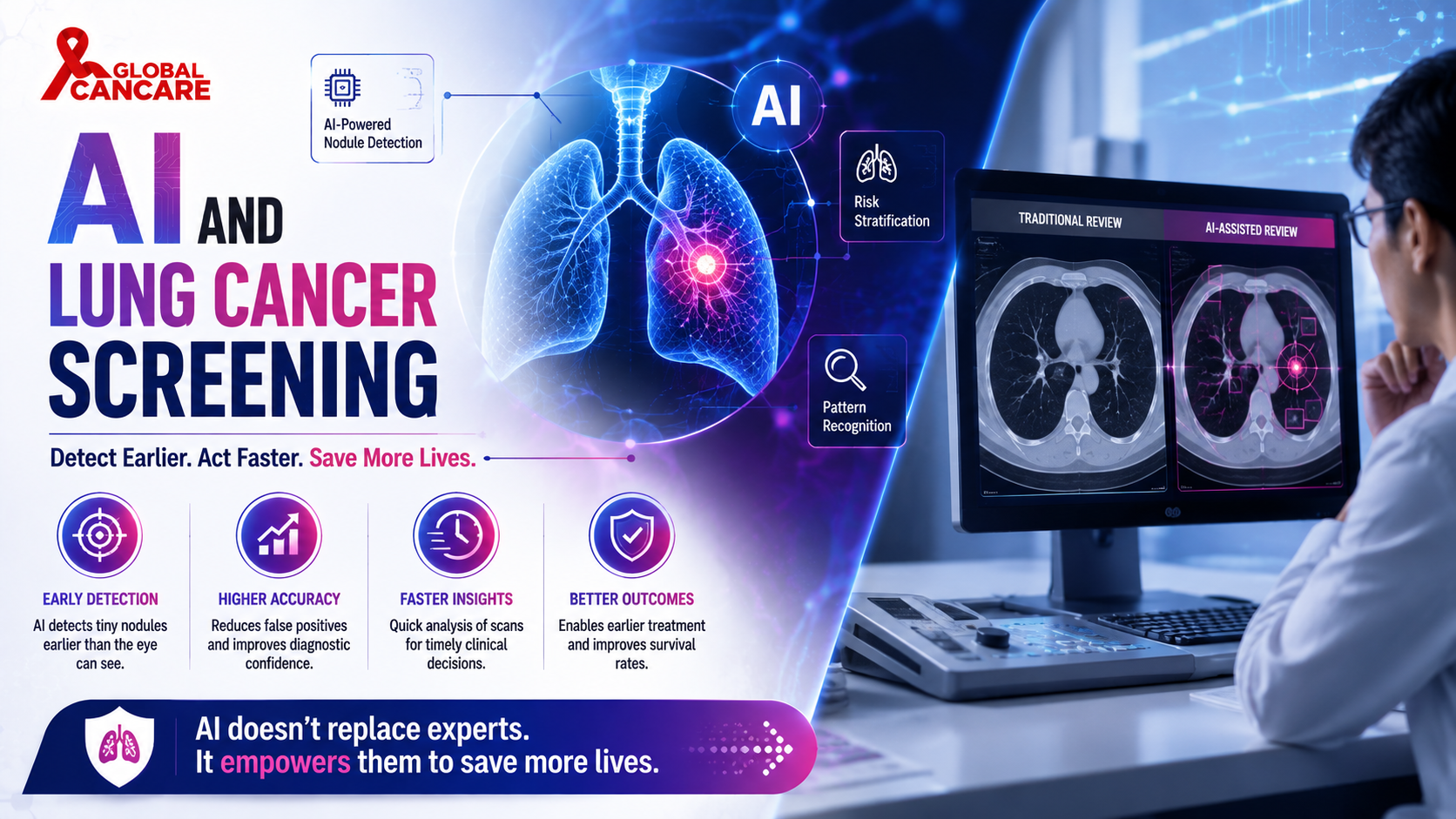
AI can assist by identifying and measuring pulmonary nodules or other suspicious findings. This can help clinicians manage large screening volumes and provide consistent image analysis.
For hospitals considering AI Cancer Screening, lung imaging demonstrates why artificial intelligence can be valuable: the technology can process large datasets while allowing specialists to focus their attention on cases requiring clinical judgement.
Main Benefits of AI Cancer Screening
The potential benefits of AI-assisted cancer screening extend beyond image detection.
Main Benefit | How It Can Help Hospitals |
Early Detection | Supports identification of suspicious findings at an earlier stage |
Workflow Efficiency | Helps teams manage increasing imaging workloads |
Image Analysis | Identifies patterns that may require specialist review |
Consistency | Provides computer-assisted analysis across large datasets |
Prioritisation | May help identify cases requiring more urgent attention |
Data Support | Can combine imaging and other information in advanced systems |
Scalability | Helps healthcare systems manage growing screening demand |
The most important benefit is the combination of technology and clinical expertise. AI can process information quickly, while healthcare professionals provide context, judgement, and patient-centred decision-making.
False Positives: An Important Challenge
No discussion of AI Cancer Screening is complete without addressing false positives. A false positive occurs when a screening test identifies something suspicious that later turns out not to be cancer.
AI systems can sometimes increase the number of findings that require additional investigation. This may lead to further imaging, biopsies, patient anxiety, and additional healthcare costs.
For this reason, hospitals should evaluate AI systems based on more than detection rates. They should also consider:
False-positive rates
False-negative rates
Sensitivity and specificity
Performance across different patient groups
Integration with existing workflows
Regulatory status
Clinical validation
The best AI solution is not necessarily the one that identifies the greatest number of abnormalities. It is the one that provides useful, clinically validated support within a safe workflow.
How Global CanCare Supports the Future of AI Imaging
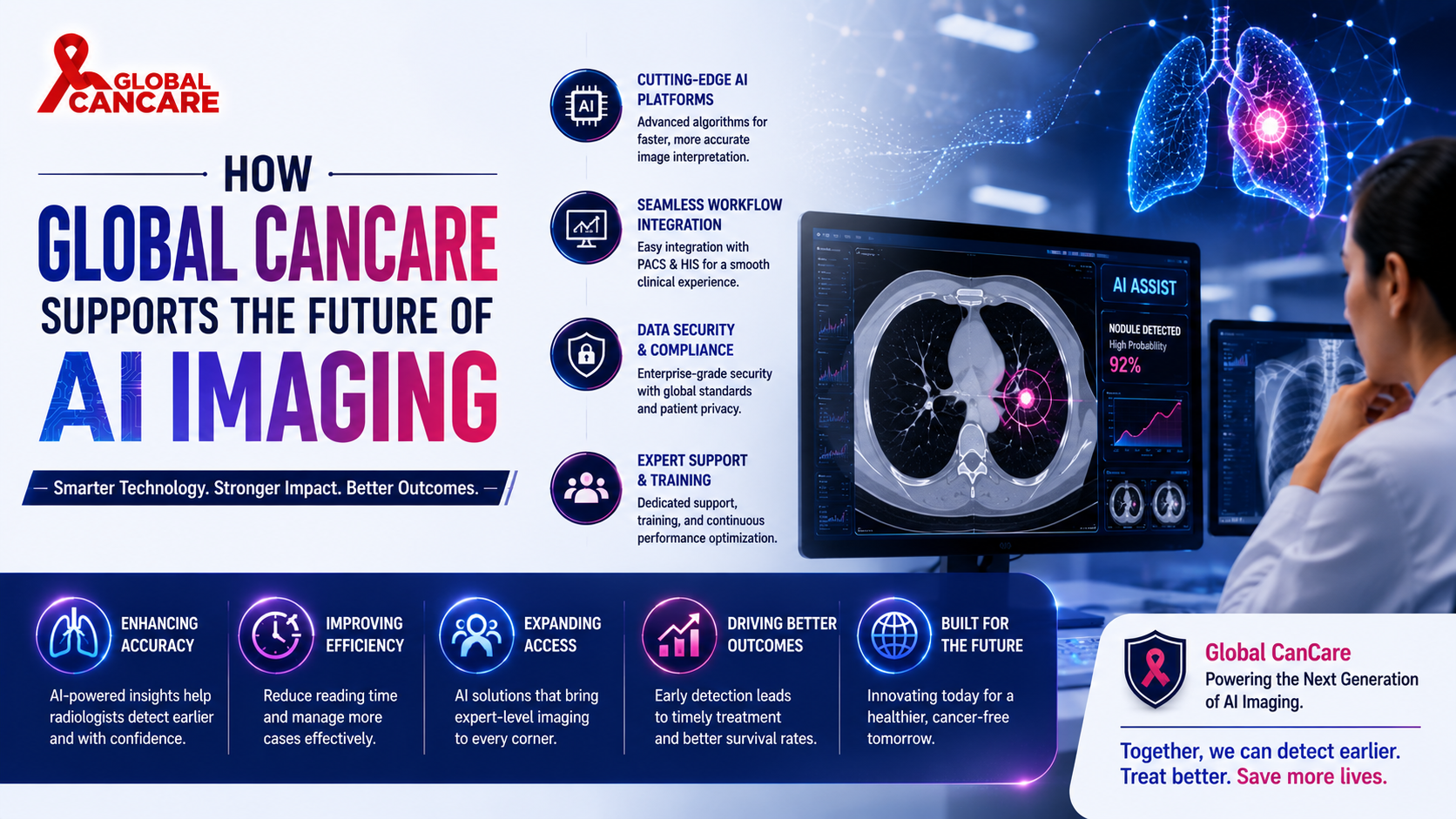
As hospitals move toward technology-enabled healthcare, infrastructure and integration become just as important as the software itself.
Global CanCare Pvt. Ltd. is developing its AI Imaging capabilities as part of a broader healthcare technology ecosystem. Its wider expertise spans medical imaging, oncology equipment, radiotherapy, nuclear medicine, medical physics, turnkey healthcare infrastructure, project management, installation, and healthcare technology solutions.
This integrated approach can help healthcare providers consider AI not as an isolated product, but as part of a connected diagnostic environment.
For hospitals planning modern cancer screening facilities, the combination of imaging technology, AI-assisted analysis, infrastructure planning, and clinical expertise can create a stronger foundation for future healthcare delivery.
The Future of Cancer Screening
AI is unlikely to replace radiologists, pathologists, or oncologists. Instead, the future is more likely to involve human expertise supported by intelligent technology.
As AI systems become more capable, hospitals will increasingly evaluate how they can use them to improve early detection, manage growing workloads, and support more efficient cancer screening programmes.
The successful adoption of AI Cancer Screening will depend on responsible implementation, clinical validation, data quality, regulatory oversight, and continuous monitoring.
For healthcare providers, the question is no longer simply whether AI can detect cancer. The more important question is how AI can be safely integrated into clinical workflows to help healthcare professionals deliver better care.
Frequently Asked Questions
1. What is AI Cancer Screening?
AI Cancer Screening uses artificial intelligence to analyse medical images and other health information to help identify findings that may indicate cancer. It is designed to support healthcare professionals rather than replace them.
2. Can AI replace radiologists in cancer screening?
No. AI is primarily a support tool. Radiologists and other qualified healthcare professionals remain responsible for interpreting findings and making clinical decisions.
3. How can AI improve cancer screening?
AI can analyse large volumes of medical images quickly, highlight suspicious areas, support prioritisation, and help improve workflow efficiency.
4. What role does AI play in mammography?
AI can assist with the analysis of mammograms by identifying suspicious patterns and helping radiologists focus their attention on areas requiring further assessment.
5. Can AI help with lung cancer screening?
Yes. AI can support the analysis of low-dose CT scans by helping identify and measure pulmonary nodules and other potentially suspicious findings.
6. Can AI eliminate false positives?
No. AI can produce both false-positive and false-negative results. Healthcare teams must evaluate AI performance carefully and use it alongside professional clinical judgement.
7. How is Global CanCare involved in AI Imaging?
Global CanCare Pvt. Ltd. is developing AI Imaging capabilities within a broader healthcare ecosystem that includes medical imaging, oncology, radiotherapy, nuclear medicine, medical physics, and turnkey healthcare infrastructure.
External Sources
National Cancer Institute – Artificial Intelligence in Cancer Research: https://www.cancer.gov/research/infrastructure/artificial-intelligence
FDA – Artificial Intelligence and Machine Learning in Medical Devices: https://www.fda.gov/medical-devices/software-medical-device-samd/artificial-intelligence-and-machine-learning-aiml-enabled-medical-devices
NCI – Breast Cancer Screening: https://www.cancer.gov/types/breast/screening
NCI – Lung Cancer Screening: https://www.cancer.gov/types/lung/screening
European Commission – European Health Data Space: https://health.ec.europa.eu/ehealth-digital-health-and-care/european-health-data-space_en
Global CanCare is helping connect advanced imaging, AI, infrastructure, and healthcare expertise to support the next generation of cancer screening.
Planning a Cancer Care project?
Our specialists can scope equipment, shielding, licensing and staffing for your facility.
Talk to our team