
News & Insights
Maharashtra's ₹300 Crore Medical Cyclotron Project: What It Means for Hospitals Planning Nuclear Medicine Infrastructure in India
Maharashtra's ₹300 crore medical cyclotron project signals a major shift in India's nuclear medicine infrastructure. Discover what hospitals, medical colleges, governments, and healthcare investors should learn before planning a medical cyclotron project.
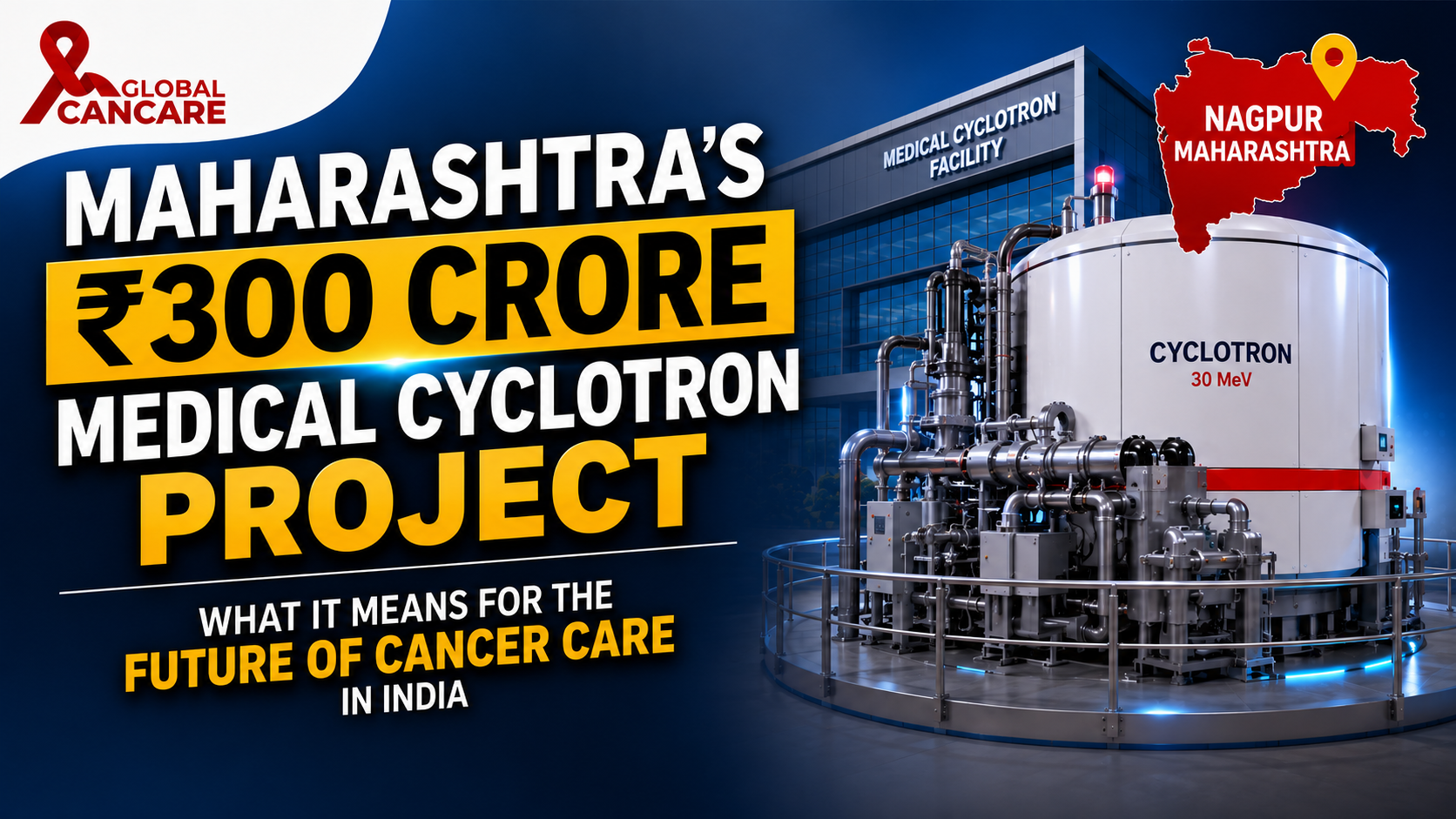
The Maharashtra Government's approval of a ₹300 crore, 30 MeV medical cyclotron facility in Nagpur is more than a regional healthcare investment. It signals India's growing commitment to advanced cancer care, nuclear medicine, and domestic radioisotope production.
For hospitals, medical colleges, research institutions, and healthcare investors, the project offers valuable insights into where cancer care is headed—and what it really takes to develop a successful medical cyclotron facility.
A Major Step Towards Self-Reliance in Nuclear Medicine
The upcoming 30 MeV cyclotron facility will produce medical radioisotopes used in PET-CT imaging, radionuclide therapy, biomedical research, and radiopharmaceutical development.
Unlike MRI or CT scanners, a cyclotron doesn't diagnose patients directly. Instead, it produces the radioactive isotopes that make molecular imaging and precision oncology possible.
This is particularly important because many PET isotopes have extremely short half-lives. For example, Fluorine-18 (F-18), the isotope used in FDG PET scans, has a half-life of only 110 minutes. Every hour spent transporting it reduces its usable activity, making long-distance distribution expensive and inefficient.
Regional cyclotron facilities solve this challenge by producing isotopes closer to hospitals, ensuring faster delivery, greater reliability, and improved patient access to advanced diagnostics.
A Medical Cyclotron Project Is Much More Than Buying Equipment
One of the biggest misconceptions is that purchasing a cyclotron is the project.
In reality, it's only one component of a much larger healthcare infrastructure programme.
A successful cyclotron facility requires careful planning across engineering, regulatory, clinical, and operational disciplines, including:
Feasibility studies and demand assessment
Facility master planning
Radiation shielding and bunker design
Cyclotron installation
cGMP-compliant radiopharmacy
Hot cells and synthesis modules
Quality control laboratories
Radiation monitoring systems
AERB approvals
Commissioning and validation
Workforce training
Maintenance and operational planning
Each element must work together as a single integrated ecosystem. Missing or poorly planned components can delay approvals, increase costs, and impact long-term performance.
Here are some common mistakes hospitals and research centres make when establishing a cyclotron facility.
Why Hospitals Must Think Beyond Equipment Procurement
The Maharashtra project highlights an important lesson: building a cyclotron facility is an infrastructure project, not an equipment purchase.
Before selecting a cyclotron, organisations should evaluate:
Current and future demand for PET radioisotopes
Which isotopes the facility will produce
Internal use versus commercial distribution
Future expansion for theranostics
Radiopharmacy and laboratory requirements
Regulatory pathways
Operational costs over the next 10–15 years
Answering these questions early helps reduce risk and ensures long-term sustainability.
Precision Oncology Is Driving Demand
As cancer treatment becomes increasingly personalised, the demand for advanced radioisotopes continues to grow.
Alongside F-18, hospitals are increasingly using isotopes such as Gallium-68, Copper-64, and Zirconium-89 for advanced molecular imaging, while therapies using isotopes like Lutetium-177 are transforming targeted cancer treatment.
This makes medical cyclotrons strategic assets for:
Comprehensive cancer centres
Multi-speciality hospitals
Medical colleges
Government healthcare institutions
Research organisations
Radiopharmaceutical manufacturers
The Nagpur project demonstrates how investments in cyclotron infrastructure can strengthen the entire nuclear medicine ecosystem rather than benefiting a single hospital.
The Future of Cyclotron Projects in India
With cancer cases rising, PET-CT installations expanding, and theranostics gaining momentum, demand for regional radioisotope production facilities will continue to increase across India.
Healthcare organisations planning new nuclear medicine programmes should begin evaluating infrastructure readiness, cyclotron capacity, regulatory requirements, financial viability, and long-term operational strategies well before equipment procurement begins.
Success will belong to organisations that view a cyclotron not as a standalone machine, but as the centrepiece of a fully integrated nuclear medicine ecosystem.
Partner with Global CanCare for End-to-End Cyclotron Project Solutions
Developing a medical cyclotron facility requires expertise in planning, engineering, regulatory compliance, radiopharmacy, project management, and clinical operations.
Global CanCare supports hospitals, governments, medical colleges, research institutions, and healthcare investors through every stage of the project—from feasibility studies and technology selection to radiation shielding, AERB approvals, commissioning, and operational readiness.
Whether you're planning a new nuclear medicine centre or expanding an existing cancer care facility, our multidisciplinary team helps you build future-ready, compliant, and scalable cyclotron infrastructure.
Ready to Build a Medical Cyclotron Facility?
A successful cyclotron project starts long before the equipment is installed.
Contact Global CanCare today to discuss your medical cyclotron, radiopharmacy, or nuclear medicine infrastructure project. Our experts will help you plan, design, and deliver a world-class facility built for the future of precision oncology.
Planning a Cancer Care project?
Our specialists can scope equipment, shielding, licensing and staffing for your facility.
Talk to our team